

Custom Decking in Austin: Why Architectural Wood Beats Plastic in 2026
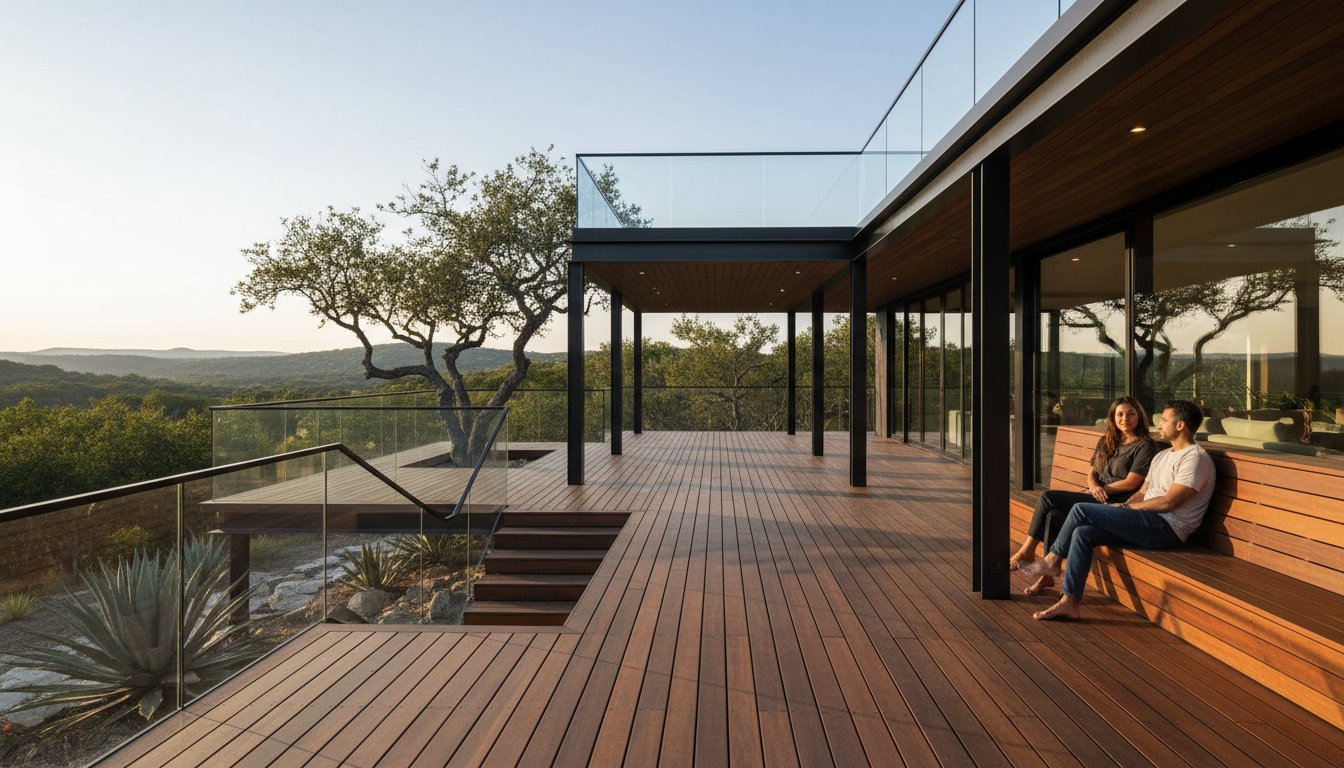
In 2024, Austin recorded 40 days of triple-digit heat, a cycle that pushed standard composite materials to their physical breaking point. You want custom decking that matches your home's high-end architecture, but you're likely tired of watching expensive "low-maintenance" boards warp and fade before the second summer. It's a common frustration for homeowners who prioritize aesthetics but keep getting stuck with generic, high-heat plastic solutions.
Investing in your outdoor space should be a strategic move for your property value, not a recurring maintenance headache. You'll learn why 3D-led engineering and architectural hardwoods like Ipe or thermally modified ash are the only materials that truly survive the Central Texas climate while maximizing your ROI. These natural choices provide a cooler surface underfoot and a structural integrity that synthetic products can't match when the sun is at its peak.
We'll break down the structural failures of plastic, the thermal advantages of premium timber, and the specific design-to-build process that ensures your project remains a permanent asset rather than a temporary fix.
Key Takeaways
- Stop settling for "off-the-shelf" kits that fail on Austin limestone; learn why high-end custom decking requires site-specific engineering to match your home’s DNA.
- Dodge the "plastic trap" of composite materials that burn feet in July and discover why thermally modified wood is the elite 30-year solution for Texas heat.
- Master the hybrid approach: combine traditional carpentry with precision steel framing for a modern aesthetic that outlasts standard wood structures.
- Eliminate guesswork with 3D design renderings and digital site scans that prove your project works in virtual reality before a single board is cut.
- Maximize your property appraisal by shifting from a basic backyard platform to an architectural investment that drives resale speed.
Defining Custom Decking: Beyond the Standard Backyard Platform
Custom decking is a site-specific engineered structure designed to match a home’s architectural DNA. It is not a generic addition or a weekend DIY project. In Austin, a deck must function as a high-performance asset that handles the unique challenges of Central Texas geography while reflecting the owner’s lifestyle. Most homeowners think a deck is just a place for a grill, but a custom build is a strategic extension of the primary living space.
The difference between a kit and a custom build
Off-the-shelf kits are designed for flat, predictable lots. They rely on 2x8 joists that often fail under the weight of high-load features. If you plan to install a 500-pound cold plunge or a heavy cedar sauna, standard framing will sag within three years. Structural integrity is the foundation of a custom build. We utilize precision metalwork and heavy-duty framing to ensure the platform remains rigid over decades of use.
Aesthetic continuity is another major separator. A kit looks like an afterthought. A custom build matches the wood grain of the deck to your interior or exterior trim, creating a seamless visual flow. This approach allows for the integration of architectural fencing and privacy screens that feel like a part of the original home design rather than a tacked-on solution. It is about creating a cohesive space where every board serves a purpose.
Why Austin’s terrain demands structural customization
Building on the Edwards Plateau means navigating solid limestone and aggressive drainage issues. You aren't building on simple dirt; you are building on a rock shelf. Standard kits fail here because they cannot handle the 15 to 20 percent slopes common in West Austin. Custom decking requires specialized steel reinforcement and custom-poured footings that are pinned directly into the limestone. This level of engineering is the only way to prevent the structure from shifting during Texas’s intense wet-dry cycles.
Precision is vital when managing the transition from indoor flooring to the outdoor Deck (building). A custom build allows for a flush-mount threshold, meaning there is no awkward step-down between your living room and the patio. This requires expert knowledge of local building codes and site-specific drainage. Without custom footings, the heavy rains common in Central Texas can cause water to pool against the foundation, leading to expensive rot and structural failure.
- Load-Bearing Capacity: Engineered for heavy features like hot tubs and outdoor kitchens.
- Limestone Anchoring: Specialized footings designed for the rocky Edwards Plateau soil.
- Seamless Transitions: Zero-threshold entries that connect indoor and outdoor spaces.
- Material Matching: Selecting wood species that complement existing architectural finishes.
A custom approach treats the deck as a strategic investment rather than a simple commodity. It solves the environmental problems that "one-size-fits-all" products ignore, ensuring the structure remains level and safe regardless of the terrain. By focusing on custom decking, you are choosing a build that is engineered to win against the elements and the clock.
Material Science: Why High-End Wood Outperforms Composite in Texas
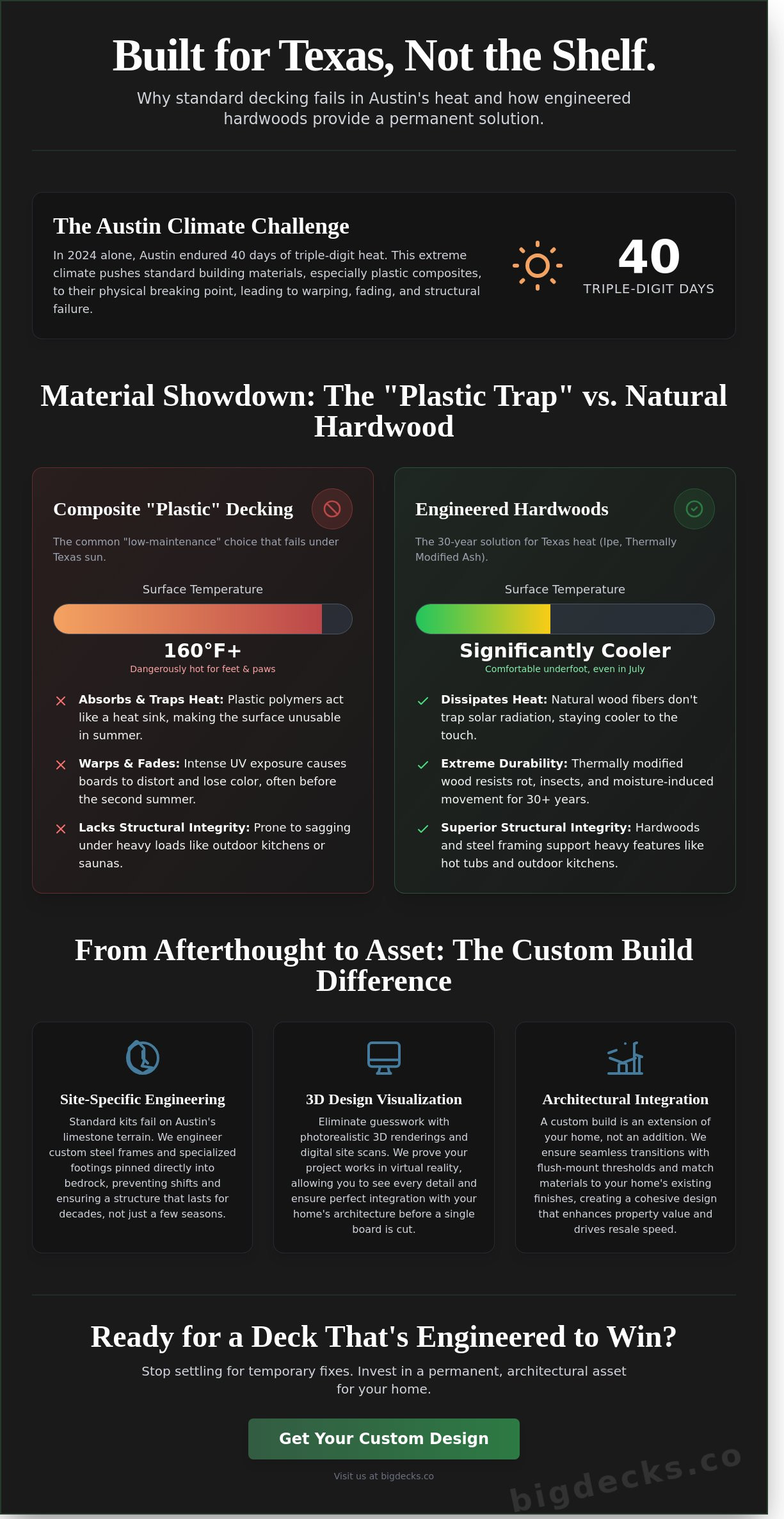
Austin summers don't play around. In July, composite decking often becomes a "plastic trap" for unsuspecting homeowners. These synthetic boards absorb solar radiation until they reach surface temperatures exceeding 160 degrees. That is hot enough to cause discomfort or even burns on bare feet and pet paws. Real wood stays significantly cooler under the Texas sun because natural fibers dissipate heat rather than trapping it like plastic polymers do.
High-end wood offers the durability and comfort homeowners expect from a premium project. When planning custom decking, the material choice determines whether the space is a usable retreat or a heat sink. Natural timber provides a tactile quality and thermal performance that synthetic materials simply cannot match in Central Texas. Choosing the right species—often by researching premium specialists like Greenhill Timbers—ensures your investment survives the brutal UV and humidity cycles of the region.
Thermally modified wood and the Austin heat test
Thermally modified wood uses a high-heat kiln process to change the cellular structure of the timber. By heating wood to over 400 degrees in an oxygen-free environment, manufacturers strip away the organic compounds that fungi and insects eat. This results in thermally modified wood that offers a 30-year warranty against rot. It is incredibly stable, meaning it won't warp or "check" when Austin's humidity spikes and drops. Using North American hardwoods like Ash for this process provides exotic performance without the environmental cost of overseas shipping.
Ipe vs. Cedar vs. Douglas Fir
- Ipe: This is the "Ironwood" of the decking world. It carries a Class A fire rating, the same as steel or concrete, making it nearly indestructible. It is so dense it doesn't float in water and resists scratches from heavy furniture or pets.
- Western Red Cedar: This is the classic choice for horizontal fences and mid-range decks. Cedar contains natural tannins that repel bugs and decay. It is lightweight, easy to work with, and brings a distinct aromatic quality to the backyard.
- Douglas Fir: This species balances cost and structural performance. It is exceptionally strong, making it ideal for the framing and large-scale platforms of a custom decking project. While it requires more diligent sealing than Ipe, its structural integrity is top-tier.
Maintenance is no longer the nightmare it was twenty years ago. Modern penetrating oils soak deep into the wood fibers rather than sitting on top like a film. This prevents the peeling and cracking seen with old-school stains. A quick cleaning and a fresh coat of oil every 18 to 24 months keeps the wood looking new. This simple routine protects your investment and ensures the wood stays supple under the sun. If you are weighing these options for your own yard, you can explore our design process to see which material fits your specific lifestyle and budget.
Engineering for Longevity: Precision Metalwork and Structural Integrity
Building a high-end deck in Central Texas requires more than just picking a wood species. It demands an engineering mindset that accounts for Austin's aggressive climate cycles. We use a hybrid approach that fuses traditional carpentry with modern steel framing to create a foundation that won't warp, twist, or sag over time. This isn't just about over-engineering; it's about ensuring your custom decking remains level and safe for decades rather than years.
Steel provides a structural precision that wood cannot match. While pressure-treated joists eventually crown and bow, steel remains perfectly straight. This allows for tighter tolerances and a sharper, more modern aesthetic. We also integrate custom welding into our designs, using metal accents to bridge the gap between the organic warmth of wood and the industrial strength of modern architecture. This structural integrity is vital for handling the drainage demands of the Hill Country. Our sub-structures are engineered to move water away from the house quickly, preventing the pooling that occurs during Central Texas flash floods where three inches of rain can fall in less than an hour.
The role of steel in modern deck design
Steel posts allow us to achieve spans that wood simply can't handle. By reducing the number of vertical supports, we create cleaner lines and more usable space beneath the deck. This metalwork integrates seamlessly with architectural fencing, creating a unified look across the entire property. In Austin's humidity, which often hits 80 percent in the early morning hours, corrosion is a legitimate threat. We solve this by using powder-coated steel exclusively. It's a non-negotiable standard that ensures the "bones" of your project remain rust-free and structurally sound regardless of the weather.
Advanced wood protection strategies
Protection starts with the right chemistry. We prioritize penetrating oils like Cutek Extreme over traditional surface stains. Surface stains act like a plastic wrap that eventually cracks and traps moisture against the wood, leading to rapid decay. Penetrating oils work differently; they soak deep into the grain to displace moisture from the inside out. This makes the re-oiling process for your custom decking much simpler because it doesn't require sanding back to bare wood. You simply clean the surface and apply a fresh coat to maintain the UV protection.
The most critical detail is the end-grain. Every time a board is cut, the "straws" of the wood are exposed. If left unsealed, these ends suck up water like a sponge, leading to rot and structural failure. We seal every single end-cut during the installation process. It's a small step that separates a professional build from a DIY project, but it's the difference between a deck that lasts fifteen years and one that lasts forty.
The Planning Phase: Visualizing Your Custom Build with 3D Design
High-stakes projects don't leave room for "maybe." If you're investing in a premium build, winging the layout is a recipe for disaster. Using 3D design renderings is how you win before the first screw is driven. It's about data, not just aesthetics. This virtual environment allows you to stress-test your ideas before committing a single dollar to lumber.
The process starts with a site scan to create a digital twin of your backyard. This isn't a rough sketch; it's a precise 1:1 replica of your property's topography and existing structures. We use this digital space to explore material and lighting options in real-time. You can swap Cedar for Douglas Fir or test how a black walnut stain looks under specific LED lighting configurations. We optimize every square inch for heavy hitters like saunas, hot tubs, and outdoor kitchens, ensuring the structural integrity supports the weight while maintaining a clean, logical flow.
Avoiding the "Oops" moment with VR
Walk through your deck before it exists. You'll see if that sectional blocks the path to the grill or if the hot tub feels cramped in the corner. We track sun angles to prevent your deck from becoming a furnace at 2:00 PM. In the Austin heat, shade is a strategic asset. Catching a design flaw in a digital file costs nothing. Fixing it mid-build can cost thousands. It's the ultimate ROI play for your custom decking project.
Austin permitting and zoning
Austin’s Development Services Department doesn't care about your "vision." They care about impervious cover limits. In neighborhoods like Westlake or Tarrytown, exceeding these limits by even 1% results in a hard stop. 3D plans provide the technical accuracy needed to breeze through HOA approvals and city permitting. We handle the red tape by presenting a digital proof that matches Austin’s strict zoning requirements, speeding up the timeline and keeping your project on track. This precision ensures your custom decking meets every local code without sacrificing style.
Don't settle for a "best guess" approach. Get a clear look at your future space by choosing a team that values precision. Start your design consultation with BigDecks today.
Investing in Value: ROI and the BigDecks Approach
Austin's real estate market rewards bold moves. A well-executed custom decking project isn't just an upgrade; it's a strategic play for your home's equity. High-end outdoor builds in neighborhoods like Tarrytown or West Lake Hills can see a significant return on investment, often recouping 70% to 80% of costs upon resale. This isn't just about adding square footage. It's about creating a definitive lifestyle statement that makes buyers move faster.
The ROI of architectural outdoor spaces
A basic concrete patio is a utility. A custom wood deck is an experience. When you analyze deck costs, look at the long-term appreciation of architectural quality. Buyers in the current market prioritize wellness and recovery. Integrating features like cold plunges or high-performance outdoor saunas into your deck design shifts the property from a standard house to a private retreat. For those with waterfront access, complementing a permanent structure with an inflatable floating party island cabana boat further enhances the luxury lifestyle appeal that drives Central Texas real estate demand. This wellness and recreation premium is the new luxury standard, driving higher appraisal values than simple landscaping ever could.
Choosing high-performance wood like Cedar or Douglas Fir signals quality to savvy inspectors and appraisers. These materials possess a natural warmth and structural integrity that synthetic alternatives lack. We treat every custom decking project as a high-stakes build where the finish matters as much as the framing. You're investing in a durable asset that ages with grace, not a temporary plastic fix that fades in the Texas sun.
Final thoughts on the BigDecks process
Our approach is built on a refusal to compromise. We combine traditional heavy-timber carpentry with modern metalwork to create structures that feel permanent and powerful. We manage the entire lifecycle of the project, from the initial design pitch to the final refinishing. This end-to-end oversight ensures the architectural intent remains intact from the first shovel in the ground to the final screw.
We refuse to build with plastic. Composite materials might promise low maintenance, but they lack the soul and the resale punch of real timber. Our team focuses on high-octane designs that utilize the best natural materials available. We build decks for homeowners who want to win the room and dominate their local market. If you're ready to stop looking at your backyard and start leveraging it, we're the strategic ally you need.
Secure Your Backyard Investment
Austin’s climate doesn't play nice with inferior materials. Plastic composites often warp or become untouchable under the July sun, while architectural hardwoods like Ipe and Thermory stay structurally sound for decades. Choosing custom decking in Central Texas requires an engineering approach that accounts for shifting limestone and extreme heat cycles. We prioritize precision metalwork and premium wood because they offer a superior return on investment compared to synthetic alternatives. Every project we handle includes a 3D visualization to eliminate the gap between your vision and the final build. This data-driven planning ensures your deck functions as a strategic asset for your home. Don't settle for a standard platform when you can build a structure designed for longevity and performance. Your property deserves a build that handles the heat as well as you do.
Ready to see your backyard in 3D? Get your custom deck bid from BigDecks.
We look forward to helping you dominate your outdoor space.
Frequently Asked Questions
How much does a custom deck cost per square foot in Austin?
Austin homeowners typically spend between $30 and $60 per square foot for professional installation according to 2024 market data from Angi. This price range fluctuates based on your choice of wood species and the complexity of the substructure. Premium materials like Ipe or high-end composite will push your investment toward the $75 mark. Factors like slope and soil stability also dictate the final project cost.
What is the best wood for a deck in the Texas heat?
Western Red Cedar is the most reliable wood for the Central Texas climate because it stays cooler than most other materials. It handles the 100-degree Austin summers without warping or becoming painful to walk on. While Douglas Fir is a durable structural choice, it needs more protection from the sun to prevent drying. Cedar's natural tannins provide a built-in defense against the rot and insects common in our humid environment.
Do I need a permit to build a deck in Austin, TX?
The City of Austin requires a permit for any deck that is more than 30 inches above the ground or exceeds 200 square feet. This ensures your custom decking meets safety codes and respects property setbacks. We handle the paperwork with the Development Services Department to keep your build legal and stress-free. Skipping this step can lead to heavy fines or forced removals during a property sale.
How long does it take to design and build a custom deck?
A standard project takes four to eight weeks from the first meeting to the final walkthrough. The design and city permit phase accounts for three to five weeks of that timeline. Actual construction usually wraps up in seven to twelve business days once the materials arrive on-site. We provide a clear schedule at the start so you know exactly when your first outdoor event can begin.
Is thermally modified wood better than composite decking?
Thermally modified wood provides the authentic aesthetic of timber with the structural stability of a synthetic material. It's an excellent choice for a custom decking project because the high-heat treatment makes the wood virtually waterproof and resistant to rot. Composite decking requires less maintenance, but it often retains more heat in the Texas sun. Thermally modified options give you a 25-year lifespan without the plastic look of many alternative products.
How often do I need to maintain a natural wood deck in Austin?
Plan to wash and reseal your natural wood deck every two years to combat the intense Austin sun. Without this maintenance, the UV rays will break down the wood fibers and turn the boards a weathered gray. A high-quality penetrating stain keeps the wood supple and prevents the cracking that leads to splinters. Inspecting the hardware and structure every 12 months ensures the deck remains safe and stable for your family.