

How to waterproof a wood deck in Austin: The professional guide to wood longevity
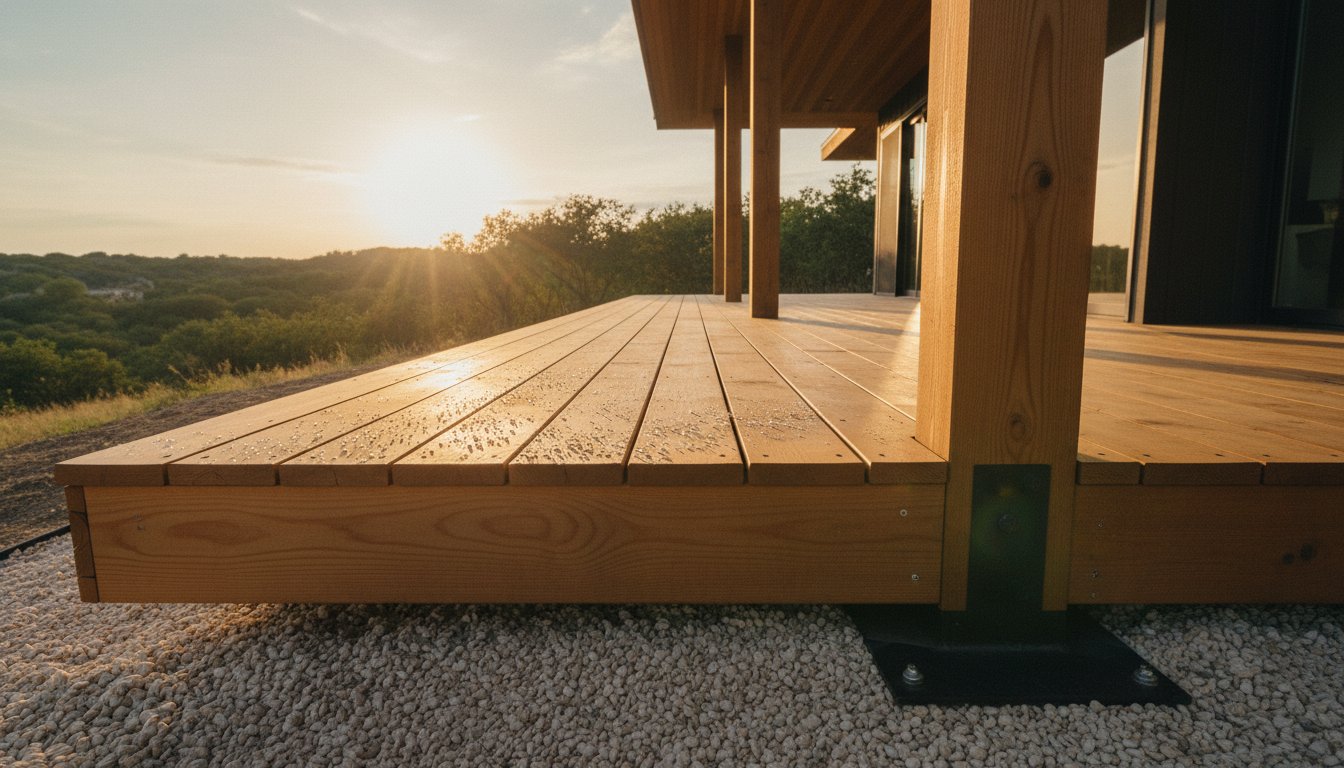
Most homeowners treat deck maintenance like a recurring tax they're forced to pay every twelve months. You've likely seen the results of standard big-box sealers; they peel like a bad sunburn and leave your Western Red Cedar looking like scrap lumber within two seasons. Central Texas is brutal on organic materials. Learning how to waterproof a wood deck correctly is the difference between a structural asset and a constant maintenance liability.
You deserve a deck that maintains its architectural integrity and clean lines for decades without an annual labor-intensive overhaul. We build with heavy 4x12 Douglas Fir and 6x6 posts because we understand how to protect the investment from the inside out. This guide details the specific materials and penetrating oils required to beat the heat and keep your wood stable.
You'll learn why Cutek Extreme is the only finish we recommend for professional results. We'll also cover the architectural details, from steel bases to moisture-shedding framing, that ensure your deck remains clean and functional for twenty years or more.
Key Takeaways
- Stop using film-forming stains that peel and trap moisture in the extreme Central Texas heat.
- Master how to waterproof a wood deck using high-performance penetrating oils that travel deep into the grain to displace moisture.
- Learn the critical preparation steps and why you must never apply oil finishes in the direct 100-degree sun.
- Protect your investment with "heavy build" engineering, including 6x6 posts on steel bases to eliminate ground-level rot.
Why standard deck sealers fail in Central Texas
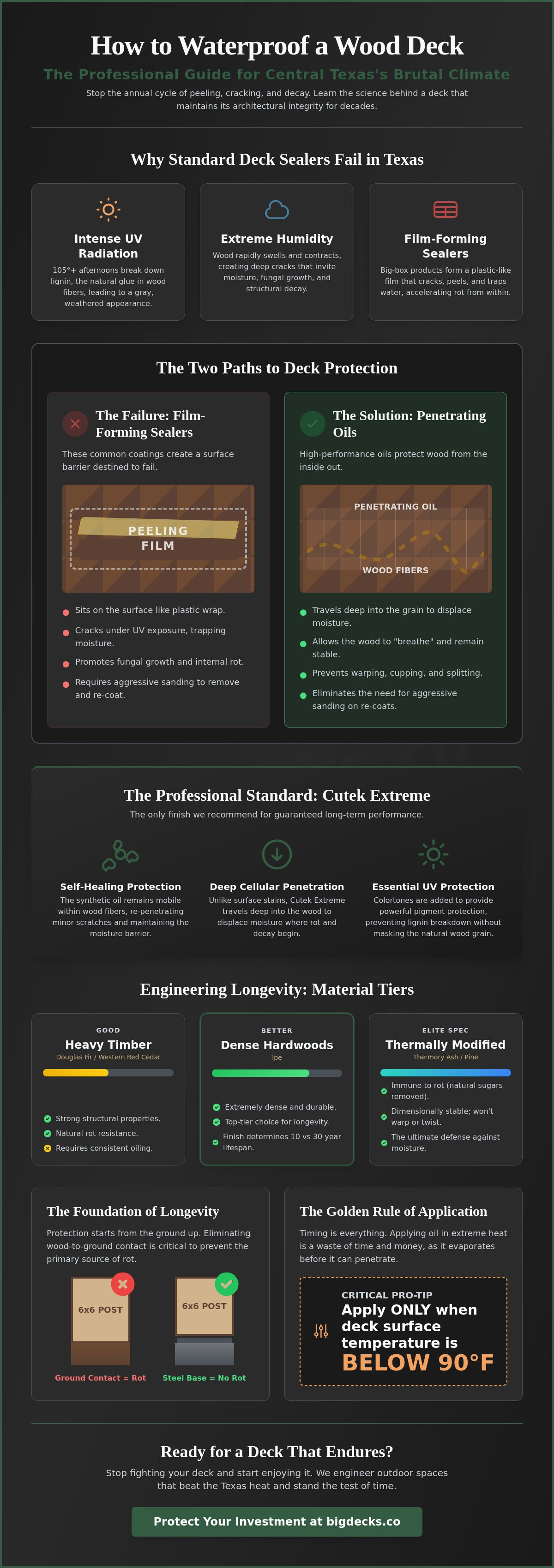
Austin’s climate is a specialized torture chamber for timber. You deal with 105-degree afternoons followed by 90% humidity and sudden flash floods. Standard big-box sealers aren't built for this intensity. They rely on film-forming resins that sit on the surface like cheap plastic wrap. When the sun hits, that film cracks. When the rain follows, water gets trapped underneath. You end up with a peeling, grey liability that looks like a failure instead of a high-value asset.
Learning how to waterproof a wood deck in Central Texas requires a shift in perspective. It isn't about creating a static, plastic seal. It's about managing how the wood interacts with its environment. If you treat high-end materials like Western Red Cedar or thermally modified ash as if they were inanimate plastic, you've already lost the game. When your luxury deck starts to peel within twelve months, the psychological cost is high. It stops being a place of relaxation and starts looking like a maintenance nightmare.
The science of wood cell collapse
UV radiation is the primary aggressor in Travis County. High-intensity rays break down lignin, which is the natural polymer acting as the glue for wood fibers. Once the lignin fails, the fibers detach and wash away. This process accelerates during the brutal expansion and contraction cycle of 100-degree days. Wood swells in the humidity and shrinks in the heat; this mechanical stress creates deep cracks that invite structural decay.
Waterproofing vs. moisture regulation
Professional wood finishing prioritizes breathability over total blockage. Wood is a cellular material that must move moisture in and out to remain stable. If you apply a non-breathable surface coating, you trap liquid water inside the grain. This creates a greenhouse effect for fungal growth and internal rot. When researching how to waterproof a wood deck, the goal is moisture regulation. We only use Cutek Extreme because it penetrates deep into the wood cells. It stays active inside the timber, displacing moisture while allowing the wood to breathe, which prevents the warping and splitting common with inferior products.
Selecting materials and high-performance penetrating oils
Success in how to waterproof a wood deck starts with material selection. You can't rely on a surface film to fight the Texas sun. BigDecks builds with heavy 4x12 Douglas Fir and Western Red Cedar because they handle structural loads and moisture differently than cheap box-store lumber. Ipe remains a top-tier choice for density; however, the finish you apply determines if that investment lasts ten years or thirty. We skip the hardware store sealers and focus on high-performance chemistry that actually integrates with the wood fibers.
Why Cutek Extreme is the professional standard
Cutek Extreme is a high-performance synthetic oil that protects wood from the inside out. Unlike rigid stains that sit on top and eventually peel, this oil travels deep into the grain to displace moisture at the cellular level. This creates a self-healing effect; as the wood expands and contracts in the Austin humidity, the oil remains mobile within the fibers to maintain protection. For our intense UV index, we use Colortones to provide essential pigment protection without masking the natural grain. Research from the USDA Forest Products Laboratory in their guide on Finishes for Wood Decks confirms that penetrating finishes outperform film-forming coatings in high-exposure environments. We exclusively recommend this system because it eliminates the need for aggressive sanding during maintenance cycles.
Thermally modified wood: the ultimate moisture defense
Thermally modified wood like Thermory Ash or Pine changes the durability equation for Central Texas. The process involves heating the timber to over 400 degrees Fahrenheit in a specialized kiln, which removes natural sugars and moisture. This makes the wood "dead" to the elements; it won't rot because the food source for fungi is gone. It stays dimensionally stable even during a flash flood or a triple-digit August heatwave. We often specify these materials when engineering architectural value for 2026 and beyond. If you want a deck that won't warp, twist, or cup, this is the elite spec. We can help you review material performance data to see which species fits your project's specific solar exposure.
The professional process for applying Cutek Extreme
Austin heat kills decks. Applying oil in 100-degree direct sun is a waste of capital. The wood surface gets too hot, causing the oil to flash off before it can penetrate the grain. Aim for a window where the surface temperature stays below 90 degrees. This ensures the oil moves deep into the fibers. It's the only way to master how to waterproof a wood deck for the long haul.
Preparing the canvas: Sanding and cleaning
Preparation is 90 percent of the result. New lumber arrives with mill glaze; this is a crushed layer of fibers from the sawmill that blocks absorption. You must sand this off. Stick to 60-80 grit sandpaper. If you go higher, you polish the wood and seal the pores. The USDA guide to finishing exterior wood confirms that surface prep dictates finish lifespan. Clean the wood, sand it right, and let it dry completely before the first drop of oil touches the surface.
Application and maintenance cycles
We use 24ft+ continuous boards to eliminate weak points and create clean lines. To avoid lap marks on these long runs, apply Cutek Extreme along the entire length of the board without stopping. Use a wet on wet technique. Apply the first coat, wait for it to migrate into the wood, and apply the second while the grain is still receptive. This maximizes the oil load deep inside the timber.
Austin humidity is unpredictable. Don't trust the clock for drying times. Use the walk-on test. If the wood feels tacky or leaves a footprint, it isn't ready. Once it's bone dry, your deck is protected. Establish a maintenance cycle every 12 to 18 months. This schedule prevents the need for aggressive chemical stripping in the future. Check our guide on how much it costs to build a deck in Austin to see how professional finishing protects your long-term investment.
Ready to build a deck that stands up to the Texas sun? Let’s discuss your material and finish options.
Engineering for drainage and structural protection
BigDecks builds with a heavy build philosophy. We don't use flimsy materials that flex and sag over time. We use oversized framing to eliminate the structural dips where water pools and rot begins. When you are evaluating how to waterproof a wood deck, the physical engineering matters as much as the chemical seal. A rigid, over-engineered frame ensures water sheds off the surface instead of sitting in low spots.
Our 6x6 posts on elevated steel bases are non-negotiable. This setup creates a permanent break between the wood and ground-level moisture, preventing the end grain from wicking up water like a straw. We also enforce strict board spacing standards. Wood needs to breathe to survive. Proper gaps allow debris to fall through and air to circulate, drying the underside of the boards and the joists after a heavy Austin downpour.
The hidden heroes of our builds are joist tape and custom flashings. We apply high-performance tape to the top of every joist before the decking goes down. This creates a waterproof barrier that prevents moisture from trapped between the boards and the frame. It's a critical step in how to waterproof a wood deck for the long haul, protecting the skeleton of your investment from the inside out.
Architectural details that prevent rot
We utilize 4x12 Douglas Fir for its massive structural integrity and clean, architectural lines. These heavy members provide the visual mass required for high-end design while resisting the warping common in smaller lumber. We pair this wood with precision metalwork. Steel bases keep the primary posts 1 to 2 inches off the concrete, ensuring zero contact with standing water. This design-led approach treats moisture defense as an integrated feature rather than an afterthought.
The ROI of professional deck maintenance
Maintenance is a calculated financial move. Annual oiling with Cutek Extreme costs a small fraction of a full deck replacement. Without professional care, most decks in Central Texas require a total rebuild every 10 to 12 years. By maintaining the wood's cell structure, you extend that lifecycle to 25 years or more. A pristine deck is a strategic asset for your home valuation, turning a potential liability into a major selling point. It is the difference between a depreciating structure and a high-performance outdoor space.
Schedule a professional deck inspection with BigDecks to secure your structure's future.
Mastering Central Texas wood longevity
Austin's climate is brutal on timber. Standard film-forming sealers will fail because they cannot handle the rapid expansion and contraction caused by our intense heat and humidity. Understanding how to waterproof a wood deck correctly means moving away from hardware store products and toward high-performance penetrating oils like Cutek Extreme. This is the only finish we recommend because it protects the wood from the inside out, ensuring 4x12 Douglas Fir and Western Red Cedar boards remain stable for decades.
Success requires more than just a good oil. It demands architectural precision, including 6x6 posts on steel bases and oversized framing engineered for maximum drainage. Our Austin-based team focuses on high-performance builds using thermally modified wood and architectural timber. We prioritize clean lines and honest materials that stand up to the sun without compromising on structural integrity. If you're tired of temporary fixes, it's time to build for the long game.
Ready to protect your investment? Let’s talk about your deck design and maintenance.
Your deck should be a permanent asset, not a recurring maintenance headache.
Frequently asked questions
How often should I waterproof my wood deck in Austin?
You should apply a maintenance coat of Cutek Extreme every 12 to 24 months to combat the intense Central Texas sun. Austin's UV index frequently reaches 10 or higher during the summer months, which aggressively breaks down wood lignin. Refreshing the oil every two years ensures the wood remains hydrophobic and structurally sound.
Can I apply Cutek Extreme over an old deck stain?
You cannot apply Cutek Extreme over an existing film-forming stain or paint. This penetrating oil requires an open wood grain to soak into the timber; old sealers act as a barrier that prevents absorption. You must strip the old finish back to raw wood using a professional stripper or mechanical sanding before you begin the process of how to waterproof a wood deck effectively.
Is thermally modified wood really waterproof?
Thermally modified ash is highly resistant to rot and moisture, but it is not completely waterproof. The thermal modification process cooks out the sugars that attract fungi, yet the wood remains a natural material that can grey and check over time. We use Cutek Extreme on modified timber to stabilize the moisture content and preserve the deep, architectural aesthetic of the wood.
What happens if I don't seal my cedar deck in the Texas heat?
Unsealed Western Red Cedar will begin to grey and develop surface cracks within 12 months of exposure to the Texas climate. The heat forces natural oils to evaporate, leading to cupping, warping, and checking in 6x6 posts and 4x12 framing. Proper sealing is the only way to protect your investment from the structural fatigue caused by rapid moisture cycles.
Do I need to waterproof the underside of my second-story deck?
You must coat all six sides of your decking boards to prevent the wood from cupping. If you only seal the top surface, the underside will absorb moisture at a different rate, creating internal tension that twists the boards. For second-story decks, treating the underside also ensures a clean, uniform look for the area below the structure.