

How to Plan and Integrate Hot Tubs into Your Austin Backyard
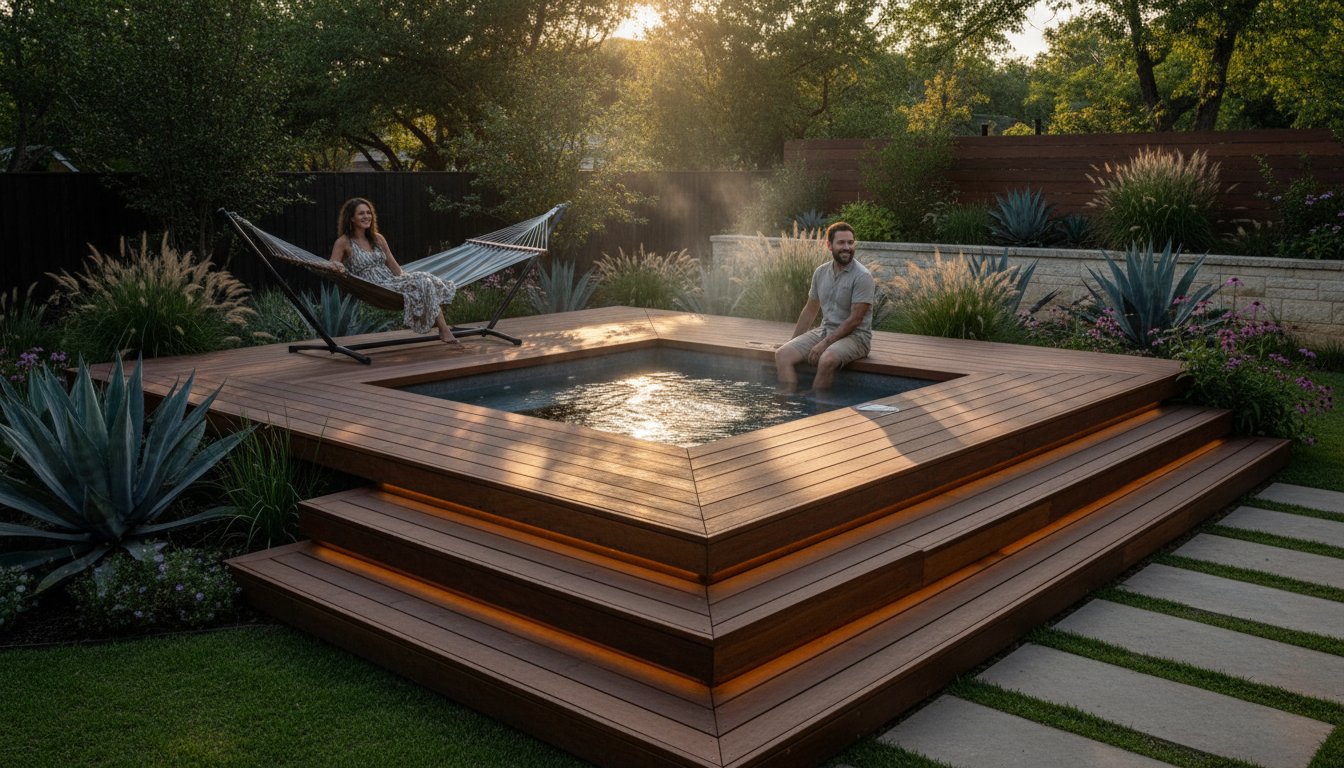
Dropping a five thousand pound tank of water onto a standard deck isn't an upgrade; it's a structural gamble that most Austin homeowners lose. In Central Texas, the transition from a store-bought spa to a high-end integrated retreat requires more than just a garden hose and a prayer. You want the luxury and the ROI that hot tubs bring to a property, but you're rightly concerned about excavating the 100 million year old limestone in your backyard and preventing your framing from rotting out.
This guide delivers the technical roadmap for selecting, placing, and structurally supporting a spa with the precision of a professional builder. We're cutting through the noise to address Austin's specific permitting hurdles, 240V electrical requirements, and the engineering needed for a seamless, built-in aesthetic. You'll learn how to plan a space that functions perfectly and looks like it was designed by an architect rather than as an afterthought.
Key Takeaways
- Define your primary use case—relaxation, therapy, or entertaining—to establish a backyard flow that works for your specific lifestyle.
- Learn the structural engineering required to support the massive weight of hot tubs, including reinforced decking and concrete pad specifications.
- Discover how to achieve a high-end, built-in look by recessing the unit and using custom wood skirting to hide unsightly plastic exteriors.
- Navigate Austin’s specific permitting and 240V electrical hardwiring requirements to keep your project safe and compliant with local codes.
- Use 3D visualization to see exactly how the integration fits your space before you commit to materials or construction.
Planning your hot tub project for the Austin climate
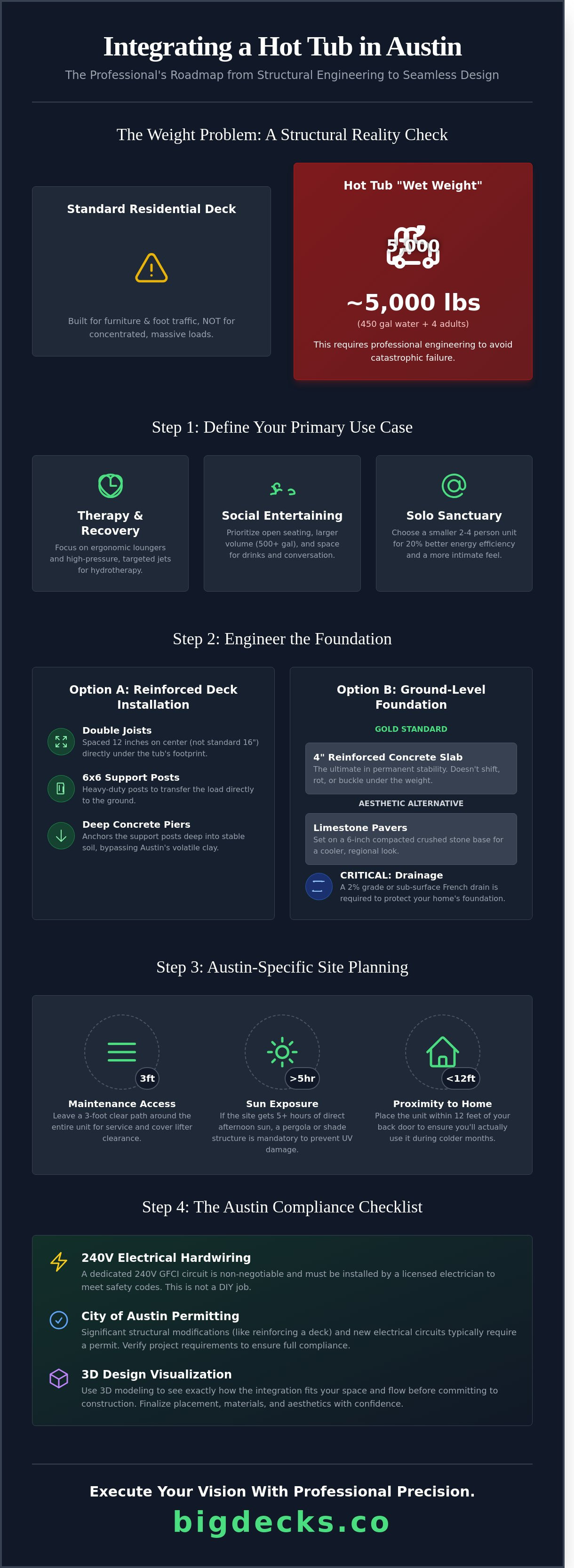
Austin backyards are high-stakes real estate. Adding a hot tub requires more than just picking a model from a catalog; it demands a strategy that accounts for 100-degree August afternoons and tight urban lots. You need to define your primary goal before moving a single shovel of dirt. Whether you're chasing 40-jet hydrotherapy for recovery, a social hub for weekend entertaining, or a solo sanctuary, the use case dictates the entire layout. A social unit needs 500 gallons of volume and open seating, while a therapeutic model focuses on ergonomic loungers and targeted pressure points.
Analyze your footprint to ensure the yard still breathes. Don't cram a unit into a corner and kill your property's flow. You need 3 feet of clear space around the cabinet for maintenance access and cover lifter clearance. Smart design creates distinct "zones" where the splash area doesn't collide with your outdoor kitchen or fire pit. This keeps the energy high and the utility practical.
Sun exposure is a dealbreaker in Central Texas. The intense UV levels here can degrade standard materials in under 36 months. If your site gets more than 5 hours of direct afternoon sun, a pergola or shade structure is a mandatory investment, not an upgrade. Finally, map the "wet-to-dry" transition. The 15-foot path from the water to your sliding glass door should consist of slip-resistant stone or composite decking. It keeps your interior hardwoods safe and prevents a 911 call from a slip on wet tile.
Choosing the right size for your space
A 7-foot square Hot tub dominates a small Travis Heights lot. If you soak solo, a 2-4 person unit offers 20% better energy efficiency than a 6-person beast. Measure your side yards twice. Many Austin homes have 5-foot setbacks, and a 90-inch tub won't fit through a standard gate without a $1,500 crane fee. Ensure the unit's visual weight matches your home's architecture so it looks like an intentional feature rather than an afterthought.
Seasonal considerations in Central Texas
Plan for the "January test" by placing the unit within 12 feet of the back door. Any further and you won't use it during our brief cold snaps. Buy a cover with 1.5-pound foam density to withstand the heat and prevent sagging. Orient the seating to catch the prevailing South-Southeasterly breezes. This makes a summer soak feel like a luxury instead of a sauna. Use 100% UV-resistant materials to ensure your investment doesn't fade into a chalky mess by year three.
Selecting a location and engineering the foundation
Choosing a spot for your hot tub isn't just about the view; it's about physics. In Austin, you're fighting two primary forces: massive weight and volatile soil. Whether you’re dealing with Blackland Prairie clay that expands when wet or the stubborn limestone of the Hill Country, your foundation must be absolute. Failing to account for these environmental factors leads to cracked shells and unlevel waterlines within two seasons.
Structural requirements for deck-mounted tubs
Most standard residential decks aren't built to support 4,000 lbs of concentrated weight. That’s the typical "wet weight" of mid-sized hot tubs once you factor in 450 gallons of water and four adults. To prevent structural sagging, we implement double joists spaced 12 inches on center and heavy-duty 6x6 support posts anchored in deep concrete piers. It’s a high-stakes calculation; you need a professional to verify that your frame meets specific Austin building codes to avoid a catastrophic deck failure.
Ground-level placement and drainage
A 4-inch reinforced concrete slab is the gold standard for permanent stability. It doesn't shift, it doesn't rot, and it handles the weight without flinching. For those seeking a Central Texas aesthetic, limestone pavers on a 6-inch compacted crushed stone base offer a cooler surface for bare feet. Regardless of the material, drainage is the silent killer of backyard builds. We design a 2% grade or install sub-surface French drains to move splash-out and heavy Austin rain away from your home's foundation.
Utility planning is the final piece of the engineering puzzle. You need a dedicated path for a 220V electrical conduit and at least 36 inches of clear access to the equipment panel for future repairs. Adhering to national electrical safety requirements is non-negotiable for a safe installation. If you’re ready to see how these engineering specs integrate into a high-end layout, explore our custom deck designs to start your project.
Design strategies for a seamless built-in look
Dropping a 500-gallon plastic shell onto a concrete slab creates an eyesore, not an oasis. To win the backyard game, you have to treat hot tubs as integrated architectural elements. This means thinking about sightlines, elevation, and how the unit interacts with your primary living space. A well-executed design makes the tub feel like a natural extension of the deck rather than a bulky appliance taking up space.
Recessed vs. flush-mount installations
A fully recessed tub sits level with the deck, offering a clean, unobstructed view across the yard. While this looks sharp, it creates a potential tripping hazard and makes getting in and out more difficult for some users. A 12-inch "step-in" height is often the superior choice for Austin projects. This elevation provides a natural place to sit before swinging your legs into the water, and it clearly defines the edge of the spa for safety.
Engineering for maintenance is the most overlooked part of the process. You must build a structural vault beneath the deck with at least 36 inches of clearance around the mechanical access panel. If a pump fails or a heater needs service, your contractor shouldn't have to rip up $10,000 worth of premium decking to reach it. Ensure your deck framing allows the spa cover to fold back completely without hitting railings, and maintain a 1/2 inch gap between the deck boards and the tub lip to prevent friction damage.
Material coordination and aesthetics
Standard factory skirting is usually cheap, textured plastic that screams "retail showroom." We recommend stripping that away and replacing it with high-end materials like Ipe, Garapa, or thermally modified ash that matches your deck boards. This creates a monolithic look that ties the entire structure together. Adding a wide "coping" edge around the perimeter provides a 10-inch to 12-inch surface that serves as a bar top for drinks or casual seating during a party.
Privacy is the final layer of a professional install. Surround the tub with architectural steel screens or horizontal slat fencing to block the neighbors' view without stopping the breeze. Finish the look with integrated 3000K LED strip lighting tucked under the coping. This provides a warm, low-voltage glow that highlights the wood grain and keeps the area safe after the sun goes down. These details turn a basic utility into a high-stakes design win.
Navigating utilities and local Austin requirements
Utility planning is where amateur projects stall. You need more than a flat spot and a dream to make this work. Getting the power and water logistics right ensures your hot tubs stay hot and your property stays compliant. This stage is about protecting your investment and your sanity before the crane arrives.
Electrical and plumbing logistics
Most high-performance hot tubs demand a 240V hardwired connection. This isn't a DIY job. You must hire a licensed electrician to run a dedicated 50-amp or 60-amp circuit from your main panel. Verify your home’s electrical capacity early. If your current service is capped at 100 amps, adding a 12,000-watt heater will likely trigger a necessary panel upgrade. Safety codes require all components to be GFCI protected. You also need a manual disconnect switch within line-of-sight of the tub but at least 5 feet away from the water line. While you fill the unit with a standard hose, placing it within 20 feet of a spigot makes the quarterly drain-and-refill process significantly easier.
Permits and HOA compliance
Austin’s Development Services Department requires a building permit if your deck exceeds 30 inches in height. Even for ground-level slabs, the electrical run needs its own permit and professional inspection. Don't ignore your HOA. Neighborhoods like Circle C or Steiner Ranch have specific rules regarding visibility and setbacks. Submitting 3D renderings with your application can speed up the approval process by 50 percent because it removes the guesswork for the board. Think about your neighbors too. A pump humming at 65 decibels next to a bedroom window is a recipe for a noise complaint. Use strategic landscaping or privacy screens to shield both the sound and the view. This proactive approach keeps the peace and protects your property value.
Executing your vision with BigDecks 3D design
Planning a high-end backyard project requires more than a napkin sketch and a prayer. You're investing significant capital into a permanent fixture; you need to see the result before the first board is cut. BigDecks uses 3D modeling to eliminate the "what if" factor. We place your hot tubs in a digital twin of your actual yard. This allows us to map out the exact footprint, ensuring you have 36 inches of clearance for foot traffic and easy access to the equipment panel.
The power of the 3D design process
You can't fix a bad view once the deck is framed. Our process lets you "walk through" the space virtually to test different layouts. We can adjust the platform height by 6 or 12 inches to ensure your soak includes an unobstructed view of the Texas Hill Country. You will see exactly how the sunset hits the water at 7:00 PM in mid-July. This visual blueprint acts as a definitive contract between you and the builders, preventing expensive mid-project changes that stall momentum.
Experimentation is cheaper in software than in the field. We swap between wood species like Ipe, Western Red Cedar, or thermally modified ash with a single click. You can see how black powder-coated steel accents look against the grain of the wood. This level of detail ensures the final build matches your mental image perfectly. It turns a stressful construction process into a predictable execution of a winning strategy.
Why a custom platform beats a DIY install
A standard hot tubs installation often results in a bulky plastic shell sitting awkwardly on a concrete slab. It looks like an afterthought. We build custom-engineered platforms that integrate the unit into the architecture of your home. By utilizing traditional carpentry techniques paired with modern metalwork, we create a seamless transition from your back door to the water. This isn't just about aesthetics; it's about structural integrity that supports 5,000 pounds of water and people without sagging over time.
Investing in a professional design-build approach maximizes your long-term ROI. A well-integrated outdoor living space can return 70% to 80% of its cost in home value. We focus on the flow of the yard, ensuring the tub doesn't block the path to the grill or the fire pit. Final thoughts: invest in a precision-engineered structure today to ensure your backyard remains a high-functioning asset for the next 20 years.
Take Control of Your Backyard Build
Success with hot tubs in Central Texas isn't about luck; it's about engineering. You're navigating Austin's limestone layers and slopes that often exceed a 15% grade. These technical challenges require a foundation built for stability and materials like Thermory or Ipe wood that are rated to last 25 years in high UV exposure. Don't leave your layout to chance or vague sketches.
A precision 3D design identifies utility conflicts and elevation gaps before you spend a dollar on construction. This data-driven approach cuts down on the 20% waste often seen in unplanned builds. We specialize in turning these complex site constraints into seamless, built-in features that look like they were always part of the landscape. It's time to stop wondering what's possible and start looking at the actual blueprint for your space.
See your hot tub in 3D: Start your BigDecks design today
Your ideal outdoor retreat is within reach when you lead with a solid plan.
Frequently Asked Questions
Do I need a permit for a hot tub in Austin, Texas?
You need a permit from the City of Austin for any hot tub or spa that holds more than 24 inches of water. This is a non-negotiable safety requirement. You'll also need a separate electrical permit to ensure your 240V wiring meets the National Electrical Code. Skipping these steps is a high-stakes gamble that can kill your home's resale value or lead to heavy city fines.
How much does it cost to build a deck that can support a hot tub?
Building a deck engineered for hot tubs typically costs between $45 and $80 per square foot. This price reflects the heavy-duty framing and 6x6 support piers required to hold a 5,000-pound load. You're investing in a high-performance structure that won't sag or buckle. It's a strategic move to ensure your outdoor space handles the weight of the water and the people inside without a single structural flinch.
Can I put a hot tub on a wood deck without extra support?
You cannot place a hot tub on a standard wood deck without professional reinforcement. Most residential decks are built to support 50 pounds per square foot, but a filled tub exerts over 100 pounds per square foot. We double the joists and install dedicated support posts directly under the tub's footprint. It's a calculated engineering play that prevents a catastrophic collapse and keeps your investment safe.
What is the best wood to use for a hot tub surround in Austin?
Ipe is the undisputed king of hot tub surrounds in the Austin climate. This Brazilian hardwood is naturally rot-resistant and boasts a 40-year lifespan even in high-moisture environments. If you want a killer look with slightly less upfront cost, Western Red Cedar is a solid alternative. It handles the Texas heat beautifully, though you'll need to apply a high-quality sealant every 24 months to maintain its stunning appearance.
How much electrical work is required for a standard hot tub installation?
Most high-end hot tubs require a dedicated 240V, 50-amp or 60-amp circuit. You'll need a licensed electrician to run the line from your main panel to a manual disconnect box located at least 5 feet from the water. Budget roughly $1,200 to $1,800 for this electrical infrastructure. It's a critical safety component that ensures your equipment runs at peak efficiency without tripping breakers or creating hazards.
How do I handle drainage for my hot tub on a sloping Austin lot?
Manage a sloping lot by installing a 4-inch reinforced concrete pad with a 2% slope away from your foundation. We often integrate a French drain system to catch runoff and direct it toward the street or a designated drainage area. If your grade is steep, a custom masonry retaining wall is the best solution. It creates a level, rock-solid terrace that keeps your backyard functional and your home's foundation bone dry.