

Before You Build A Deck In Austin, Read This
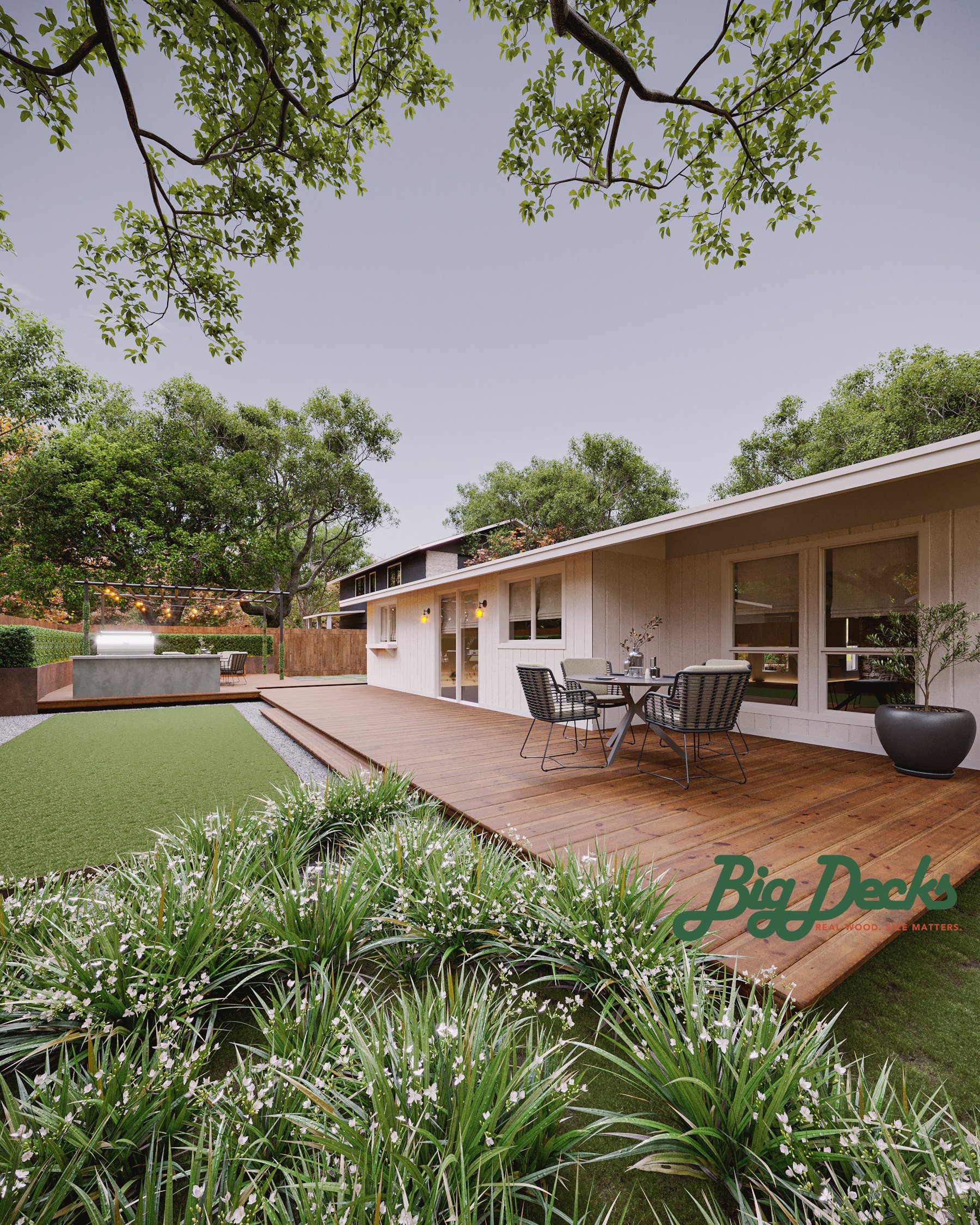
Most people call us and say something like, “We need a deck.”
What they usually mean is, “We need our whole outside life to work better, and a deck is the start.”
This first BigDecks blog is about that gap. The gap between “I guess we need some boards out there” and “This actually feels like a place we want to live on.”
One big move, not ten small ones
A lot of backyards get built in layers
A small deck here
A paver patch there
A couple of planters tossed in later
Nothing is really wrong with any one piece, but nothing is truly right either. It all feels a bit random.
At BigDecks, we try to do the opposite.
We look for one big simple move that makes the space work.
That might be a long, low deck that runs the width of the house.
It might be a raised platform that lines up with the interior floor and erases the threshold.
It might be a deck that steps down into crushed stone, with West Texas style plants and a plunge pool tucked into the corner.
The point is not “deck for the sake of deck.”
The point is: what is this space supposed to do for you?
Are you cooking and eating outside
Are kids running in and out all day
Do you want a quiet morning coffee spot
Are you trying to host ten people or two
Once we know that, the layout starts to draw itself.
Why we only work with real wood
We build real wood decks.
No fake boards. No plastic lumber.
Does that make our life harder sometimes
Yes
Is it worth it
Absolutely
Real wood does a few things that matter to us:
It looks better in real light, not just in a product photo
It feels better under bare feet
It ages in a way that can be maintained, not just tolerated
We work with:
Oversized Douglas Fir for our signature big board decks
Western Red Cedar for a warm, classic feel
Thermally modified boards from select suppliers here in the United States
Pressure treated framing and surfaces where it makes sense and keeps the budget sane
We are not married to the most expensive material every time.
Sometimes the smartest move is a cost efficient board with a clean layout and a good finish.
The non negotiable part is this
It has to be built right
We will not build something wrong on purpose just to save money
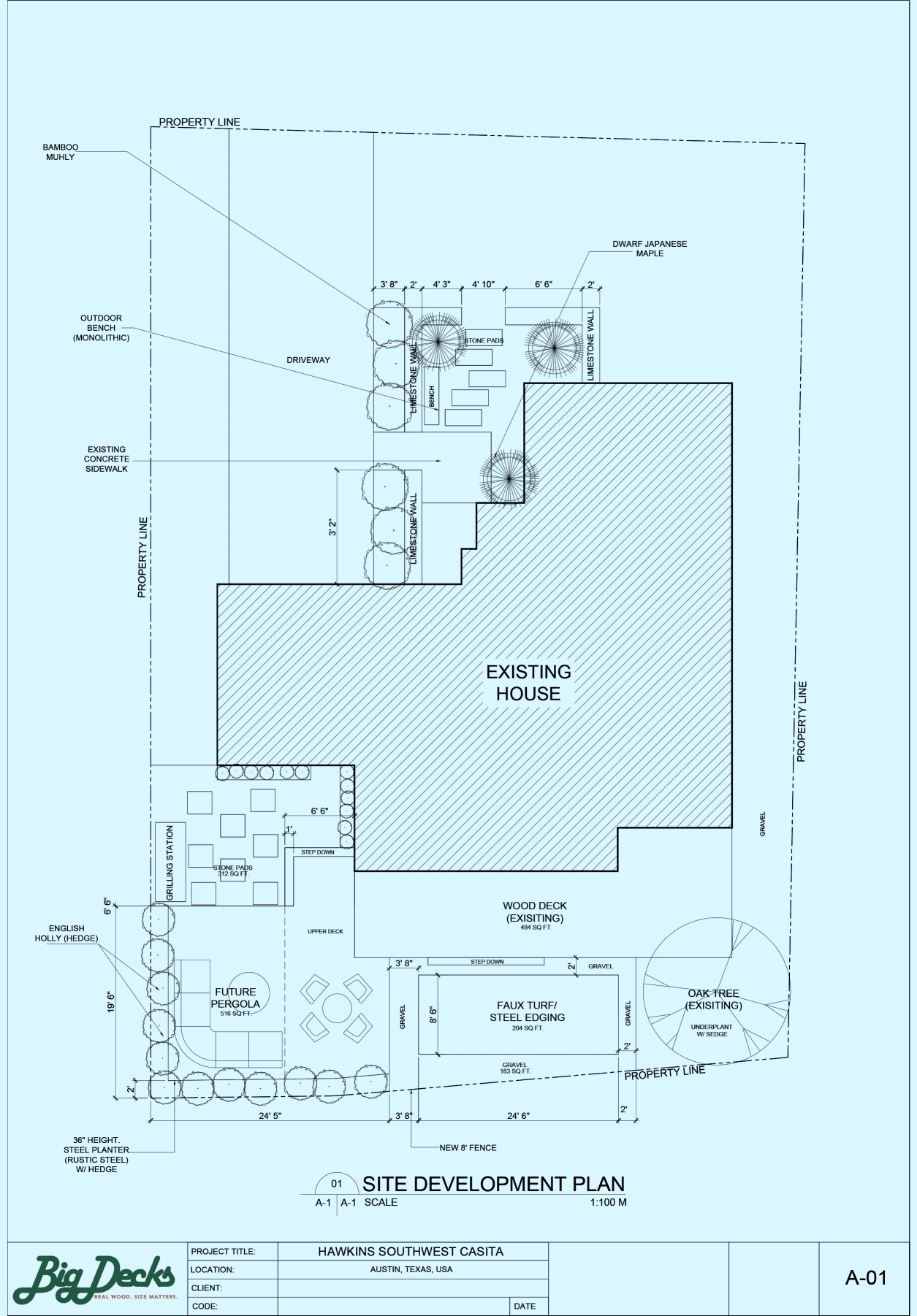
The design phase is not a luxury, it is the foundation
Before anyone swings a hammer, there is a design step.
Most projects go through a three dimensional design phase with our draftsman. That package is 650 and includes:
3D drawings of your deck and outdoor space
Photo real renderings
Drone footage of your actual yard worked into the visuals
You get to see how the deck sits with the house, the grade, the trees and the sun. We talk about how you move through it, where you sit, where the grill goes, where the plants go.
This does a few important things:
It makes sure your goals and our ideas match
It keeps surprises out of the build
It gives everyone something solid to point to when questions come up
Could we skip this and just “wing it” on site
Yes
Would that be cheaper on paper
Probably
Would you be happier with the result
No
The real cost question
Everyone asks, “What does a BigDeck cost”
Most projects start around ten thousand dollars and go up from there.
The price depends on:
Size and shape of the deck
Access to the site
Footings and structural needs
Railings, fencing and gates
Stone, concrete and planting
Extras like plunge pools, hot tubs or saunas
We are happy to use more cost efficient materials when that is the right call for the house and the budget. A pressure treated range with the right layout and a solid finish can still be beautiful and durable.
What we will not do is agree to build something flimsy, unsafe or wrong on purpose. If the only way a project works is by cutting out the structure, the finish and the details that keep it from failing, it is not a BigDecks project.
Permits, maintenance work and what actually needs approval
Austin can be confusing when it comes to permits.
Not every project needs one.
Some smaller decks under roughly 200 square feet, some remove and replace projects that stay within the same footprint, and landscaping work are often treated more like maintenance than new construction.
Some clients want permits to the letter. Some do not care.
Our job is to talk honestly about what is typical and what the city expects, not scare you or pretend nothing matters.
If a permit is required or you decide you want one, we can either:
Support you while you pull it yourself
Or take it on and include that work in our proposal
Same with HOAs. We can be in the background or more involved, depending on how much you want to handle.
Real wood needs care, and that is part of the deal
If you want a deck you never touch again, plastic might look tempting.
If you want a real wood deck, maintenance is part of the relationship.
Here is how we approach it:
We use Cutek Extreme as our standard finish on the premium range
We use Olympic products on our pressure treated range
For thermally modified wood, Western Red Cedar and Douglas Fir, we expect a recoat around six months, then roughly every twelve months after that
Cutek has cleaners that pair with their oils and we can tell you exactly what to buy and how to use it.
If you do not want to deal with that at all, we offer cleaning and refinishing as a service and can put you on a recurring calendar. The goal is simple
Keep the deck looking good and performing well so you actually enjoy being out there.
We stay outside, but we bring good friends
We focus on the exterior.
That means:
Decks, fencing, gates
Stone, crushed rock courts, concrete pads
West Texas style and native Texas plants
Cold plunges, hot tubs and saunas through a small group of manufacturers
Plunge pools through Plungey, where we are a distributor
We do not go inside.
We do not pull electrical or plumbing permits.
Instead, we work with preferred licensed partners who handle those trades. You get a cleaner division of responsibility and people doing the part they are actually good at.
So, where do you start
If you are thinking about a deck in Austin, the best first step is simple
Send a couple of photos of your yard
Tell us how you want to use the space
Tell us roughly where your budget wants to land
From there, we can tell you quickly whether this feels like a BigDecks project, what ballpark you are in, and whether it makes sense to move into design.
Our job is not just to put boards in your yard.
Our job is to give you an outside space that feels like it finally caught up with the life you are actually living.