

Planning and Executing Professional Deck Work in Austin: A 2026 Guide
Planning deck work in Austin? Our 2026 guide covers durable materials, structural needs, and maintenance to build a high-ROI deck that lasts in the Texas sun.
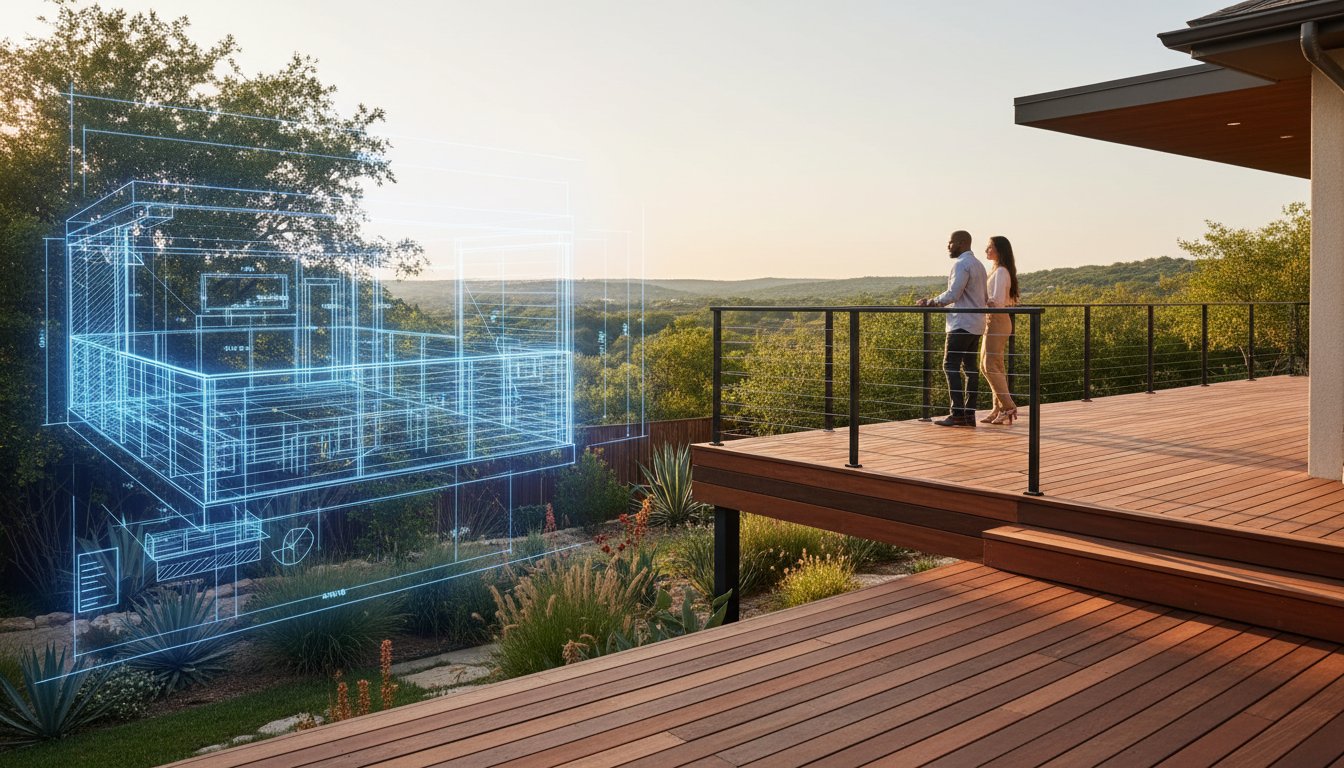
Your current backyard vision is likely a liability waiting to happen under the relentless Austin sun. Most homeowners invest heavily in outdoor spaces only to watch the Texas heat strip away the value within 36 months. Executing professional deck work requires more than just a hammer and a permit; it demands a strategic approach to material durability and structural integrity. You already know that an unreliable contractor or the wrong wood species will turn your investment into an expensive eyesore by next summer.
This guide promises to give you the exact blueprint for building a high-ROI outdoor space that survives the 2026 climate without constant upkeep. We'll break down the specific material trade-offs, structural engineering requirements, and maintenance schedules you need to ensure your project adds lasting value to your property. We are stripping away the fluff to provide a clear, results-oriented roadmap for your next build.
Key Takeaways
- Learn how high UV indices in Central Texas impact material selection and why premium species like Ipe and Cedar are essential for durability.
- Discover how 3D visualization prevents costly mid-project changes by allowing you to finalize architectural details before construction begins.
- Understand why professional deck work in Austin requires a focus on structural foundations and custom metalwork rather than just surface-level aesthetics.
- Identify the specific maintenance routines and penetrating oils, such as Cutek Extreme, required to protect your investment from the elements.
- Master the vetting process for hiring specialized contractors who prioritize engineering and long-term ROI over the risks of a low-bid quote.
Understanding Deck Work in the Austin Climate
Successful deck work in Central Texas is more than a weekend DIY project. It is a calculated integration of architectural design, structural engineering, and material science. In Austin, your outdoor space isn't just fighting gravity; it's fighting a climate that actively tries to dismantle wood structures. To build a deck that lasts, you have to understand the specific environmental stressors of the Hill Country and the Blackland Prairie.
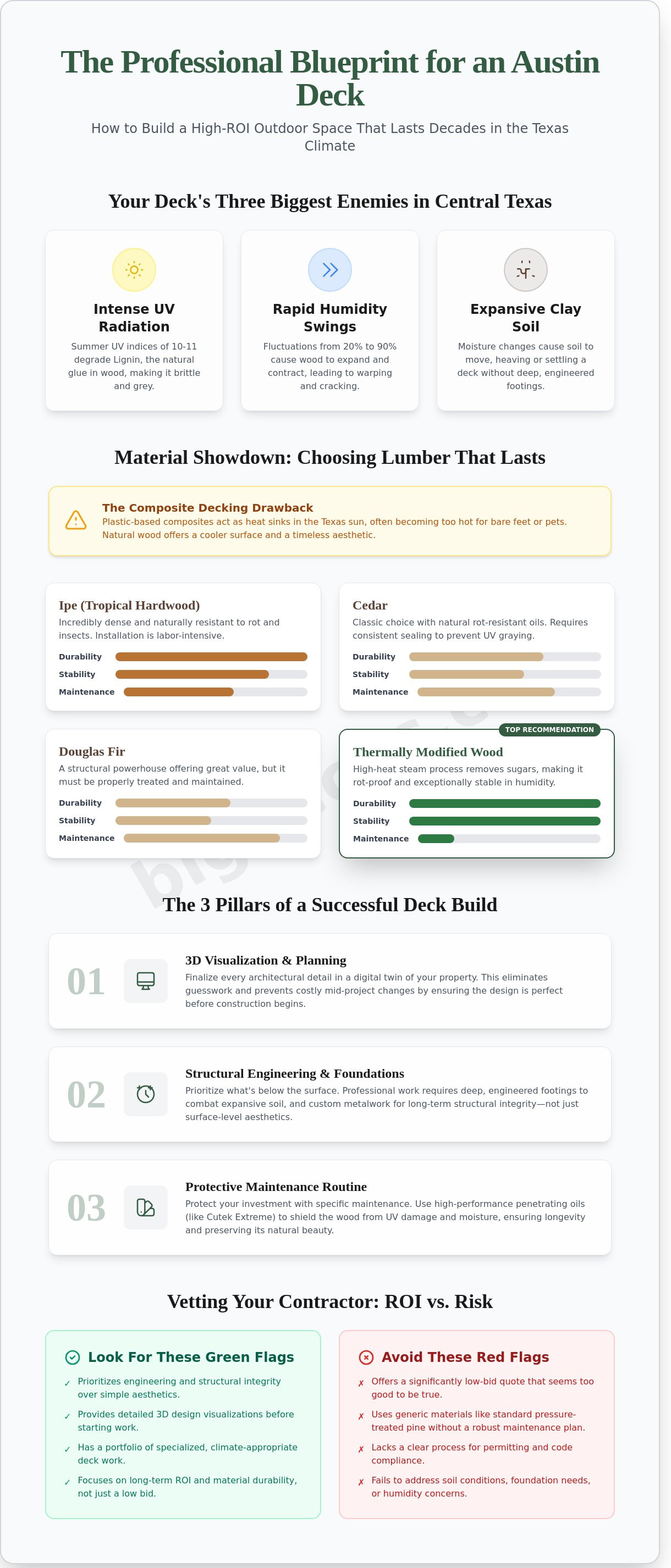
Central Texas frequently sees UV indices of 10 or 11 during the summer months. This intense radiation targets the structural integrity of your wood at a molecular level. While many homeowners view a deck as a simple platform, professional deck construction and materials must account for the relentless humidity cycles that define our region. Austin often swings from 20 percent to 90 percent humidity within a single week. These fluctuations cause wood to expand and contract rapidly, which leads to warping, checking, and fastener withdrawal if the engineering isn't precise.
Soil conditions also dictate the longevity of any local deck work. Much of Austin sits on expansive clay soil that moves significantly with moisture changes. Without deep, engineered footings, a deck can heave or settle, causing the entire frame to rack. We treat every project as a strategic build where the foundation is as critical as the finishing stain.
The Texas Sun vs. Standard Lumber
Lignin is the natural glue that holds wood fibers together. When temperatures hit 100 degrees for 40 consecutive days, UV rays penetrate the surface and degrade this lignin, leaving wood brittle and grey. Pressure-treated pine is often sold as a permanent fix, but it's actually a baseline material that requires aggressive maintenance. You'll recognize climate failure when you see "cupping" boards or deep cracks, known as checking, which allow water to rot the joists from the inside out.
Austin Permitting and Code Compliance
The City of Austin requires a residential permit for any deck that is more than 30 inches above grade or serves as part of an accessible exit. Navigating these rules involves more than just safety checks. You must account for impervious cover limits, which usually range from 20 to 45 percent of your lot size depending on your zoning. Professional deck work prioritizes these legal benchmarks because a non-compliant deck is a liability during a home sale. We focus on building to code the first time to ensure your investment is protected and your structure is safe for the long haul.
Planning Your Project: From 3D Design to Material Selection
Successful deck work starts before the first post hole is dug. Precision planning prevents expensive mid-project pivots that blow budgets and stall timelines. You need a strategy that accounts for the brutal Texas sun and your home's specific architectural flow.
Visualizing the Transformation
Static blueprints often fail to capture how shadows fall or how traffic flows during a backyard cookout. Utilizing 3d design renderings in Austin eliminates this guesswork by creating a digital twin of your property. You can test different lighting configurations and furniture layouts in a virtual environment, ensuring the final build matches your home’s existing aesthetic perfectly. This phase is about risk mitigation; it’s much cheaper to move a virtual staircase than a physical one.
The Case Against Composite Decking
Many homeowners lean toward composite materials to avoid maintenance, but Texas heat creates a significant drawback. Plastic-based boards act as heat sinks, often reaching temperatures that make them uncomfortable for bare feet or pets during July and August. Authentic wood grain offers a natural cooling effect and a timeless look that synthetic patterns can't replicate. Thermally modified wood provides a sustainable alternative, offering the durability of tropical hardwoods without the environmental baggage of plastic composites.
- Ipe: An incredibly dense tropical hardwood that resists rot and insects but requires significant labor for installation.
- Cedar: A classic choice known for its natural oils and pleasant scent, though it requires consistent sealing to prevent UV graying.
- Douglas Fir: A structural powerhouse that offers great value, provided it is treated and maintained correctly.
- Thermally Modified Wood: Our top recommendation for 30-year durability. This wood undergoes a high-heat steam process that removes organic sugars, making it essentially "rot-proof" and highly stable in fluctuating humidity.
Choosing "cheap" materials often results in a higher total cost of ownership. Low-grade pressure-treated lumber might save money upfront, but the warping and cracking caused by the Austin climate will lead to replacement in as little as 7 to 10 years. Proper deck finishing and preservation techniques are vital for any species you choose, ensuring the wood fibers remain resilient against intense UV radiation. If you're ready to see how these materials look on your property, you can explore our design options to find the right fit for your lifestyle.
Structural Foundations and Custom Metalwork
The Texas sun destroys more than just your deck boards. It cooks the frame underneath, causing wood joists to twist and pull away from their fasteners. If your foundation fails, the most expensive surface materials in the world won't save the project. Quality deck work starts with engineering that accounts for 100-degree days and the sudden flash floods that define the Hill Country climate.
Traditional wood frames are notoriously susceptible to dry rot and warping as moisture gets trapped in the tight gaps between the joists and the decking. Steel framing eliminates this risk entirely. It stays perfectly flat for decades, ensuring your investment doesn't sag, bounce, or squeak. In Central Texas, where humidity levels can swing 40% in a single day, metal provides a level of structural stability that pressure-treated lumber simply cannot match.
Managing drainage is equally critical when building on the Austin limestone shelf. Water must move away from the house and the deck's primary support points to prevent erosion or pooling. We design every substructure to handle high-volume runoff, ensuring that the ground beneath the structure stays stable. This focus on the "skeleton" of the project is what separates a five-year deck from a thirty-year outdoor living space. High-quality deck work requires looking past the surface to ensure the bones can handle the local environment.
Precision Metal Fabrication
Custom welding adds a modern, architectural edge to a project while serving a critical structural purpose. We utilize powder-coated steel and galvanized components to resist corrosion during the humid months. Combining industrial metal accents with traditional carpentry creates a high-contrast look that fits the modern Austin aesthetic. It's about building a structure that handles the weight of a full party without a whisper of movement or vibration.
Engineering for Shifting Texas Soil
Central Texas soil is notoriously unstable, often consisting of expansive clay that grows and shrinks with moisture levels. We evaluate each site to determine if helical piles or traditional concrete footings are the right choice for your specific coordinates. Helical piles act like giant screws, anchoring the deck deep into the stable strata to prevent the deck from heaving as the ground moves. This keeps your transitions to the house seamless and your sliding glass doors functioning perfectly.
If you plan to add a hot tub or a barrel sauna, the structural engineering must happen during the initial build phase. A standard residential deck supports approximately 40 to 50 pounds per square foot, but a filled six-person hot tub can require a capacity of 100 pounds per square foot or more. We reinforce these specific zones with dedicated steel beams and thickened footings. This foresight ensures your deck remains level and safe, providing the long-term utility you expect from a professional build.
The Essential Maintenance Routine for Austin Decks
Austin's climate is a relentless machine that grinds down organic materials. If you don't have a proactive plan for your deck work, the sun will turn your investment into gray tinder within 24 months. You need a schedule that treats maintenance like a strategic asset rather than a weekend chore.
Inspect your structure every six months, specifically in March and October. Check for hardware corrosion and loose boards near high-traffic zones. Don't forget your architectural fencing; vertical surfaces take less foot traffic but endure the same UV assault as the deck platform. Maintaining these vertical elements ensures the entire outdoor space ages at a uniform rate.
For homeowners who want to ensure every aspect of their property is looked after, JBM Custom Contracting offers professional property maintenance services that complement a high-end deck build by protecting the surrounding structures.
Your inspection should also include the surrounding canopy, as dead or damaged branches can pose a significant threat to your structure during a storm. If you notice a hazardous tree, contacting a specialist for emergency tree removal Austin TX is a critical step in preserving both your deck and your home’s safety.
Distinguishing between cleaning, sanding, and refinishing is vital for your long-term budget. Cleaning removes surface debris; sanding is a corrective measure for wood that has already suffered UV damage or heavy splintering. Refinishing is the complete process of returning the wood to a stable state before sealing it. Skipping the sanding phase on a weathered deck means you're just sealing in existing damage.
Cleaning and Surface Preparation
Cleaning is about chemical balance, not brute force. Use a specialized wood cleaner to lift Texas dust and organic growth without destroying the lignin that holds fibers together. Avoid high-pressure washing at all costs, especially on softwoods like Western Red Cedar. High PSI settings often exceed 3,000 pounds per square inch, which can shred wood cells and create a fuzzy texture that traps moisture. Perform a water bead test by splashing a few ounces of water on the boards. If the liquid soaks in within 30 seconds, the wood is thirsty and ready for oil.
Applying High-Performance Penetrating Oils
Traditional film-forming stains are a liability in Central Texas. These products sit on top of the wood and eventually crack when temperatures hit 105 degrees for ten consecutive days. We use Cutek Extreme because it's a synthetic penetrating oil that stays mobile inside the wood fibers. It displaces moisture from the inside out and won't peel or flake under intense heat. To maintain color, add a specific Colortone tint to your oil. This provides the UV protection needed to keep your deck looking like a high-end architectural feature. Deep penetration is the only way to ensure your deck work survives the next decade of Texas summers.
Ready to ensure your outdoor investment stands the test of time? Talk to an expert about your deck work.
Hiring a Decking Contractor: Professional Standards
Choosing a partner for your deck work requires more than a quick search and a few quotes. You're investing in a structural asset that must withstand 105-degree days and sudden Central Texas flash floods. A builder who primarily works with standard pressure-treated pine won't have the technical expertise needed for high-end wood and metal construction. These premium materials require precise engineering and specialized fasteners to manage the intense expansion and contraction cycles common in our climate. If the metal framing isn't properly isolated from certain wood tannins, you'll see corrosion and staining within the first 24 months.
Price often dictates quality in the Austin market. While a low bid looks attractive on paper, it usually leads to the highest long-term cost through premature repairs or total structural failure. Understanding how much it cost to build a deck in Austin helps you spot unrealistic estimates that compromise on safety or material grade. Design-build firms offer a streamlined path for complex backyard transformations. They handle the architectural planning and construction under one roof, reducing the risk of miscommunication between a designer and a separate crew. This integrated approach ensures the final build actually matches the initial vision without expensive change orders halfway through the project.
Questions to Ask Your Builder
Ask specifically about their experience with thermally modified wood. This material reacts differently to fasteners and moisture than standard lumber, requiring a builder who knows the specific pre-drilling and ventilation requirements. Verify their liability insurance and local Austin references to ensure they're established in the community. Review their past projects in person if possible. Look for tight miters, consistent board spacing, and how they integrate metal railings with wood framing for a seamless finish. Professional deck work is visible in these small, technical details that cheap crews tend to ignore.
The BigDecks Approach to Outdoor Living
We bridge the gap between traditional craftsmanship and modern 3D technology. Our team uses detailed renderings to ensure every structural element is optimized before the first board is cut, allowing you to see exactly how shadows and drainage will function. We select materials like Ipe or heat-treated ash specifically because they survive the local climate without warping or rotting. Investing in custom decks in Austin means building for longevity and architectural value. We don't just build platforms; we engineer outdoor environments that hold their value for decades. Our goal is to provide a finished product that looks as sharp in year ten as it did on day one.
Build for the Long Game in Austin
Austin's climate is a relentless adversary for outdoor structures. High-stakes deck work requires more than just a hammer and some boards; it demands a tactical approach to material selection and structural engineering. We use Thermory and Ipe because they're the only materials that consistently survive 100-degree Texas heat without compromising their integrity. Our process integrates in-house 3D design and custom metal fabrication to ensure your project is built on a foundation of precision rather than guesswork.
Success in high-end wood construction comes down to the details that most contractors ignore. You're investing in an asset that should enhance your property value and your lifestyle for decades. By focusing on professional standards and a rigorous maintenance routine, you protect that investment from the elements. Don't settle for a generic build when you can have a space engineered for performance and aesthetic dominance. It's about winning the room, even when that room is outdoors.
Ready to start your project? Get a professional design bid from BigDecks.
Your vision is the blueprint, and we have the expertise to execute it perfectly.
Frequently Asked Questions
Is it better to repair or replace my old wood deck in Austin?
Decide based on the 30 percent rule; if more than 30 percent of your deck boards show structural rot, replacement is the only move that protects your ROI. Surface-level graying or minor splinters are easy wins for a professional restoration. Austin's intense heat cycles fatigue wood quickly, so we inspect the joists first to ensure the foundation isn't a liability before suggesting a surface-level fix.
How long does professional deck work typically take to complete?
Most professional deck work for a standard 300 square foot project wraps up within 5 to 10 business days. This timeline includes everything from site prep to the final coat of UV protection. Larger, custom builds with integrated lighting or steel framing can extend the schedule to 3 weeks. We focus on maintaining momentum because a stalled job site is a drain on your time and your property's potential.
Does a new deck increase the resale value of an Austin home?
A professionally built wood deck delivers a 65 percent return on investment according to the 2023 Cost vs. Value Report. In the Austin market, outdoor living space is a high-stakes requirement for buyers looking for a complete lifestyle package. A killer deck effectively increases your usable square footage, making your property a dominant player when it’s time to hit the market and win the listing game.
What is the best wood for a deck in the Central Texas humidity?
Ipe and Cumaru are the undisputed champions for Central Texas because their extreme density resists the 90 percent humidity spikes we see every summer. These tropical hardwoods don't just look stunning; they refuse to rot or warp under pressure. If you prefer a classic look, Western Red Cedar is a reliable alternative due to its natural tannins, though it requires more frequent maintenance to stay in peak condition.
Do I need a permit for a deck if it is not attached to my house?
Austin building code requires a permit for any deck that exceeds 200 square feet or sits higher than 30 inches off the ground, regardless of attachment. You also have to navigate property line setbacks which typically require a 5 foot gap in most residential zones. Skipping the permit process is a rookie mistake that can stall a home sale or lead to expensive tear-outs during a city inspection.
How often should I oil my deck to prevent sun damage?
Apply a high-quality UV-rated oil every 12 to 18 months to neutralize the 2,800 hours of sunshine Austin receives annually. You'll know it's time for a refresh when water stops beading on the surface and begins soaking into the wood grain. Staying ahead of this cycle prevents the wood from checking and maintains the aggressive, high-end aesthetic your outdoor space deserves.