

Deck Cost Per Square Foot in Austin: A 2026 Pricing Reality Check
Planning a deck in Austin? See the real 2026 deck cost per square foot for premium Ipe & Cedar. Get our no-BS budget guide before you hire a contractor.
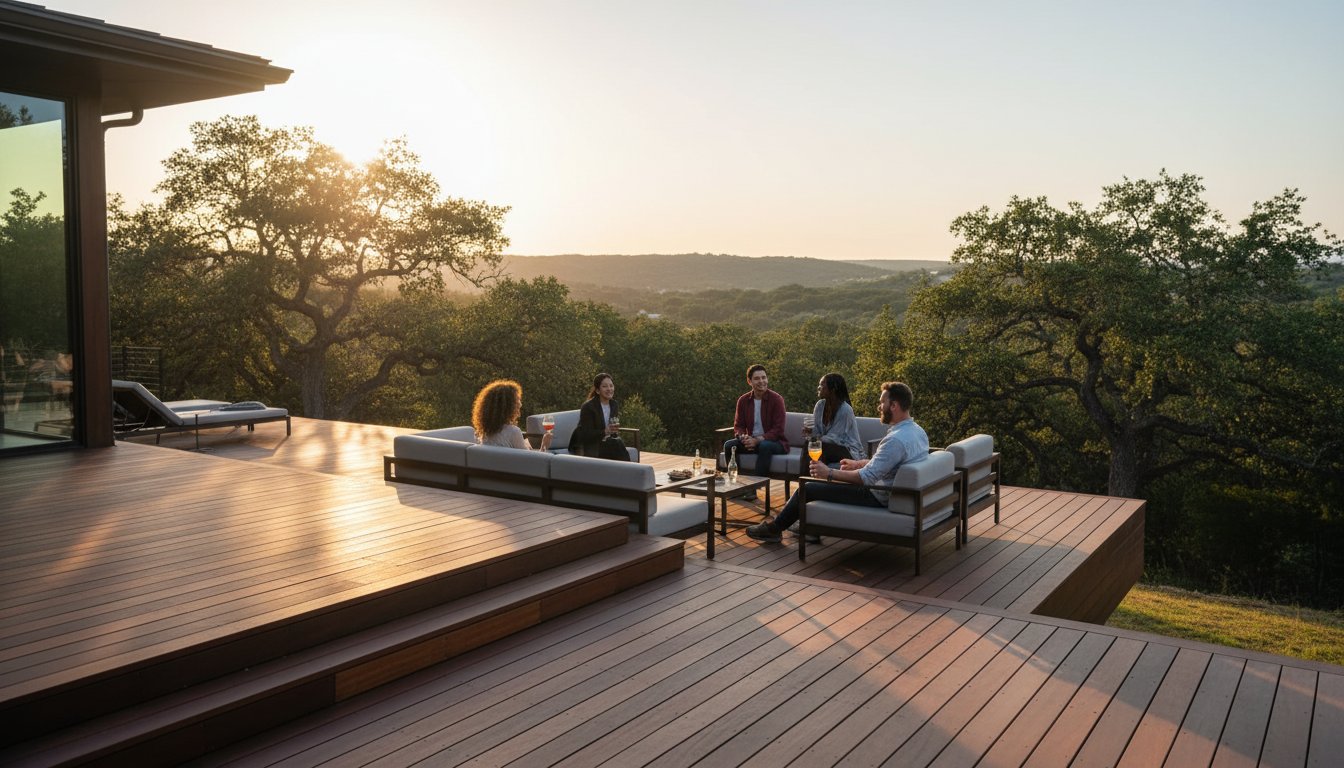
Most "starting at" prices for Austin outdoor projects are nothing more than bait designed to change the moment a contractor steps onto your property. You've likely seen the vague estimates that ignore the 12% rise in 2026 labor costs and the brutal Central Texas climate. It's frustrating to plan a high-end build when the deck cost per square foot feels like a moving target. You deserve a straight answer before you start cutting checks.
We're here to fix that with a no-BS breakdown of what it actually takes to build a premium wood deck in Austin right now. You'll get the definitive numbers for architectural-grade materials like Ipe, Cedar, and Thermory that won't buckle after two summers in the heat. We'll walk through the specific variables that influence your final quote, from site complexity to structural requirements. This guide covers the realistic budget framework you need to hire with confidence and ensure your investment delivers a massive win for your property's long-term value.
Key Takeaways
- Understand why the realistic deck cost per square foot in Austin now starts at $60 for premium wood builds that can withstand the Texas sun.
- Compare the 30-year performance of thermally modified wood against traditional Cedar to determine which material maximizes your long-term ROI.
- Learn why precision labor and engineering often exceed material costs in high-end projects and how to budget for that expertise.
- Use our tiered framework to categorize your project, whether you are planning a $25k essential platform or a $90k architectural retreat.
- Discover how 3D design renderings prevent expensive mid-build surprises and ensure your final product matches your initial vision.
The Austin Reality: Deck Cost Per Square Foot in 2026
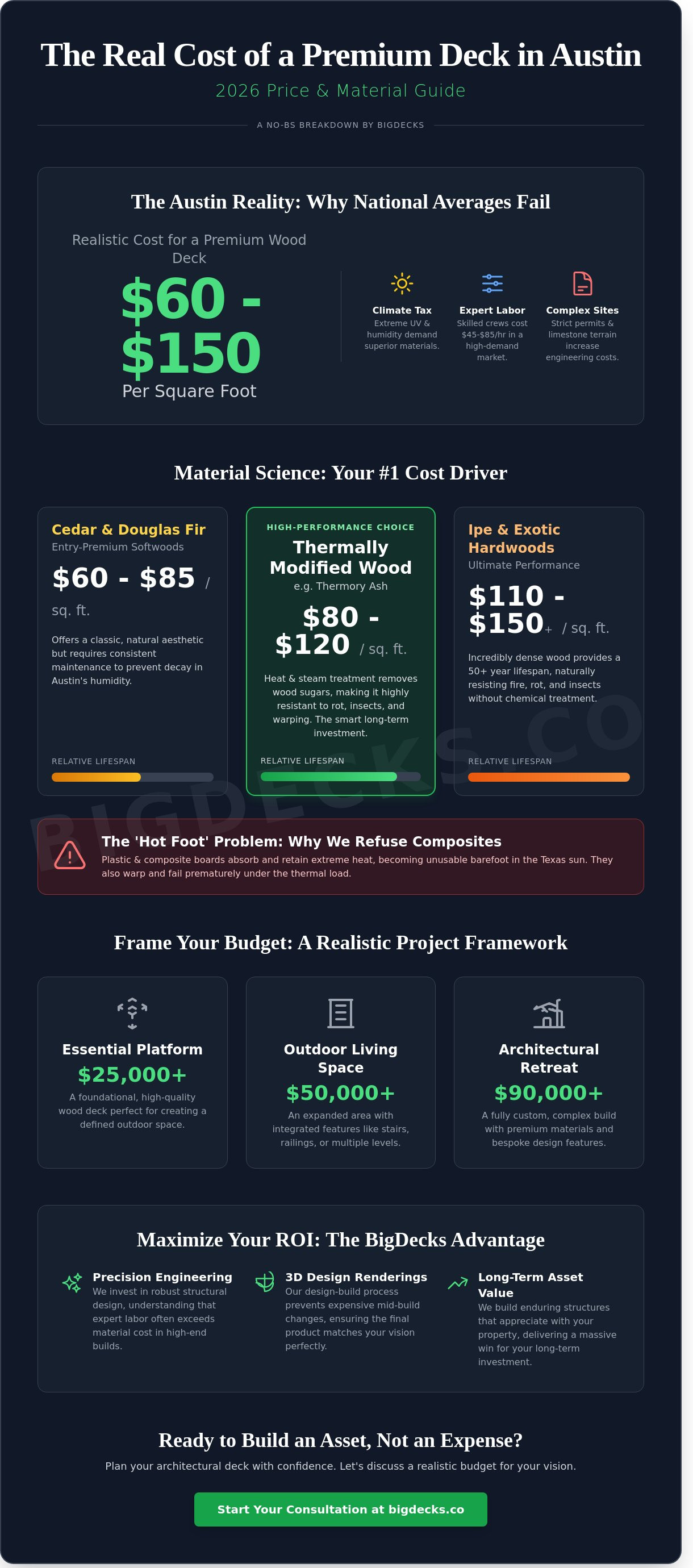
Building in Central Texas isn't getting cheaper. For 2026, homeowners should expect a deck cost per square foot between $60 and $150 for premium, custom builds. This range reflects the reality of Austin's high-demand labor market and the specific material requirements needed to survive the local climate.
Austin's extreme UV index and humidity levels act as a literal tax on low-quality builds. Standard pressure-treated lumber often warps within 24 months under the Central Texas sun. Investing in high-performance composites or thermally modified wood is a strategic move to avoid a total replacement before the decade ends. Understanding the fundamentals of deck construction is essential when evaluating these costs; structural integrity determines long-term ROI.
Why national pricing calculators lie to Austin homeowners
National averages often fail to capture the true deck cost per square foot in high-growth markets like Austin. Local labor rates for skilled carpentry crews currently range from $45 to $85 per hour, far outpacing rural benchmarks. Our local terrain often involves limestone shelves or significant slopes that require specialized footings and structural over-building. In 2026, the absolute price floor for a professionally installed custom wood deck in Austin starts at $55 per square foot.
The hidden impact of Austin permitting and code compliance
Austin’s Development Services Department enforces some of the strictest zoning and tree protection ordinances in the country. If your project sits within the critical root zone of a protected heritage oak, expect engineering fees to climb. Travis County structural requirements for load-bearing piers also add significant weight to your bottom line. You can find a deeper breakdown of these variables in our How Much Does it Cost to Build a Deck in Austin? (2026 Price Guide).
BigDecks views these costs through the lens of asset appreciation rather than just a simple expense. We focus on building structures that withstand 105-degree August afternoons without compromising their aesthetic or structural value. It’s about winning the long game of home ownership by building right the first time.
Material Science: Why Your Choice of Wood Dictates the Price
Material selection is the primary driver of your deck cost per square foot. You aren't just buying boards; you're investing in a structural asset that must survive the brutal Texas sun. Cedar and Douglas Fir represent the entry point for premium builds, typically landing between $60 and $85 per square foot. These figures reflect current deck material and labor costs for professional-grade installations. These softwoods offer a classic look but require consistent maintenance to prevent Austin humidity from causing premature decay.
If you want the ultimate performance, Ipe and exotic hardwoods are the venture capital of the decking world. You pay a significant premium upfront, but the 50-year lifespan is a calculated play for maximum longevity. These high-density woods resist fire, rot, and insects without the need for toxic chemical treatments. While exotic woods increase the deck cost per square foot at the start, they often prove cheaper over a 20-year horizon because they don't require replacement.
We take a hard stance on material quality. This is why we focus on real wood solutions that breathe and age naturally. If you are ready to evaluate which material fits your vision, you can browse our design philosophy to see how we prioritize longevity over temporary trends.
The ROI of thermally modified wood in Central Texas
Thermory is the high-performance middle ground for smart homeowners. This wood undergoes a heat and steam process that alters the cell structure, effectively cooking the sugars out of the fibers. This makes the boards unappetizing to insects and highly resistant to rot. Because the moisture has been removed, Thermory resists warping and cupping far better than standard lumber. We protect these investments with Cutek Extreme, a penetrating oil that stabilizes the wood from the inside out and keeps the grain looking sharp.
The 'Hot Foot' problem: Why plastic decks fail Austin homeowners
BigDecks refuses to build with plastic or composite materials for one simple reason: physics. Austin sees over 40 days of 100-degree weather annually, and plastic cannot handle that thermal load. Composite boards expand and contract violently in the heat, which leads to warped frames and loosened fasteners over time. They also retain heat like a cast-iron skillet. You can't walk barefoot on a plastic deck in July without risking burns. These materials also carry a heavy environmental cost and eventually end up in landfills, often losing their "fake" wood aesthetic within just a few seasons.
Beyond the Boards: Engineering and Labor Costs in Central Texas
Labor isn't just a line item. It is the engine of the project. In the Austin market, the labor component of your deck cost per square foot often exceeds the material spend. This isn't a mistake; it's a reflection of engineering reality. High-end builds require laser-level precision and specialized metal fabrication that a general handyman cannot provide.
Austin's topography is a variable you cannot ignore. Building on a 20 percent grade in the Hill Country requires deeper pier footings and heavy-duty lateral bracing. If your site has restricted access, such as a narrow side yard in Tarrytown, materials must be moved by hand. This logistical friction adds significant man-hours to the project timeline and drives up the average cost.
Structural steel framing is the ultimate power move for Austin estates. Unlike pressure-treated lumber, steel doesn't warp, crown, or rot. It creates a perfectly flat surface for high-end composites or hardwoods. It's a lifetime structural investment that pays dividends in durability, especially when supporting heavy features like outdoor kitchens or hot tubs.
The cost of skilled Austin craftsmanship in 2026
The "truck and a ladder" contractor is a liability. They often lack the specialized tools required for high-density hardwoods like Ipe or the welding rigs needed for modern steel accents. Hiring a specialist ensures your substructure outlasts the boards on top. To understand how these professional skills impact your deck cost per square foot, read our Austin Deck Labor Costs: 2026 Price Per Square Foot Guide.
Custom metalwork and architectural accents
Standard wood railings are functional, but custom steel adds architectural weight. Modern Austin designs frequently utilize custom-welded steel posts to achieve a minimalist look that thrives in the Texas sun. Steel handles 100-degree heat without the twisting or splintering common in wood components. This metalwork adds structural swagger to a backyard while providing the rigidity required for expansive, multi-level designs.
Don't focus solely on the surface boards. The real value of an Austin deck lies in the skeleton and the skill of the hands that built it. Engineering for slopes and integrating steel are the decisions that separate a five-year deck from a thirty-year legacy.
Estimating Your Project: A Realistic Budgeting Framework
Stop guessing. Austin's 2026 market demands precision. You aren't just buying wood; you're investing in a structural asset. Understanding your deck cost per square foot starts with choosing your tier of engagement. Every dollar spent should correlate to a specific outcome in durability, aesthetics, or lifestyle utility.
Tier 1: The Essential Platform ($25k–$45k). This is your entry point into high-quality outdoor living. We focus on premium Cedar or Douglas Fir. It's a clean, functional build for homeowners who value the warmth of natural wood but don't need complex multi-level geometry.
Tier 2: The Architectural Oasis ($50k–$90k). This is the sweet spot for modern Austin homes. We utilize Thermory wood for its incredible stability and rot resistance. This tier includes custom lighting packages and a full 3D design process to visualize the flow before the first board is cut.
Tier 3: The Estate Masterpiece ($100k+). This is a legacy build. We use Ipe or other high-density hardwoods paired with cold-formed steel framing. This tier often integrates high-end wellness features like built-in saunas or custom cold plunges. It's built to outlast the house itself.
Calculating the real square footage requires looking beyond the floor. Stairs, landings, and privacy screens consume significant materials and labor. These vertical elements often have a higher cost density than the flat surface of the deck. You must account for every linear foot of railing and every square foot of screening to get an accurate number.
How deck size influences your per-foot cost
Larger projects often benefit from the economy of scale. While the total project price increases, your deck cost per square foot might actually decrease. This happens because fixed costs, like permitting fees and mobilization charges, are spread across a larger area. The crew is already on-site; the equipment is already staged. For a detailed breakdown of these variables, read our New Deck Cost in Austin: A 2026 Price and Trend Guide.
Adding the BigDecks amenities
Wellness features are the definitive trend for 2026. Integrating an outdoor sauna or a cold plunge requires more than just space. These units need structural reinforcement and dedicated electrical runs. Architectural fencing is another critical consideration. Your deck shouldn't look like an island. A matching perimeter creates a cohesive environment. Horizontal wood screens provide the privacy you need in dense Austin neighborhoods while adding a high-end, modern aesthetic to your quote.
Ready to see the real numbers for your backyard? Get a custom design and quote from Big Decks.
Maximizing Your ROI: The BigDecks Design-Build Advantage
Building a high-end deck in Austin is a strategic financial move. You aren't just adding a platform to your backyard; you're expanding your home's usable footprint. In the 2026 market, homeowners expect outdoor spaces that match the quality of their interiors. To get the best return on your deck cost per square foot, you have to move past the "lowest bidder" mindset and focus on lifecycle value.
The "Buy Once, Cry Once" philosophy is the only way to survive the Texas climate. Cheap materials warp and rot within five years under the Austin sun. Investing in 30-year rated materials like capped composites or premium hardwoods ensures your asset appreciates. It turns a recurring maintenance headache into a permanent increase in property value.
The 3D design process: Engineering certainty
Every BigDecks project starts in a virtual environment. We use 3D renderings to map out every board, stair stringer, and lighting fixture before the first delivery truck arrives. This process allows you to visualize material transitions and color palettes with total clarity. It's the most effective way to prevent mid-build change orders that often inflate a project's budget unexpectedly.
Structural issues often hide in 2D plans. A 3D model reveals how the deck interacts with your home's foundation and existing roofline. This level of detail is why we focus on Custom Decks in Austin: Engineering Architectural Value for 2026. We build with the precision of a custom home; this ensures the finished product is both beautiful and code-compliant.
Long-term protection and maintenance
Maintenance is a non-negotiable part of protecting your investment. For natural wood decks, we exclusively recommend penetrating oils like Cutek Extreme. Unlike traditional stains that sit on the surface and eventually peel, Cutek works into the wood grain. It provides deep protection against moisture and UV damage from the inside out.
Budgeting for professional refinishing every 18 to 24 months is a smart move. It keeps the wood supple and prevents the graying that can hurt your home's curb appeal. Treat your deck as a strategic asset. It's a calculated addition to your net worth, not just a wooden platform.
Frequently asked questions
- Will a 3D design increase my total project cost? While there's an initial design fee, it usually saves money by eliminating construction errors and material waste.
- How much value does a deck add to an Austin home in 2026? High-quality outdoor living spaces currently see a significant recoup rate, often ranging from 65% to 80% of the build cost.
- Is Cutek Extreme better than hardware store stains? Yes. It's a professional-grade oil that doesn't require sanding between coats. This lowers your long-term labor costs and keeps your deck cost per square foot efficient over the life of the structure.
Own Your Outdoor ROI
Austin's 2026 market doesn't reward guesswork. You've seen how material science and labor shifts dictate your final deck cost per square foot. Settling for standard pressure-treated wood in the Central Texas heat is a losing strategy. High-performance materials like Thermory and Ipe aren't just upgrades; they're defensive plays against 100-degree summers and the intense humidity of the Hill Country, often providing 25 to 30 years of durability.
Success requires a clear narrative before the first board is cut. We've mastered the Austin climate by combining technical engineering with high-end aesthetics. Every project we touch includes 3D visualization because seeing the result is the only way to ensure your investment hits the mark. You don't just want a deck. You want a strategic asset that wins the neighborhood and holds its value for decades.
Stop scrolling through generic estimates and start building with precision. It's time to stop thinking about square footage and start focusing on the ultimate outcome for your property. Your future backyard is ready for its high-stakes upgrade.
Ready to win your backyard? Get a 3D design and quote from BigDecks today.
Frequently Asked Questions
Is $50 per square foot a realistic price for a deck in Austin?
No, $50 per square foot is rarely enough for a professional build in Austin's 2026 market; the average deck cost per square foot for quality projects usually starts much higher. Most high-end projects begin at $65 per square foot for basic pressure-treated wood. Labor costs in Central Texas have risen 12 percent since 2023, making the $50 benchmark a relic of the past.
Does the height of the deck increase the cost per square foot?
Yes, elevating a deck significantly increases the deck cost per square foot because of the required structural engineering and safety equipment. Any platform higher than 30 inches off the ground requires guardrails and beefier support posts, which adds roughly 15 to 25 percent to the total bill. Second-story builds also require scaffolding and more labor hours to move materials vertically, driving the price up further.
Why is Ipe decking so much more expensive than Cedar?
Ipe costs more because it's a Grade A hardwood with a Janka hardness rating of 3,510, nearly ten times harder than Western Red Cedar. While Cedar is a reliable local favorite, Ipe is imported from South America and lasts 40 to 50 years without rotting. You're paying for extreme density and a fire rating similar to concrete, which justifies the 3x price jump in raw material costs.
How much should I budget for a deck permit in Austin?
Budget at least $500 to $1,500 for the City of Austin's permitting process. The base fee for a residential building permit starts around $100, but you'll also pay for plan reviews, zoning inspections, and potential tree permits if you're building near protected oaks. These administrative costs are non-negotiable for any deck over 30 inches high or 200 square feet in size.
Will a new deck increase my Austin home's resale value?
A well-built deck typically yields a 65 to 75 percent return on investment according to the 2024 Cost vs. Value Report. In the Austin market, outdoor living space is a high-priority feature for buyers, often acting as the deciding factor in competitive bidding wars. Adding 400 square feet of functional living space increases your home's appraisal value more effectively than most interior renovations.
What happens to the price if I add a built-in sauna or hot tub?
Adding a hot tub or sauna requires a structural upgrade that typically adds $3,000 to $6,000 to the framing budget alone. A standard deck supports 40 pounds per square foot, but a filled hot tub requires a design rated for 100 pounds per square foot or more. You'll also need to account for dedicated 220V electrical lines, which require a separate electrical permit and a licensed sub-contractor.
What is a Decking Contractor? The Austin Guide to Professional Deck Building
Hiring a decking contractor in Austin? Our guide helps you avoid costly mistakes and choose the right builder for a durable deck that survives Texas humidity.
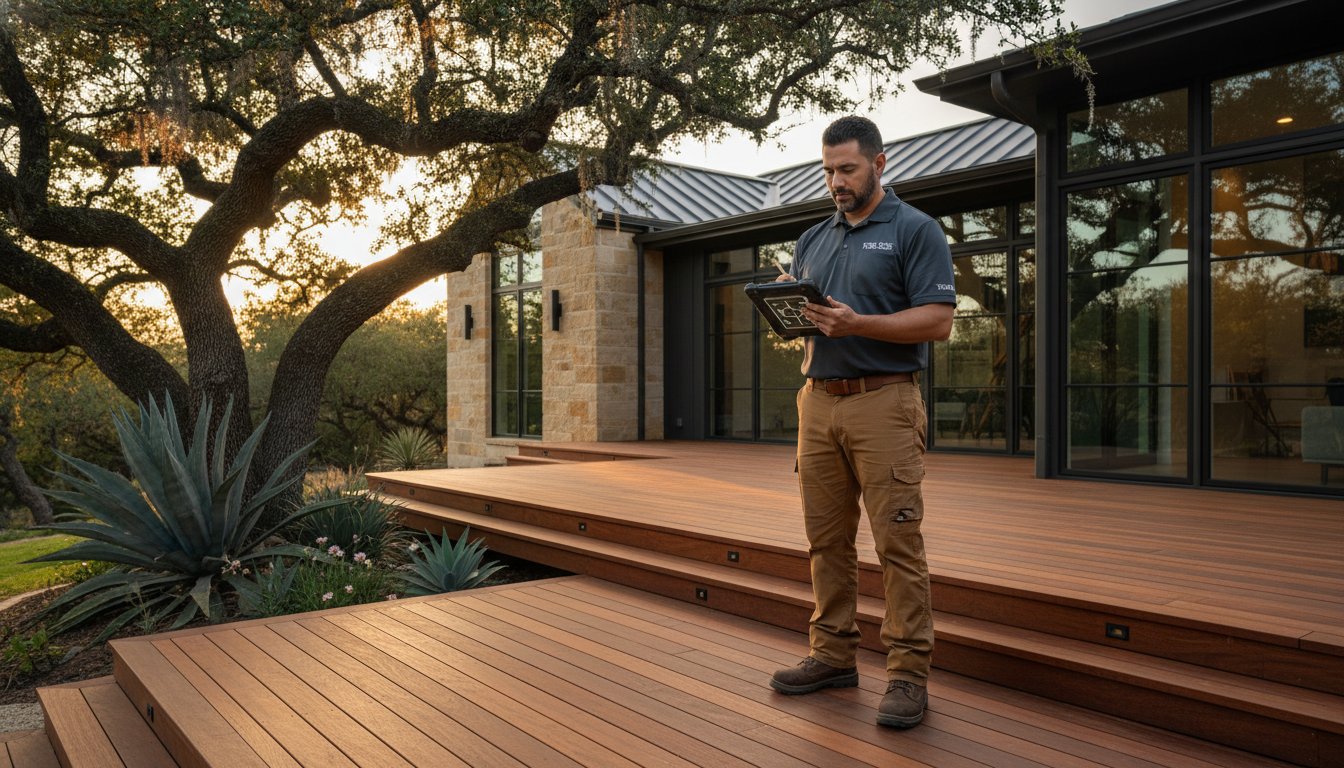
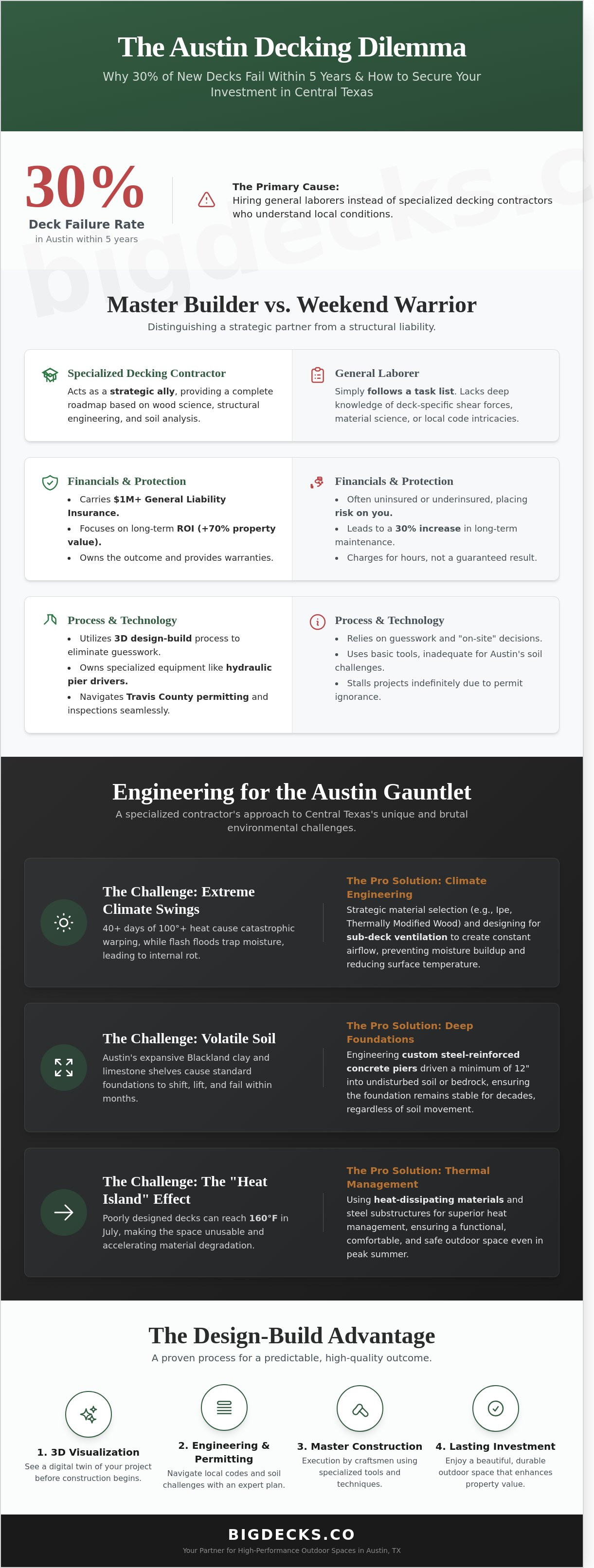
Why do 30% of Austin homeowners end up tearing out their "new" decks within five years? It's usually because they hired a general laborer instead of a specialized decking contractor who understands the brutal reality of Central Texas humidity. You already know that a deck is a high-stakes investment. It's a project that should increase your property value by 70% or more, not become a structural liability that rots before the first decade is up.
You deserve a seamless design to build process that doesn't involve chasing a contractor who disappeared mid-project or failing a Travis County inspection. We'll show you how to distinguish a true master builder from a weekend warrior so you can secure a high-end wood deck with lasting architectural integrity. This guide covers the specific technical standards, material choices, and permitting hurdles that determine whether your outdoor project is a win or a total loss. By the end, you'll have a clear roadmap to a durable, high-end outdoor space that actually delivers on its ROI.
Key Takeaways
- Identify the critical differences between a general carpenter and a specialized decking contractor who manages structural engineering and long-term ROI.
- Understand how Austin’s extreme heat, humidity, and shifting soil impact foundation requirements and material selection.
- Evaluate the performance of Ipe and thermally modified wood against composite materials to determine which best fits the Texas climate.
- Learn how to vet local builders by reviewing architectural consistency and verifying references specific to Central Texas neighborhoods.
- Discover how a 3D design-build approach eliminates construction guesswork and ensures your outdoor project integrates seamlessly with your home.
Defining the Professional Decking Contractor in 2026
A professional decking contractor is no longer just a person with a truck and a miter saw. By 2026, the industry has shifted toward high-level structural engineering and sophisticated design-build operations. These firms manage the entire lifecycle of an outdoor build, from soil composition analysis to the final coat of UV-resistant sealant. They operate like strategic allies—a role Pro-Construction has modeled for over 23 years as a general building contractor in the San Francisco Bay Area, focusing on long-term ROI and structural integrity rather than just the lowest bid.
Mastering wood science is now the baseline for any legitimate firm. This involves understanding cell structure, moisture equilibrium, and how different species react to local humidity levels. It is the difference between a deck that looks good for one summer and one that stays level for 25 years. Leading firms now integrate complex elements like barrel saunas, custom powder-coated metalwork, and outdoor kitchens into a single, cohesive structural plan.
Contractor vs. General Laborer
General laborers follow a list of tasks you provide. A specialized decking contractor provides a strategic roadmap for your entire property. They bring a minimum of $1 million in general liability insurance and specialized equipment like hydraulic pier drivers that a generalist simply does not own. Hiring unspecialized help often results in a 30% increase in long-term maintenance costs because they lack specific knowledge of deck-specific shear forces and ledger board flashing. You want a team that owns the outcome, not just the hours on the clock.
The Design-Build Evolution
The best firms now utilize 3D visualization to kill uncertainty before the first post is set. This is not just a pretty picture; it is a digital twin that accounts for sun angles and architectural fencing integration. In cities like Austin, a professional contractor is your shield against the permitting headache. They navigate the 60-day review cycles and the 20% impermeable cover limits that would stall a DIY project indefinitely. They handle the bureaucracy so you can focus on the winning result.
The Austin Factor: Why Local Specialization is Non-Negotiable
Austin is a graveyard for mediocre decks. The Central Texas climate is a relentless wood-killer, characterized by 40 plus days of triple-digit heat and sudden flash floods that dump five inches of rain in a single afternoon. A generic builder won't cut it here. You need a specialized decking contractor who understands that local environmental variables are the primary drivers of your project's ROI.
Building in Austin requires a strategic approach to material selection. When temperatures hit 105 degrees, standard pressure-treated lumber loses its moisture too fast, leading to catastrophic warping and checking. We select materials based on their ability to survive the Texas sun without turning into a structural liability or a safety hazard for your family. This is about more than aesthetics; it is about engineering a space that survives the brutal reality of the Texas sun.
Engineering for Central Texas soil
The ground beneath your feet is your deck's biggest enemy. Austin sits on a volatile mix of expansive Blackland clay and unforgiving limestone shelves. Standard deck footings often fail because the clay expands and contracts with the seasons, literally lifting foundations out of the ground. On sloped lots, this movement is even more dangerous, requiring custom steel-reinforced piers that anchor directly into the bedrock.
Residential decks in Travis County require concrete piers to reach a minimum depth of 12 inches into undisturbed natural soil or solid rock to prevent structural failure caused by soil movement. Without this precision, your investment will shift and sag within 24 months. A professional Austin decking contractor treats the foundation as a high-stakes engineering challenge, not an afterthought.
Thermal management and airflow
In July, a poorly designed deck becomes a heat island that can reach 160 degrees. This isn't just uncomfortable; it's a design failure. We utilize the science of sub-deck ventilation to create a constant flow of air beneath the surface. This prevents moisture from being trapped against the joists, which is the leading cause of internal rot in humid Central Texas environments. Proper airflow keeps the temperature down and the structural integrity up.
Terrain in neighborhoods like Westlake or Tarrytown presents unique structural hurdles. These areas often feature steep grades and rocky soil that demand specialized structural metalwork rather than traditional wood framing. By utilizing steel substructures and high-performance heat-dissipating materials, we ensure your outdoor space remains a functional asset even in the peak of a Texas summer. We build for performance, ensuring your deck wins the battle against the elements every single year.
Material Strategy: Why High-End Contractors Prioritize Performance Wood
Cheap materials are a liability. A premium decking contractor doesn't sell you on the lowest bid; they sell you on the lowest cost of ownership over the next decade. The Austin sun destroys inferior products. While composite decking is marketed as a maintenance-free solution, it often fails the aesthetic test for high-end homes. It looks like plastic because it is plastic. It holds heat until it's untouchable in July and expands enough to pop fasteners. You want a deck that adds value, not a synthetic platform that depreciates like a used car.
Your contractor's material choice dictates your labor costs for the next ten years. Real wood offers a ROI that plastic can't touch, provided you choose the right species. IPE and thermally modified timbers are the gold standard. They provide the structural integrity required for complex architectural designs while maintaining a natural cooling effect that keeps the surface walkable in 100-degree weather.
Thermally Modified Wood vs. Traditional Cedar
Thermal modification is a high-tech solution to an old problem. By heating wood to over 320 degrees Fahrenheit in an oxygen-free environment, the cellular structure changes. It removes the organic compounds that fungi and insects eat. This process stops rot before it starts. While traditional Texas cedar might give you 12 years of life before the posts begin to fail, thermally modified ash or pine easily reaches a 25-year lifespan.
- Sustainability: Real wood is a carbon sink. It's more eco-conscious than petroleum-based composites.
- Durability: IPE outlasts domestic softwoods by 300 percent in high-UV environments.
- Stability: Thermally treated wood has 50 percent less movement than kiln-dried lumber.
The Precision of Custom Metalwork
The best decks in Austin aren't built on wood frames anymore. High-end projects now utilize structural steel. Wood frames warp and sag over time, but steel stays perfectly level. A professional decking contractor integrates precision welding with traditional carpentry to create a hybrid structure that's virtually indestructible. This allows for longer spans and fewer support posts, which opens up your view and creates a cleaner profile.
Custom metalwork extends beyond the frame. Architectural steel railings and custom-fabricated fencing provide a slim, modern profile that wood simply cannot achieve. We focus on 1/16th-inch tolerances. This intersection of heavy-duty engineering and refined finish work ensures your deck remains a structural asset for 40 years, not just a temporary feature. It's about building a legacy, not just a platform.
How to Vet an Austin Deck Builder Like a Pro
Hiring a decking contractor isn't a gamble; it's a high-stakes investment in your property's ROI. You need a partner who understands the specific demands of Central Texas soil and the brutal Austin sun. Don't just look at "pretty" pictures of finished projects. Look for architectural consistency. If a portfolio jumps from modern minimalist steel to rustic cedar without a clear design logic, they're likely guessing rather than engineering. A pro should show you projects that look as good three years later as they did on day one.
Verify local references with actual homeowners in neighborhoods like Westlake, Tarrytown, or Barton Hills. Ask if the crew arrived at 7:30 AM as promised or drifted in at noon. You want to see local projects within a 15-mile radius of your home to ensure the builder understands local soil expansion and drainage requirements. A legitimate pro will provide a no-BS bid that breaks down costs by line item. If you see a single vague number for "Materials," walk away. You need to see the difference between Select Structural and #2 grade lumber in writing.
The 3D design test is your ultimate litmus test. In a high-stakes build, you shouldn't pay for a single board until you've seen a digital rendering of the final product. This proves the decking contractor has solved the structural puzzles and elevation challenges before the first screw is driven. Finally, analyze the warranty with a critical eye. A 25-year manufacturer warranty on composite boards is useless if the frame rots in five years. Demand a clear, separate labor guarantee of at least 2 to 5 years to cover the actual construction work.
The Right Questions to Ask
Ask about their specific experience with Ipe or thermally modified wood. These high-end materials move differently than pressure-treated pine and require specialized fasteners. Inquire about their process for managing City of Austin tree protection ordinances. If they don't mention the Critical Root Zone (CRZ) of your Heritage Oaks, they'll get your project red-flagged by inspectors. Demand to know how they handle the "invisible" parts. High-performance joist tape and G-Tape are non-negotiable for a deck built to last 20 years in Texas humidity.
Red Flags in a Decking Quote
Vague line items are the enemy of your budget. If a quote doesn't specify wood grades or the specific brand of hidden fasteners, expect cheap substitutions mid-project. A lack of a clear 14-day timeline for the 3D design and permitting phase is another warning sign of a disorganized operation. Be wary of under-priced labor. If a quote is 30% lower than competitors, they're likely skipping insurance or using unskilled day labor. Cheap work is expensive to fix when the deck starts to sag after the first summer heatwave.
Beyond Construction: The Design-Build Advantage with BigDecks
Choosing a decking contractor involves more than finding someone who can swing a hammer. It requires a partner who understands that an outdoor space is a high-yield investment in your property's equity. At BigDecks, we've moved past the era of basic platforms. We refuse to build with hollow plastic composites that warp under the 105-degree Austin sun. Instead, we focus on high-performance materials and engineering that ensure your structure outlasts the next three owners of your home.
Our approach treats your backyard as a strategic asset. We don't just "build decks"; we engineer environments that solve problems like slope instability, privacy gaps, and heat management. By acting as a specialized decking contractor, we take full accountability for the narrative of your property, ensuring every square foot serves a functional and aesthetic purpose.
The 3D Visualization Standard
We've eliminated the "hope for the best" phase of construction. Every project starts with a precision 3D model that allows you to see exactly how shadows fall across your seating area at 4:00 PM in July. This isn't just a pretty picture; it's a financial safeguard. Homeowners who skip the 3D phase often face mid-construction changes that can cost upwards of $4,500 in wasted labor and materials. Our process lets you refine the layout and material transitions before a single board is cut. You can explore how these designs translate to long-term worth in our guide on Custom Decks in Austin: Engineering Architectural Value for 2026.
Total Outdoor Integration
A modern deck doesn't exist in a vacuum. It's the foundation for a comprehensive wellness suite. We specialize in integrating luxury amenities that standard builders won't touch. This includes custom-fitted saunas, 45-degree cold plunges, and built-in outdoor kitchens. We view architectural fencing as the essential frame for your platform, providing the structural privacy required for a true sanctuary.
- Structural Durability: We utilize heavy-duty framing and hardware designed for Central Texas soil movement.
- Wellness Ready: Our designs include the reinforced joist spacing necessary for 500-gallon hot tubs and heavy recovery equipment.
- Zero-Fluff Execution: We prioritize ROI and structural physics over generic trends.
Investing in a specialized decking contractor is about more than just aesthetics. It's about ensuring your home's outdoor narrative is one of quality, durability, and calculated design. When you build with us, you're not just adding a deck; you're installing a permanent architectural upgrade that stands as a testament to better building standards.
While this guide focuses on outdoor structures, the same principles of high-end craftsmanship apply to the rest of your home. For those seeking to elevate their interior spaces, Grand Building Construction provides expert remodeling services that exemplify these same elite architectural standards in kitchen and bathroom renovations.
Build for the Austin Decade
The Austin market doesn't reward shortcuts. A professional decking contractor should bring more than a hammer to your site; they need to bring a 3D vision and a mastery of materials that survive 100 degree Texas summers. We've seen projects fail because they relied on standard pressure-treated lumber instead of IPE or thermally modified wood. These high-performance materials are the baseline for a structure that stays stable for 25 years or more.
Integrating precision metalwork and structural steel isn't just an aesthetic choice. It's a structural necessity for the modern Austin home. Stop settling for vague sketches. You deserve a design-build process that accounts for every bolt and board before the first hole is dug. We focus on the ROI of your backyard, ensuring the engineering matches the architecture. Your project is an investment in your home's equity and your daily lifestyle. Let's build something that holds its value as long as it holds your guests.
Ready to build a deck that actually lasts? Start your 3D design with BigDecks today.
Your vision is ready for the big stage. Let's make it happen.
Frequently Asked Questions
What is the difference between a decking contractor and a general contractor?
A decking contractor is a dedicated specialist focused on outdoor structural engineering, whereas a general contractor manages a broad spectrum of home renovations. Specialists own this specific niche. They understand the shear strength of fasteners and the moisture management required for a structure to survive 20 years. Don't hire a jack-of-all-trades for a project that requires master-level precision and specific outdoor expertise.
Do I need a permit to build a deck in Austin, Texas?
You'll need a permit from the City of Austin for any deck higher than 30 inches or any structure attached to your home. Code compliance isn't optional if you value your property's resale worth. Expect to provide a detailed plot plan and structural sections to the Development Services Department before the first hole is dug. This process ensures your build meets safety standards and local zoning laws.
How much does a professional decking contractor cost per square foot in Austin?
Professional decking contractor rates in Austin currently range from $65 to $120 per square foot for premium, custom builds. This price reflects the high cost of grade-A timber and the expert labor required for complex architectural designs. If a quote comes in under $50, the builder is likely cutting corners on structural hardware or using sub-par materials that won't last five years in the Texas climate.
Why do high-end contractors avoid composite or plastic decking materials?
High-end builders reject composite materials because they're thermal traps that frequently hit 150 degrees in the Austin sun. They lack the soul, the structural rigidity, and the long-term longevity of real timber. Wood is the only choice for a high-stakes design that needs to look as good in 10 years as it does on day one. Real wood wins the aesthetic and performance game every time.
How long does a custom wood deck installation typically take?
Expect a custom wood deck installation to take 10 to 21 business days. We spend the first 48 hours letting footings cure because structural integrity isn't a place to rush. Precision takes time. A three-week window ensures every joint is tight and every board is perfectly aligned for maximum impact. Weather delays in the Austin area can occasionally add 3 to 5 days to the schedule.
What kind of maintenance does a professional wood deck require in Austin?
Your wood deck requires a professional UV-protective oil treatment every 12 to 18 months to combat the intense Texas heat. This isn't a suggestion; it's a survival strategy for your investment. Spending $2 per square foot on annual maintenance prevents the graying and cracking that destroys the value of a custom outdoor space. Consistent care keeps your deck in peak condition for decades of use.