

Deck Repair in Austin TX: Engineering Your Outdoor ROI in 2026
Protect your home's value with expert deck repair in Austin TX. Learn how to engineer your outdoor ROI and beat the Texas heat before the 2026 market shifts.
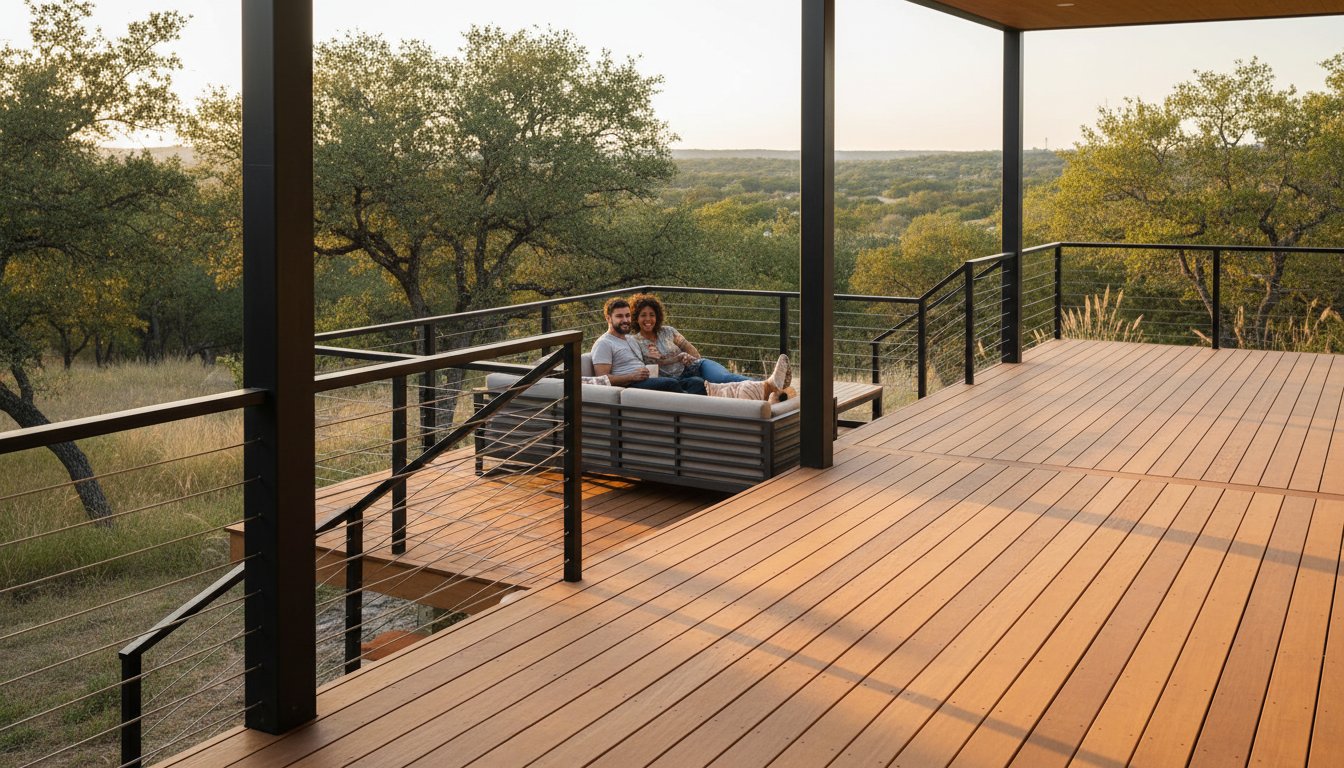
Is your outdoor space a strategic asset or a mounting liability? Most homeowners treat maintenance like a slow-motion rescue mission, but simply swapping a few boards is just delaying the inevitable collapse of your property value. If you're tired of watching the 105-degree July heat turn your investment into a splintered hazard, it's time to stop thinking about basic fixes. High-level deck repair austin tx isn't just about aesthetics; it's a calculated engineering play to protect your equity before the 2026 market shifts.
You already know the Central Texas climate is a relentless enemy of traditional lumber. Between the UV damage that strips cheap finishes in 18 months and the humidity that forces joists to warp, your frustration with structural uncertainty is justified. You deserve a deck that feels like a fortress, not a safety concern. This guide moves past the "good enough" mentality to show you how to build for the long game.
We'll break down the 65% cost difference between a strategic restoration and a full tear-out so you can make a smart financial decision. You'll learn which specific materials actually survive Austin's microclimates and how to vet contractors who prioritize integrity over speed. It's time to stop patching holes and start engineering your outdoor ROI.
Key Takeaways
- Stop the "Texas Toaster" effect by understanding how Austin’s unique UV and humidity cycles accelerate structural failure in traditional cedar and pine.
- Perform a "kill-fee" audit to decide if your investment in deck repair austin tx is a smart asset recovery or if repair costs have crossed the 50% replacement threshold.
- Learn why precision metalwork and steel framing outperform standard carpentry for solving permanent structural issues like "bouncy" or racking decks.
- Identify the specific protection protocols, including penetrating oils and thermally modified upgrades, required to hit a 30-year durability target.
- Transition from temporary handyman patches to strategic architectural restoration that treats your outdoor space as a high-yield property investment.
Austin’s Climate vs. Your Deck: Why Central Texas is a Structural Nightmare
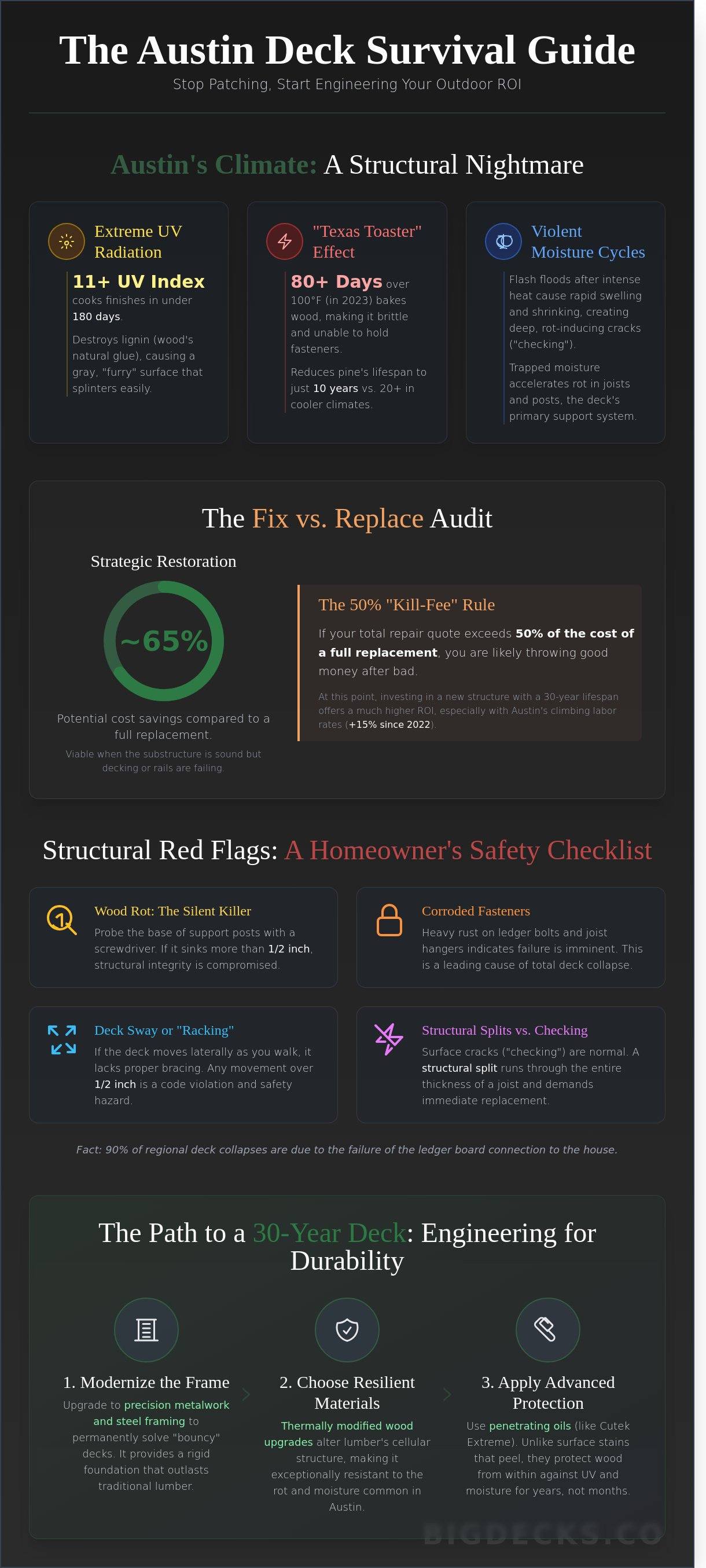
Austin's climate is a relentless assault on outdoor structures. In 2023, the city logged 80 days with temperatures over 100 degrees, creating a pressure cooker environment for organic materials. For homeowners considering deck repair austin tx, understanding this environmental toll is the difference between a five year fix and a permanent solution. Wood doesn't just age here; it fights a losing battle against extreme UV radiation and erratic moisture cycles.
The "Texas Toaster" effect on wood
The "Texas Toaster" effect occurs when wood fibers are baked at 110 degrees and then immediately saturated by a 2 inch flash flood. This rapid moisture swing causes the wood to swell and shrink violently. You'll see this as "checking," which are deep cracks that run along the grain and trap rot-inducing water. Standard retail stains often fail within 180 days because the UV index, which frequently hits 11 in July, literally cooks the pigment out of the oil. If your deck boards look gray or feel "furry" to the touch, the lignin holding the fibers together has already been destroyed by the sun.
Thermal expansion and contraction also wreak havoc on your hardware. As the wood moves, fasteners begin to "back out" of the joists. This leaves screw heads protruding and creates loose, rattling boards that compromise the entire frame. While pressure-treated pine might last 20 years in cooler climates, Austin's cycle of heat and humidity often limits its structural lifespan to 10 years before the wood becomes too brittle to hold a screw.
Local building codes and safety standards
Austin's 2026 building codes have tightened requirements for lateral load connectors and ledger board attachments. Most older Central Texas homes rely on nails or simple lag screws that don't meet modern shear strength standards. The ledger board, where the deck meets the house, remains the primary point of failure for 90% of deck collapses in the region. Structural deck failure is defined by the 2026 safety guidelines as any connection point that allows more than 0.5 inches of lateral movement under a standard live load of 40 pounds per square foot. Ensuring your deck repair austin tx project meets these updated metrics is essential for long term safety.
- UV index levels of 10+ accelerate cellular breakdown in cedar.
- Flash flooding creates "trapped moisture" pockets in joist tape.
- 2026 codes require tension ties on at least two locations per deck.
The Fix vs. Replace Audit: Is Your Deck a Liability or an Asset?
Every deck project reaches a tipping point where maintenance becomes a liability. We apply a strict "kill-fee" analysis to these decisions. If your quote for deck repair austin tx exceeds 50% of the cost of a full replacement, you are likely throwing good money after bad. Austin labor rates for specialized trades have climbed roughly 15% since 2022, making it critical to spend your budget on assets that offer long-term durability rather than temporary patches.
You must evaluate the narrative arc of your property. An aging, grayed-out deck can actively devalue a high-end home, creating a visual disconnect that turns off potential buyers. However, identifying "hidden" structural wins, such as a perfectly preserved pressure-treated frame beneath failing surface boards, can make a repair a highly viable investment.
Structural red flags you cannot ignore
Safety is non-negotiable. Wood rot in support posts is often a silent killer. You can spot this by probing the base of the posts with a screwdriver; if the tool sinks more than half an inch into the wood, the structural integrity is compromised. Rust is another major factor. Check your ledger bolts and joist hangers for heavy corrosion, as failed fasteners are the leading cause of deck collapses in Central Texas.
- Testing the "sway": If the deck moves laterally when you walk, it lacks proper bracing. This racking is a primary safety concern that requires immediate intervention.
- Cracking vs. Splitting: Surface-level checking is a natural part of wood aging. A structural split, however, runs through the entire thickness of a joist and demands a replacement.
ROI: When replacement wins the room
Choosing between a repair and a full replacement is a play for equity. A repaired cedar deck might buy you five years of use, but a new IPE platform provides a 40-year lifecycle and significantly higher resale value. If the bones of your structure are solid, you can often save a boring project by integrating modern architectural fencing. This adds privacy and a high-end aesthetic finish without the cost of a full teardown. Smart homeowners research custom decks in Austin to understand how specific material choices impact their 2026 property valuation.
If you aren't sure where your project stands on the audit, it's time to consult with a pro who can provide a definitive assessment of your substructure.
Beyond the Patch: Structural Engineering and Modern Metalwork Repairs
Wood is a traditional choice, but it isn't always the right solution for a permanent fix. High-performance deck repair austin tx requires moving past simple patches and into the territory of structural engineering. We use metal to solve the fundamental physics problems that wood simply can't handle over several decades of Texas heat.
Precision metalwork provides a level of stability that standard carpentry lacks. By integrating steel components into an existing structure, we can stop the rot cycle and provide a foundation that doesn't warp, twist, or sag. This approach turns a basic maintenance task into a strategic upgrade for your home's exterior.
The steel framing advantage
Precision matters when your foundation is at stake. While wood eventually yields to gravity, steel framing provides a rigid skeleton that eliminates the "bouncy" sensation common in older Austin decks. We prioritize precision welding because it creates a monolithic structure that stays 100% level regardless of moisture levels.
Custom metal accents often double as structural reinforcement in our repair plans. These components aren't just for show; they provide the lateral strength necessary to keep a deck safe during high-traffic events. Using steel allows us to span longer distances with fewer posts, opening up the space beneath the deck for functional use.
Upgrading your deck’s persuasion power
A repair is an opportunity to increase your property's ROI through better design. Swapping dated wooden pickets for architectural metal railings changes the entire aesthetic of the home while requiring zero maintenance. Custom metalwork provides a much higher return on investment than wood because it won't splinter, fade, or require restaining every two years.
Durability is a major factor in the limestone-heavy soil found across Central Texas. Steel posts offer 50% more lateral stability than traditional wood 4x4s, which often twist as they dry out in the summer sun. We also engineer drainage solutions into the metalwork to protect your home's foundation. By diverting water away from the ledger board on sloped lots, we prevent the rot that kills 80% of Austin decks before they reach their twentieth year.
- Precision Welding: Creates a permanent, non-combustible structural bond.
- Architectural Metal: Increases curb appeal and eliminates picket maintenance.
- Engineered Drainage: Uses custom flashing to move water away from critical wood components.
Protection Protocols: Using Cutek Extreme and Thermally Modified Upgrades
Austin’s 105-degree summer days destroy cheap finishes in months. Most homeowners make the mistake of using film-forming stains that sit on top of the wood like a layer of paint. These coatings crack and peel because they can't handle the constant expansion and contraction of the boards. At BigDecks, we exclusively use penetrating oils to ensure your deck repair austin tx survives the Texas sun without looking like a science experiment.
The science of penetrating oils
Cutek Extreme doesn't just sit on the surface; it migrates deep into the wood fibers to displace moisture from the inside. Standard big-box stains create a plastic-like layer that traps water, leading to rot and fungal growth. Cutek stays active inside the wood, providing a peel-free promise that makes future maintenance simple. You just clean the surface and reapply every 18 to 24 months without the nightmare of sanding back to bare wood. This deep penetration creates a hydrophobic barrier that survives the highest UV index ratings in the country.
Upgrading to thermally modified wood
Performing a deck repair austin tx means choosing materials that outlast the next decade. If you're replacing failed boards, we recommend thermally modified wood like Thermory. This material undergoes a high-heat "cooking" process at 212 degrees Celsius to remove the sugars that rot fungi feed on. The result is a 30-year durability rating and incredible stability in Austin’s high humidity. We use 3D design renderings to show you exactly how these premium upgrades integrate with your existing structure before we touch a single board.
Our goal is to build a deck that looks stunning today and stays that way five years from now. We focus on the ROI of your outdoor space by selecting materials that require less labor over time. This strategic approach turns a simple repair into a long-term asset for your home.
This philosophy of climate-specific durability extends to the home's interior as well; for those interested in seeing how high-performance materials are applied to indoor spaces, you can check out X Cabinet & Stone for insight into mountain-durable kitchen and bathroom design.
Winning the Long Game: Why BigDecks is Your Strategic Repair Partner
Stop settling for temporary patches that fail within two seasons. We don't perform basic handyman services; we execute architectural restoration. If your current structure is salvageable, we apply precision metalwork and expert carpentry to stabilize it. If it's too far gone, we pivot to a strategic replacement that maximizes your property value. We treat every deck repair austin tx project as a high-stakes investment in your home's equity.
The BigDecks design-build difference
3D visualization is our baseline for every project. It allows you to see the final product and approve the structural logic before construction begins. This process eliminates the guesswork that plagues most local contractors. Materials like IPE and thermally modified wood are our primary tools because they outperform standard cedar by 300 percent in the Texas heat. We combine traditional craftsmanship with the precision of a modern business strategy to ensure your outdoor space lasts 25 years or more.
Your next move: The professional inspection
Your project starts with a high-stakes audit of your current deck. We don't just look at the surface boards; we dive into the skeleton of the build. Our inspection includes several critical checkpoints:
- Checking ledger board attachment for structural safety and moisture protection.
- Evaluating joist spacing to ensure compatibility with modern, heavier decking materials.
- Assessing footing stability against Central Texas soil shifts.
- Reviewing all hardware to ensure it meets 2024 building codes.
You won't receive a vague estimate after our visit. You get a custom restoration proposal that outlines every technical requirement and cost. It's time to stop managing a failing asset and start building a win. Get your killer deck repair bid today.
Own the Austin Climate Before it Owns Your Deck
Your outdoor space is a high-stakes asset that demands more than a weekend patch job. Austin’s volatile humidity and 100-degree heat cycles create a structural nightmare that typical carpentry can't survive. Every project we touch focuses on engineering for the 2026 market, prioritizing structural metalwork and thermally modified upgrades that outlast standard pressure-treated lumber. We don't guess about your safety or your property value. We use 3D visualization to map every structural load and potential failure point before construction begins.
A professional deck repair austin tx isn't just about replacing boards; it's about a strategic fusion of climate-specific engineering and precision craftsmanship. By implementing protection protocols like Cutek Extreme, you're securing a long-term win for your home's ROI. Our team specializes in this exact intersection of durability and design, ensuring your deck remains a liability-free asset for years. It's time to stop managing decay and start engineering your outdoor future.
Book Your High-Stakes Deck Audit Now
Let's build something that stands its ground against the Texas heat.
Frequently Asked Questions
How much does deck repair cost in Austin, TX?
Austin homeowners typically spend between $800 and $3,500 for professional deck repair austin tx. Structural fixes like joist reinforcement or post replacement sit at the higher end of that range. Minor board swaps or railing tightenings often fall under $1,200. These prices fluctuate based on the 2024 local labor market and current lumber availability.
Can I repair a deck myself or do I need a professional?
You can handle surface-level aesthetics like sanding or staining yourself, but structural integrity requires a pro. If the ledger board is pulling away from the house or the primary support posts show rot, you're looking at a serious safety liability. Professional builders ensure your deck meets the 2021 International Residential Code standards. This protects your property value and prevents catastrophic failures during high-occupancy events.
How often should I restain my deck in the Austin climate?
Plan to restain your deck every 2 to 3 years to combat the 300 days of annual Central Texas sunshine. UV rays break down wood fibers faster than moisture does in this region. If water no longer beads on the surface or you see graying wood, the protective seal has failed. Maintaining this schedule doubles the lifespan of your investment and keeps the wood from warping under 100-degree heat.
Is it better to repair or replace my aging wood deck?
Replace the deck if more than 20 percent of the substructure shows signs of rot or structural damage. Repairing surface boards is a smart play if the frame remains solid and level. However, pouring money into a failing frame is a poor ROI. If your deck is over 15 years old, a full replacement often costs less over a 5-year period than constant patchwork maintenance.
What is the best wood for deck repairs in Central Texas?
Western Red Cedar and Ipe are the top performers for deck repair austin tx because they naturally resist local pests and rot. Pressure-treated Southern Yellow Pine is the budget-friendly standard, though it requires more frequent sealing to prevent splitting in the heat. For those looking for a 25-year lifespan with zero rot, heat-treated thermally modified wood is the modern gold standard in high-end Austin builds.
How long does a typical deck restoration take?
Most professional deck restorations take between 3 and 5 business days from start to finish. This timeline includes 1 day for a deep chemical clean and pressure wash, followed by 48 hours of drying time. The final application of stain or sealer usually takes 1 day, depending on the square footage. Expect delays if the humidity stays above 70 percent or if structural board replacements are discovered during the prep phase.