

Rooftop Deck Contractors in Austin: Engineering Luxury Above the Skyline
Find expert rooftop deck contractors Austin homeowners trust. Learn to avoid costly leaks & permit issues while building a safe, stunning deck that boosts yo...
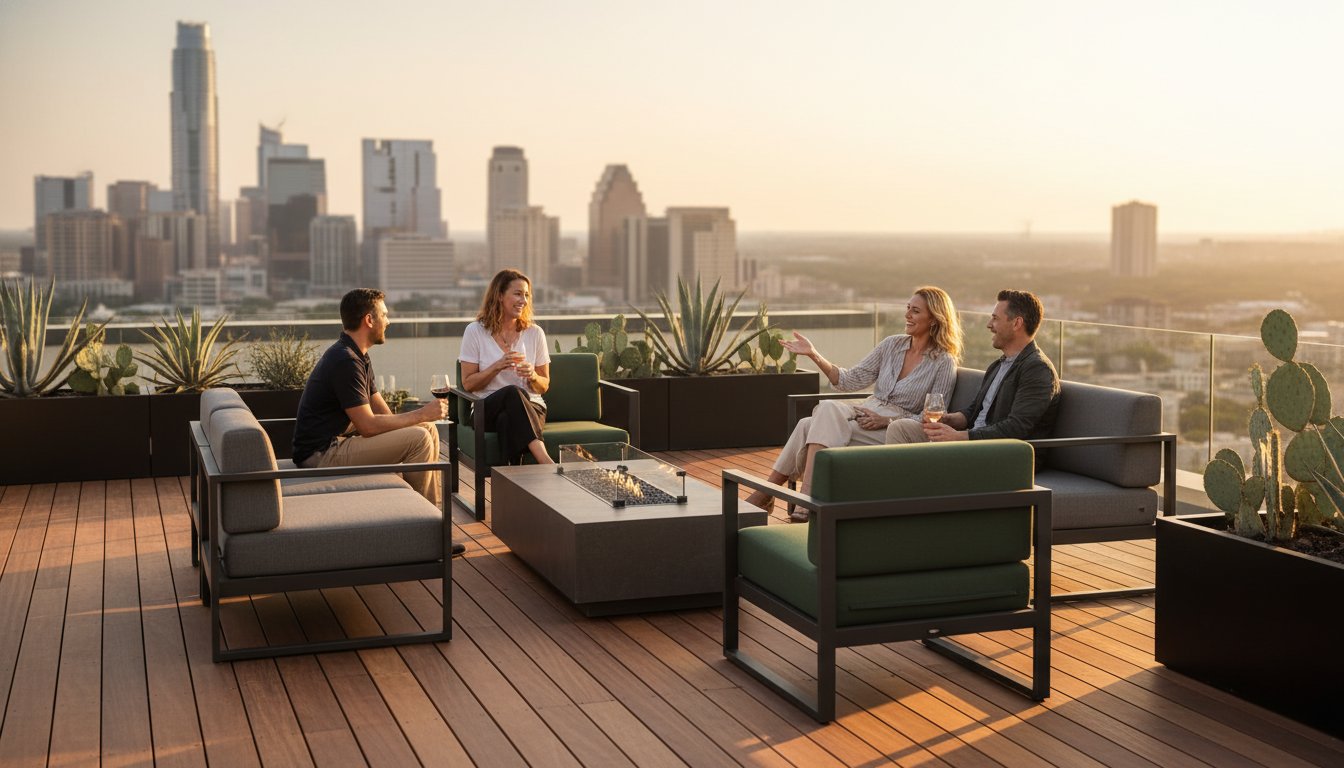
Most rooftop decks in Central Texas are ticking time bombs of structural rot and permit violations that can wipe 15% off your home's resale value. You want the skyline view and the private retreat, but the thought of a structural failure or a persistent leak in your master bedroom is enough to stall any project. It's a valid concern. Austin's strict Wildland-Urban Interface codes and complex drainage requirements turn a simple build into a high-stakes engineering puzzle.
You deserve a space that's as safe as it is stunning. This guide shows you how to find rooftop deck contractors Austin homeowners rely on to navigate the city's rigid permitting process while selecting materials that won't melt under the 105-degree August sun. We'll explore the specific engineering hurdles for urban builds and why premium wood finishes often provide a better long-term ROI than standard plastic composites. You'll learn exactly what it takes to build a deck that increases your equity without compromising your roof's integrity. It's time to win the skyline.
Key Takeaways
- Discover why vertical outdoor space is the highest ROI play for Austin properties and how it directly impacts 2026 market valuations.
- Learn the non-negotiables of structural engineering, including why a professional seal is mandatory for managing weight loads on existing roof joists.
- Identify the specific materials that survive the Texas sun, focusing on why thermally modified wood outperforms heat-trapping synthetics.
- Find out how professional rooftop deck contractors Austin use 3D modeling to catch structural conflicts in the virtual phase before they become expensive field errors.
- Navigate the financial reality of high-end rooftop builds with a transparent look at pricing and the logistics of urban construction.
Maximizing Austin Real Estate: Why Rooftop Decks are the Ultimate ROI Play
Austin real estate is a high-stakes game of inches. You can't manufacture more land in the 78704 or 78702 zip codes, so you have to build up. A rooftop deck is a strategic vertical expansion that reclaims the footprint of your home, turning dead roof space into high-value square footage. In a market where lot sizes are tightening, this is the most aggressive move you can make to increase your property's usable area.
The "Skyline Premium" is a real financial metric driving valuations toward 2026. Buyers in the luxury segment prioritize private views and exclusive outdoor access over traditional, maintenance-heavy lawns. Expert rooftop deck contractors Austin homeowners trust understand that vertical space isn't just a place to sit. It is a lifestyle hub for recovery setups like saunas and cold plunges, or high-end hosting environments that traditional backyards can no longer accommodate due to urban infill density.
The Shift Toward Vertical Living in Central Texas
Homeowners in East Austin and South Lamar are leading the move away from the traditional backyard. As urban infill projects maximize building footprints, ground-level outdoor space often shrinks to a small strip of grass. By moving the "yard" to the roof, you gain a private oasis that is physically separated from street noise and neighbor sightlines. This trend reflects a broader move across Travis County toward modern, architectural efficiency. A well-designed Rooftop garden or lounge area provides the seclusion that ground-level patios simply cannot offer in high-density zones.
Calculating the Value-Add for Your Austin Property
The ROI for custom decks remains high because they directly address the psychological needs of the luxury buyer. A view of the Frost Bank Tower or the University of Texas clock tower isn't just a perk; it is a permanent asset that keeps your home competitive. Architectural consistency is the pivot point for resale value. If the deck feels like a seamless extension of the main structure rather than an afterthought, it justifies a higher price per square foot. For homeowners aiming for a cohesive look, professional interior design services toronto can provide the creative direction needed to harmonize indoor spaces with outdoor retreats. Experienced rooftop deck contractors Austin focus on these structural details to ensure the project looks like a primary feature of the home's original design.
Vertical outdoor space is about more than just aesthetics. It represents a functional win in a city that is rapidly densifying. When you build up, you aren't just adding a deck. You are securing a vantage point in one of the most competitive real estate markets in the country.
Structural Engineering and Austin Building Codes: The Reality Check
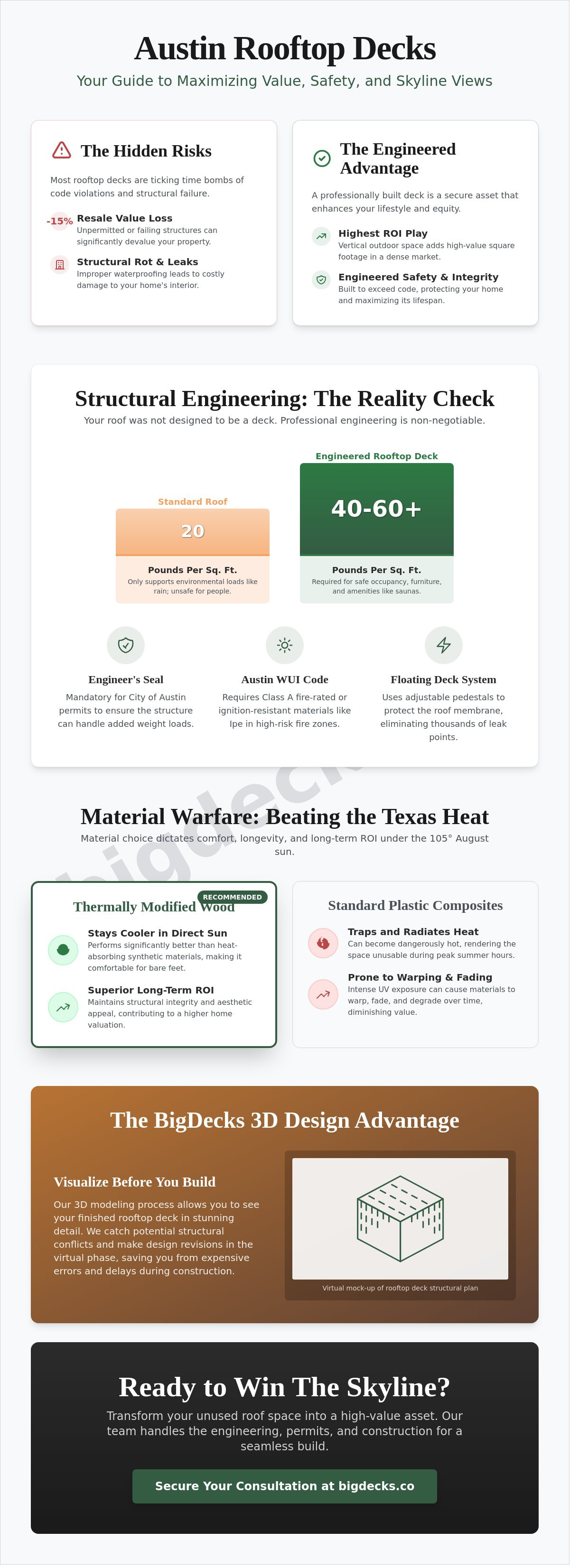
Building a deck on your roof isn't like building one in your backyard. The primary concern for most homeowners is whether the existing joists can handle the weight without sagging or snapping. Standard residential roofs in Central Texas are typically engineered to support a live load of 20 pounds per square foot. Most rooftop deck contractors Austin work with require a minimum of 40 to 60 pounds per square foot for safe occupancy. You cannot skip the structural engineer's seal; the City of Austin won't issue a permit without it.
Fire safety is another non-negotiable factor in local construction. The Austin Wildland Urban Interface (WUI) code, adopted in 2020, mandates specific ignition-resistant materials for decks in high-risk zones. This often limits your material choices to heavy hardwoods like Ipe or specific Class A fire-rated composites. These materials are durable, but they add significant weight that your framing must be able to support.
To protect your home from leaks, modern builders use a floating deck system. This method utilizes adjustable pedestals that sit directly on top of the roof's waterproof membrane. Because the system isn't bolted through the roof, it eliminates thousands of potential leak points. This setup also allows water to flow freely to your existing drainage system, preventing rot and mold growth under the deck boards.
Navigating the Austin Permitting Maze
The City of Austin Development Services Department scrutinizes rooftop plans more than almost any other residential project. They specifically look for lateral bracing and point-load distributions to ensure the deck won't shift during high winds. Projects built over detached garages are a common pitfall; these structures often lack the foundation depth required for the added weight of a second level. Attempting unpermitted work is a massive financial risk. If the city discovers an illegal rooftop structure, they can force a complete teardown, and your homeowner's insurance will likely deny any claims related to roof damage or structural failure.
Weight Loads and Dead Loads: The Math of Safety
Understanding the difference between live and dead loads is the foundation of a safe build. Live loads include anything that moves, such as people, furniture, and even heavy planters. Dead loads are the permanent, immobile weight of the deck structure itself, including the framing, decking boards, and railings. When you add a hot tub or a sauna, you're introducing thousands of pounds of concentrated weight. These features require specialized steel reinforcement or additional columns that tie directly into the home's foundation. When you're ready to see what's possible, a consultation with Austin deck specialists can clarify your home's specific capacity.
Material Warfare: Why Thermally Modified Wood Beats the Texas Heat
Rooftop decks in Austin endure 30% more UV radiation than backyard structures. Ground-level decks often benefit from tree canopies or fence shadows, but a rooftop is a thermal warzone with zero cover. This relentless exposure creates a microclimate that can destroy inferior materials in a single season. Professional rooftop deck contractors Austin know that selecting a board based on looks alone is a recipe for a structural failure within five years.
The Problem with Composite on Austin Roofs
Plastic composite boards are frequently marketed as the ultimate low-maintenance solution. In the Austin sun, they become a liability. These petroleum-based synthetics retain heat at an alarming rate, often reaching surface temperatures 40 degrees higher than natural wood. This is the "Barefoot Test" reality: on a 100-degree July afternoon, a composite deck can literally blister skin.
Beyond the heat, synthetics suffer from significant thermal expansion. As the temperature swings from a 30-degree winter night to a 105-degree summer day, these boards grow and shrink. This movement puts immense pressure on fasteners, leading to warped boards and "mushroomed" screw holes. From an environmental perspective, these materials are difficult to recycle and eventually end up in landfills, unlike renewable timber options.
While many local synthetics fail, the industry is seeing a shift toward higher standards. Just as European thermally modified woods are becoming the gold standard, high-performance WPC composite decking Sweden shows how advanced engineering can address the heat and stability issues found in traditional composite products.
Thermally Modified Wood: The 30-Year Rooftop Answer
Thermally modified wood, specifically products like Thermory, represents the elite standard for high-exposure environments. The process involves "cooking" the timber in a specialized kiln at temperatures exceeding 400 degrees Fahrenheit. This intense heat alters the wood's chemical structure, removing moisture and natural sugars. The result is a board that is naturally rot-resistant and incredibly stable.
Experienced thermally modified wood enthusiasts choose this material because it doesn't react to humidity or heat like raw lumber. It provides the same durability as exotic hardwoods like Ipe but with a lighter weight profile that reduces the load on your roof's structural beams. Maintenance is straightforward and depends on your aesthetic goals:
- Apply UV-protectant oil: Do this annually if you want to maintain the deep, chocolate-brown tones of the wood.
- Let it silver: If you prefer a weathered look, leave it alone. The wood will age into a sophisticated silver patina without losing its structural integrity.
- Periodic cleaning: A simple wash every six months keeps the surface clear of Austin dust and debris.
While Cedar remains a classic choice for its natural oils and Ipe offers unmatched density, thermal modification provides a 30-year lifespan that specifically addresses the expansion issues found in the Texas climate. It is a strategic investment for homeowners who want a luxury finish that won't buckle under the sun.
The 3D Design Advantage: Visualizing Your Skyline Transformation
Flat 2D blueprints fail to capture the complexity of a rooftop environment. These projects aren't just about laying boards; they're about navigating existing HVAC units, drainage slopes, and structural load points. Professional rooftop deck contractors Austin use advanced modeling to ensure every inch of the build is accounted for before materials arrive on-site.
High-fidelity 3d design renderings serve as a digital dress rehearsal for your construction project. This technology identifies potential structural conflicts, such as a support beam intersecting with a vent pipe, during the design phase rather than the build phase. Catching these issues early prevents costly change orders and keeps the timeline on track.
There's a significant psychological win in seeing your deck before a single board is cut. You can virtually walk through the layout to test the flow between the outdoor kitchen and the lounge area. It removes the guesswork and gives you the confidence that the final product will match the vision in your head.
Precision Metalwork and Custom Accents
Steel is the backbone of the modern Austin aesthetic. We integrate custom metalwork into rooftop designs to solve height and safety requirements without obstructing the view of the skyline. Precision welding allows for slimmer railing profiles that meet local building codes while maintaining an open, airy feel.
Combining traditional carpentry with structural steel creates a deck that's both warm and industrial. This synergy is vital for rooftops where weight distribution and wind resistance are primary engineering concerns. The 3D model allows us to place every custom bracket and lighting fixture with millimeter precision.
Planning for Austin's Micro-Climates
Austin weather is unforgiving, especially on an exposed roof. We use 3D tools to map sun exposure across different seasons, ensuring shade structures provide actual relief during a July afternoon. Designing for wind resistance is equally critical for properties near Lady Bird Lake, where gusts can reach 20 miles per hour even on calm days.
The layout also accounts for the survival of your greenery. We integrate native West Texas plantings like Red Yucca or Silver Ponyfoot directly into the 3D plan. This ensures the weight of planters is supported by the building's load-bearing walls and that irrigation lines are hidden from view.
Frequently Asked Questions
Do I need 3D designs for a simple rooftop deck?
Yes. Rooftop projects involve complex structural variables like drainage and weight distribution that 2D drawings often miss. The 3D process identifies these technical hurdles before they become expensive problems.
How accurate are the sun mapping tools?
The software uses specific geographic coordinates and historical weather data to simulate shadows. This allows us to place pergolas and umbrellas exactly where they'll block the most heat during peak sun hours.
Can I change materials after seeing the 3D rendering?
That's the primary benefit of the process. You can swap composite for hardwood or change the railing color in the software to see how it affects the overall look and your budget before any orders are placed.
Executing the Build: Why BigDecks Dominates the Austin Rooftop Scene
BigDecks acts as the strategic partner for homeowners ready for high-stakes rooftop execution. We don't deal in vague promises or soft timelines. We build assets. If you're analyzing how much it cost to build a deck, we provide a no-BS breakdown that respects your capital. Our team handles the engineering weight so you can focus on the view. Our white-glove process starts with rigorous site protection and ends only after the final coat of oil has cured.
The BigDecks Quality Standard
We refuse to use inferior plastic materials. Texas heat acts as a brutal filter for quality; most composites simply fail under the Austin sun. They warp, sag, and retain heat until they're untouchable. As the rooftop deck contractors Austin homeowners trust for longevity, we only install high-performance woods like Ipe and Thermory. These materials offer the density required for structural integrity and the natural beauty that synthetic products cannot mimic.
Every project receives a treatment of Cutek Extreme. This is not a surface film that peels; it is a penetrating oil that protects the wood from the inside out. We also master the logistical nightmare of urban construction. Whether it's coordinating a crane lift on a busy downtown street or managing 1,000 square feet of hardwood delivery through a tight alley, our team handles the friction. We keep the site clean and the progress visible.
Start Your Transformation Today
Research is the first step, but execution is what creates value. A rooftop deck is an investment in your home's narrative arc. It is the definitive statement of your property's potential. We invite you to move from the design phase into active construction. Our collaborative approach ensures your vision is engineered to last decades, not just seasons. Let's build something that wins the room.
Frequently Asked Questions
- How long does a typical rooftop project take? Most Austin rooftop builds require 6 to 10 weeks for construction. This timeline depends heavily on the complexity of the steel substructure and current permitting speeds.
- Do I need a structural engineer for a rooftop deck? Yes. We never build on a roof without a stamped engineering report. We must ensure the existing structure can support the "live load" of furniture and guests.
- Why choose Ipe over composite for a roof? Ipe stays significantly cooler than plastic composites in 100-degree weather. It also has a Class A fire rating, which is often a requirement for Austin building codes.
- Does BigDecks handle the permitting process? We manage the entire process with the City of Austin. We handle the paperwork and inspections so you don't have to deal with the bureaucracy.
Own the Austin Skyline
Building above the city requires more than a vision; it demands a grasp of structural reality. Austin's WUI codes and strict 2021 IBC standards mean your project must be engineered for fire resistance and significant weight loads from the start. Choosing materials like Ipe or thermally modified wood ensures your investment survives the 100 degree Texas summer without warping. It's the difference between a temporary fixture and a permanent financial asset.
Success in this environment comes down to technical execution. You need a partner who manages the entire stack, from in-house custom metalwork and welding to complex structural navigation. As the leading rooftop deck contractors Austin property owners trust, we focus on the engineering details that protect your ROI. We don't just build decks; we secure your place above the skyline with precision and code-compliant design.
Ready to win your skyline? Get a professional 3D design for your Austin rooftop deck today.
Your new perspective on the city is just a design away. Let's get started.
Frequently Asked Questions
Do I need a permit for a rooftop deck in Austin?
You absolutely need a building permit for any rooftop deck project in Austin. The City of Austin Development Services Department requires these permits to ensure the structure meets specific safety codes and load-bearing requirements. Skipping the legal paperwork puts your home at risk and creates massive headaches when you eventually try to sell the property.
How much weight can a standard Austin residential roof hold?
Most standard residential roofs are designed to support only 20 pounds per square foot of dead load. A functional rooftop deck requires a capacity of at least 60 to 100 pounds per square foot to handle the weight of guests and furniture safely. Professional rooftop deck contractors Austin will always perform a structural analysis to determine where your frame needs extra steel or timber.
Will a rooftop deck cause my roof to leak?
A properly engineered deck won't cause leaks if you use the right mounting technology. We utilize floating pedestal systems or sleeper joists that sit directly on the waterproof membrane without puncturing it. This approach allows water to flow naturally to your existing drains. Leaks only become a problem when inexperienced builders use hardware that pierces the roof's protective seal.
What is the best material for a rooftop deck in the Texas heat?
Porcelain pavers and thermally modified wood are the most durable choices for the intense Austin climate. Porcelain stays much cooler than dark composite boards and won't warp when temperatures hit 100 degrees. If you want the look of natural wood, modified ash resists UV damage and won't splinter like traditional pressure-treated lumber does under the Texas sun.
How much does it cost to build a rooftop deck in Austin per square foot?
Project costs depend heavily on your home's existing structural integrity and the materials you choose. Rooftop installations involve unique expenses like crane rentals to lift materials and specialized engineering fees for load calculations. While ground-level decks have simpler budgets, elevating your living space requires a higher investment in logistics and structural reinforcement to ensure long-term safety.
Can I put a hot tub or sauna on my rooftop deck?
You can certainly install a hot tub or sauna, but it requires a structural engineer's seal of approval. A standard 400 gallon hot tub weighs approximately 4,000 pounds once filled, creating an immense point load on your roof joists. We must reinforce the support columns to transfer that weight directly into the foundation so the structure remains perfectly stable under the pressure.
How long does it take to build a rooftop deck from design to completion?
Most projects take between 12 and 20 weeks from the initial consultation to the final walkthrough. The design and engineering phase usually lasts 4 weeks, while the City of Austin permit review process often takes another 8 weeks. Once we have the permits, rooftop deck contractors Austin typically require 4 to 6 weeks of focused on-site labor to finish the build.