

Horizontal Wood Fence with Metal Posts: The Austin Guide to Durability and Design
Build a horizontal wood fence with metal posts in Austin. Our guide covers durability, design, and how to beat shifting clay soil for a fence that lasts.
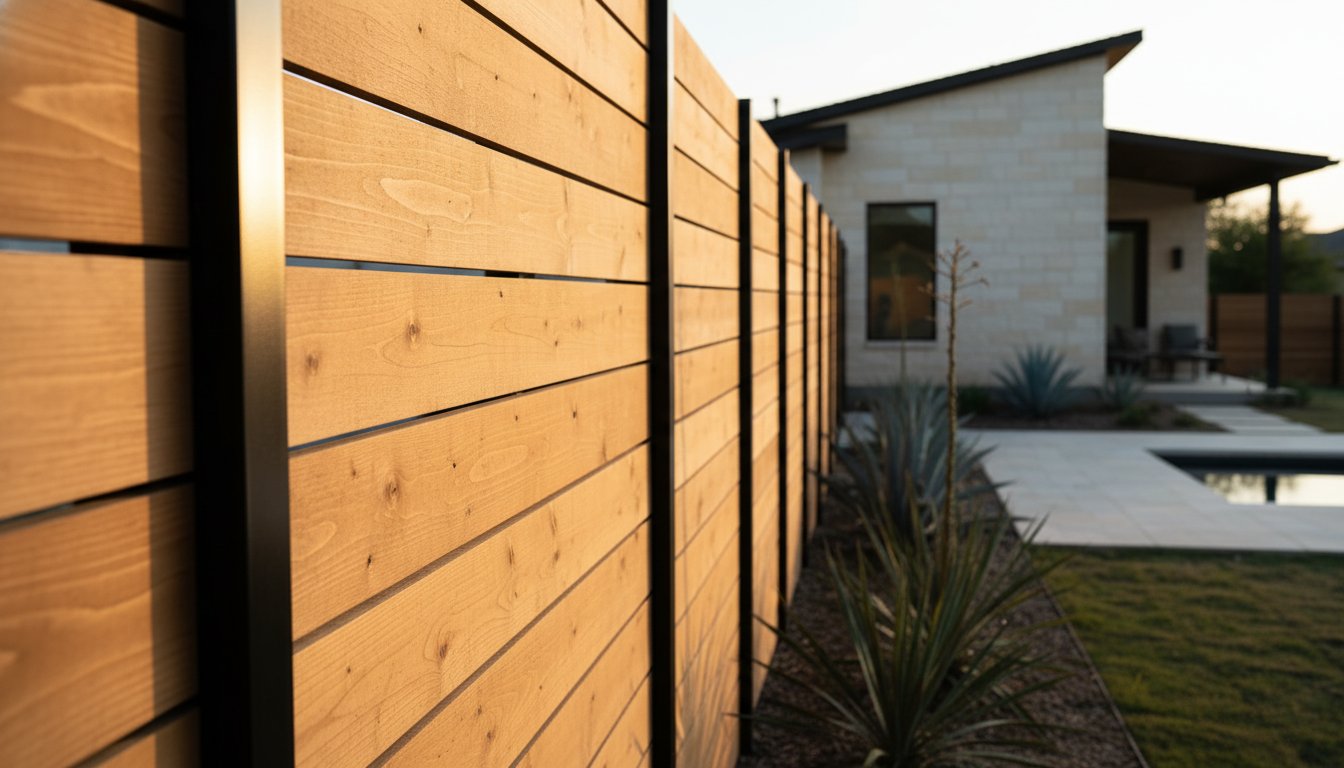
Your current fence is a liability waiting for the next July heatwave to buckle your curb appeal. In Austin, 85% of residential properties sit on expansive clay that acts like a slow-motion earthquake, turning standard wood posts into tilted eyesores within three years. If you want to dominate the neighborhood aesthetic in 2026, you stop playing defense. You build a horizontal wood fence with metal posts. It's the only strategic move that fuses the raw structural power of commercial steel with the high-end, modern warmth of premium cedar. This isn't just a boundary; it's a tactical upgrade for your property value.
You already know that the brutal Central Texas humidity turns cheap materials into warped junk before the first summer is over. We're going to show you exactly why steel-backed horizontal designs are the only logical choice for a backyard that survives the next decade of storms. From soil-shift mitigation to the ROI of modern architecture, this is your blueprint for building the last fence you'll ever need to buy.
Key Takeaways
- Stop gambling on "Austin Rot" with outdated wood posts and discover why a steel-backed hybrid system is the ultimate power move for structural longevity.
- Master the technical anatomy of a horizontal wood fence with metal posts, including the secret role of U-channels in killing board warp before it starts.
- Identify the high-performance wood species specifically engineered to dominate 100-degree Austin summers without cracking under pressure.
- Lock down your perimeter against shifting clay and high-velocity winds with the exact engineering specs required for a "sail-proof" fence system.
- Eliminate construction guesswork and visualize your win using 3D renderings that bridge the gap between architectural vision and backyard reality.
Why Austin homeowners are ditching wood posts for steel
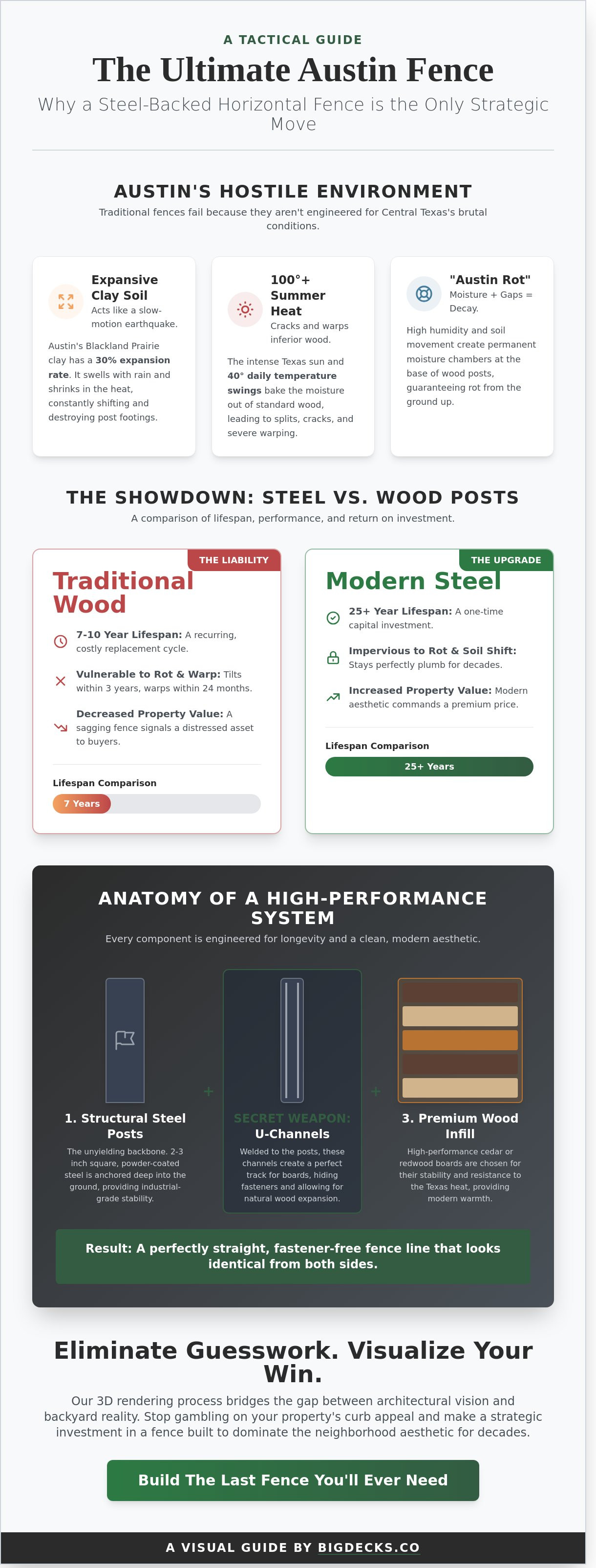
Your backyard is an asset, not a liability. In the high-stakes world of Austin real estate, curb appeal is your pitch deck. Most homeowners gamble their property value on traditional pressure-treated pine posts. They lose. Within 84 months, those posts are leaning, rotting, or snapped. It is a failed investment. We are seeing a massive strategic shift toward the horizontal wood fence with metal posts. This is a hybrid structural system designed specifically for the Central Texas battlefield. It combines the warm, modern aesthetic of cedar with the industrial-grade strength of galvanized steel.
Steel does not decay. It does not care about the 30% expansion rate of Austin clay. It delivers a 25-year lifespan compared to the measly 7 years you get from wood. Understanding the Anatomy of a fence is the first step in protecting your equity. If you are building a horizontal layout, the stakes are even higher. Horizontal boards act as massive levers; they catch wind and exert constant torque on your vertical supports. Wood posts buckle under that pressure. Steel thrives on it.
The problem with traditional wood posts in Texas
Austin sits on a foundation of Blackland Prairie clay. This soil is aggressive. When it rains, it swells; when the 105-degree August heat hits, it shrinks. This constant movement creates micro-gaps between the wood post and its concrete footing. Moisture settles in those gaps, creating a permanent rot chamber. It is a slow-motion execution for your perimeter. Furthermore, the horizontal wood fence with metal posts solves the structural stress issue. Traditional wood posts often warp within 24 months, causing horizontal lines to sag and look amateur. Steel remains plumb, ensuring your design stays sharp and professional for decades.
Steel vs. wood: The ROI of your backyard perimeter
Stop thinking about fence repair. Start thinking about capital preservation. Replacing a wood fence every 7 to 10 years is a recurring tax on your time and bank account. A steel-backed system is a one-time deployment of capital. It maintains a straight, stunning line that commands a premium during a home sale. In a market where 92% of buyers prioritize outdoor living spaces, a sagging fence is a red flag. Choosing steel is a move for the savvy homeowner who values long-term ROI over short-term savings. It is the difference between a property that looks like a distressed asset and one that wins the neighborhood. Build it once. Build it right. Secure the win. This focus on structural permanence is a strategy that pays dividends across your entire property; for those looking to extend this industrial-grade durability to residential or agricultural outbuildings, Bradberry Steel provides pre-engineered and weld-up steel building systems that offer the same permanent ROI as a steel-backed fence.
Anatomy of a modern horizontal fence system
Building a high-performance horizontal wood fence with metal posts isn't a DIY weekend project. It's a strategic assembly of three critical components: structural steel posts, precision U-channels, and premium wood infill. Forget the flimsy 4x4 lumber. Those warp within 12 months in the Texas sun. We use heavy-duty steel to anchor the system into the limestone. Structural integrity depends on post spacing. For standard residential heights, 6-foot spacing is the benchmark for maximum rigidity. If you push it to 8-foot centers, you risk sagging unless you're using thicker, commercial-grade lumber. This is about physics, not just aesthetics. Every component serves a purpose in this high-stakes game of curb appeal. We strip away the fluff to focus on what works.The U-channel: Secret to the clean horizontal line
Stop nailing boards directly to posts. It's a rookie mistake that leads to split wood and ugly gaps. The metal U-channel is the real hero here. It creates a dedicated track where wood can breathe. Choosing the right wood for the Central Texas heat requires understanding that cedar and redwood will expand and contract as the temperature swings 40 degrees in a single day. The U-channel allows this movement without compromising the structure. It hides the raw ends of the boards, delivering a surgical finish. Plus, it solves the "bad side" problem. Both you and your neighbor get the same killer view. No visible fasteners. No messy overlap. Just clean, uninterrupted lines that scream high-end design. It's a win for everyone involved.Post options: Beyond the galvanized pipe
The silver round pipe belongs in a dog park, not your backyard. For a modern Austin aesthetic, square powder-coated steel is the undisputed champion. Black powder coating is the gold standard because it disappears into the shadows, making the wood grain pop. It creates a high-contrast look that matches the modern architecture found in Zilker or East Austin.- Standard Square Posts: 2-inch or 3-inch steel provides a massive upgrade over wood.
- Custom H-Posts: These allow the wood to slide directly into the post for a seamless, architectural look.
- Powder Coating: This isn't just paint. It's a baked-on finish that resists the 100-plus degree Austin summers.
Choosing the right wood for the Central Texas heat
Austin summers don't just feel hot. They are a brutal test of structural integrity for every outdoor project. When the thermometer hits 105 degrees for 40 consecutive days, standard lumber fails. You need a material that survives the radiation. A horizontal wood fence with metal posts is only as strong as its weakest plank. Without the right species, your modern aesthetic turns into a warped, gray mess in under 24 months. Check the Austin Guide to Horizontal Fences for a deeper dive into the technical specs of these materials.
The secret to longevity isn't just the species. It's the protection. Penetrating oils are the only way to fight UV graying. Unlike film-forming stains that peel and flake, these oils dive deep into the wood fibers. They block the sun and keep the color locked in. If you skip this step, you aren't building a fence; you're building a countdown to a renovation.
Western Red Cedar: The classic Austin choice
Western Red Cedar remains the gold standard for aesthetic warmth in Central Texas. It contains natural tannins that repel insects and prevent decay. We specify 1x4 or 1x6 clear cedar to ensure every line in your horizontal wood fence with metal posts stays razor-sharp. You're buying a look, not just a barrier. However, cedar is soft. It requires a commitment to maintenance. Without a consistent schedule of oil-based staining, the Texas sun will bleach it to a dull silver within one or two seasons. If you want that rich, amber glow, you have to earn it.
Thermally modified wood: The 30-year solution
Thermally modified wood is the ultimate durability play for homeowners who demand perfection. This isn't your standard lumber. The wood is "cooked" at temperatures exceeding 400 degrees in an oxygen-free environment. This process removes the organic sugars that rot and bugs love to eat. It effectively turns the wood into a high-performance material that laughs at the humidity.
- Dimensional Stability: It won't shrink, twist, or cup when the humidity swings from 90% to 10% in a single week.
- Long-Term ROI: This material often comes with a 30-year warranty against rot, making it the smartest investment for high-end properties.
- Boreal Beauty: The cooking process gives the wood a deep, dark chocolate hue that penetrates all the way through the board.
Choosing between cedar and thermally modified options comes down to your long-term strategy. Cedar offers immediate impact and classic style. Thermal modification offers a permanent win against the elements. Either way, you're building for the long haul.
Engineering for shifting soil and high winds
Austin weather is a relentless stress test for your property. Between the brutal sun and sudden windstorms, your backyard is a high-stakes environment. A horizontal wood fence with metal posts isn't just about the aesthetic. It's about tactical survival. When the wind picks up, a solid horizontal fence acts like a massive sail. Without the right backbone, that sail becomes a liability. You aren't just building a barrier; you're engineering a structure to withstand 70 mph gusts and the volatile movement of Central Texas earth.
Footing depth and soil mechanics in Austin
The Blackland Prairie clay under your feet is a nightmare for standard construction. This soil expands when wet and shrinks when dry, creating a constant churning motion that ejects shallow posts. Most builders cut corners with 24-inch footings. That's a mistake. In Austin, you need a minimum of 36 inches of depth to hit stable ground. We utilize bell-bottom piers, wider at the base than the top, to lock the foundation into the earth. Unlike wood, steel posts don't wick moisture from the clay. They stay dry, stable, and rigid while wood alternatives would be rotting from the inside out. Proper drainage at the base is non-negotiable. We slope the concrete footings to ensure water sheds away from the post, preventing the pooling that compromises structural integrity over time. This prevents the 30 percent expansion rate of local clay from wreaking havoc on your investment.
Managing wind load on solid privacy screens
Physics doesn't care about your design goals. A 6ft tall horizontal privacy wall creates immense wind pressure. During a Central Texas storm, the lateral force on each post can exceed hundreds of pounds per square foot. This is where the horizontal wood fence with metal posts wins the game. Metal provides the shear strength required to keep your fence plumb when the pressure hits. If you want the look without the drag, consider modern horizontal fence ideas that incorporate 1/4-inch gaps between slats. These gaps allow air to pass through, reducing the "sail effect" while maintaining your privacy. It's a strategic move that balances high-end design with mechanical reality. By choosing steel over wood, you ensure the fence stays upright while your neighbors are left cleaning up debris after a storm.
Designing your backyard perimeter with BigDecks
A high-performance fence doesn't exist in a vacuum. It's the perimeter that protects your lifestyle and your investment. At BigDecks, we don't just install products; we engineer environments. Your horizontal wood fence with metal posts should be the architectural anchor for a larger custom deck project. We look at the total ROI of your outdoor space. It's about flow, privacy, and creating a cohesive aesthetic that screams premium quality. Stop thinking about just a fence. Start thinking about a total backyard transformation that wins the neighborhood.
We treat every project like a high-stakes pitch. Every detail matters. When you invest in a horizontal wood fence with metal posts, you're buying more than privacy. You're buying a statement of intent. Our team handles the heavy lifting, the engineering, and the logistics. You get the result. We align every board with the precision of a Swiss watch. It's about creating a backdrop that makes your home look like it belongs on the cover of a design magazine.
The 3D visualization advantage
Guesswork is for amateurs. We use 3D design renderings to kill uncertainty before the first post hole is dug. We model your fence against your home's actual architecture. You'll see exactly how the lines interact with your roofline and windows. This is how we eliminate the "I didn't think it would look like that" moment.
- Test different wood stains and powder-coated post colors in a virtual environment.
- Map out precise elevations on Austin's notorious 15 percent to 30 percent grade slopes.
- Visualize integrated LED lighting and custom gate placements before construction starts.
This isn't a best guess scenario. It's a digital blueprint for success. We account for every inch of your property line. We ensure the transition from your deck to your fence is seamless and intentional.
Precision metalwork and finishing
Standard gates are the weak point of every residential fence. They sag, they drag, and they fail within 24 to 36 months. We solve this with custom-welded steel frames. These gates are over-engineered to stay square for decades. We pair this structural steel with Cutek Extreme wood oils. This isn't a cheap hardware store stain. It's a high-performance oil that penetrates deep into the grain to prevent warping and rot in the Texas heat.
The research phase is over. You've seen the specs. You know the value. It's time to stop scrolling and start building. Move from the research phase to the execution phase. Get a modern horizontal fence bid from BigDecks today and secure your perimeter with the best in the business.
Build a Perimeter That Wins
Average fences fail because they ignore the reality of Central Texas. Austin clay soil exerts significant pressure during wet seasons; wood posts simply can't compete. By integrating a horizontal wood fence with metal posts, you're investing in a system engineered for the long game. We utilize heavy-duty steel and premium thermally modified wood to create a barrier built to withstand 70 mph wind gusts. This is high-performance architecture for your backyard. BigDecks brings the precision of 3D modeling to every project, ensuring your vision is flawless before the first post hits the ground. We're Austin-based experts in architectural metalwork and specialists in premium cedar. Don't settle for a rotting eyesore that kills your property value. It's time to play at a higher level and secure your perimeter with a design that commands respect. Your backyard deserves a killer upgrade that stays straight and true for decades. We've mastered the science of the Central Texas heat so you don't have to worry about warping or decay.
Request a 3D Design & Bid for Your Austin Fence Project
Let's build a legacy in your backyard.
Frequently Asked Questions
Will a horizontal wood fence with metal posts cost more than a standard fence?
Yes, you'll pay more upfront for this setup. A horizontal wood fence with metal posts increases your initial capital expenditure but kills long-term maintenance costs. Wood posts often fail in 7 to 10 years; galvanized steel stays rock solid for 25 years. You're buying a permanent asset, not a temporary fix. It's a strategic play for homeowners who value ROI over cheap, fast solutions that rot.
Do metal posts rust over time in the Austin climate?
High-quality steel posts don't rust in Austin if they meet ASTM A123 galvanization standards. Austin's 66 percent average humidity is a non-issue for zinc-coated or powder-coated steel. While raw iron fails, modern galvanized posts survive decades of Texas storms. You want the 20-year warranty that comes with industrial-grade materials. Don't settle for inferior metals that compromise your property's structural integrity or aesthetic appeal.
Can I use metal posts with a horizontal cedar fence?
Cedar is the ultimate partner for metal. Western Red Cedar contains natural oils that resist rot, making it the perfect infill for a horizontal wood fence with metal posts. This combination is the industry benchmark for Austin luxury builds. It creates a high-contrast, architectural look that screams premium quality. You get the warmth of natural wood backed by the indestructible strength of steel for a killer finish.
How deep should metal fence posts be set in Austin’s clay soil?
You must set posts 24 to 36 inches deep to beat Austin's shifting clay. The Blackland Prairie soil in Central Texas expands up to 10 percent when wet, which can heave shallow posts right out of the ground. Use 80 pounds of 4,000 PSI concrete per hole to ensure zero movement. A deep set is the only way to guarantee your fence line stays perfectly straight for a decade.
What is the best way to attach horizontal boards to metal posts?
Use heavy-duty steel brackets or 1.5-inch self-tapping screws for a secure connection. These fasteners bite into the metal and won't back out under the tension of drying wood. Avoid cheap clips that rattle or sag. You need a rigid, mechanical bond that handles the 15-pound per square foot wind loads common in Hill Country storms. It's about precision engineering, not just slapping boards together for a quick win.
Does a horizontal fence provide more privacy than a vertical one?
Horizontal designs provide 100 percent visual privacy when you use a tongue-and-groove profile or zero-gap installation. Unlike vertical fences that often show daylight between shrinking pickets, horizontal layouts overlap to kill sightlines entirely. This is a tactical upgrade for backyard security. You're building a fortress that looks like a masterpiece. It's the cleanest way to shut out the neighbors and own your space with total confidence.