

Cold Plunges in Austin: Why This High-Performance Trend is Here to Stay
Ready for cold plunges in Austin? Learn to install a permanent, high-end unit that complements your home's design and survives the Texas heat.
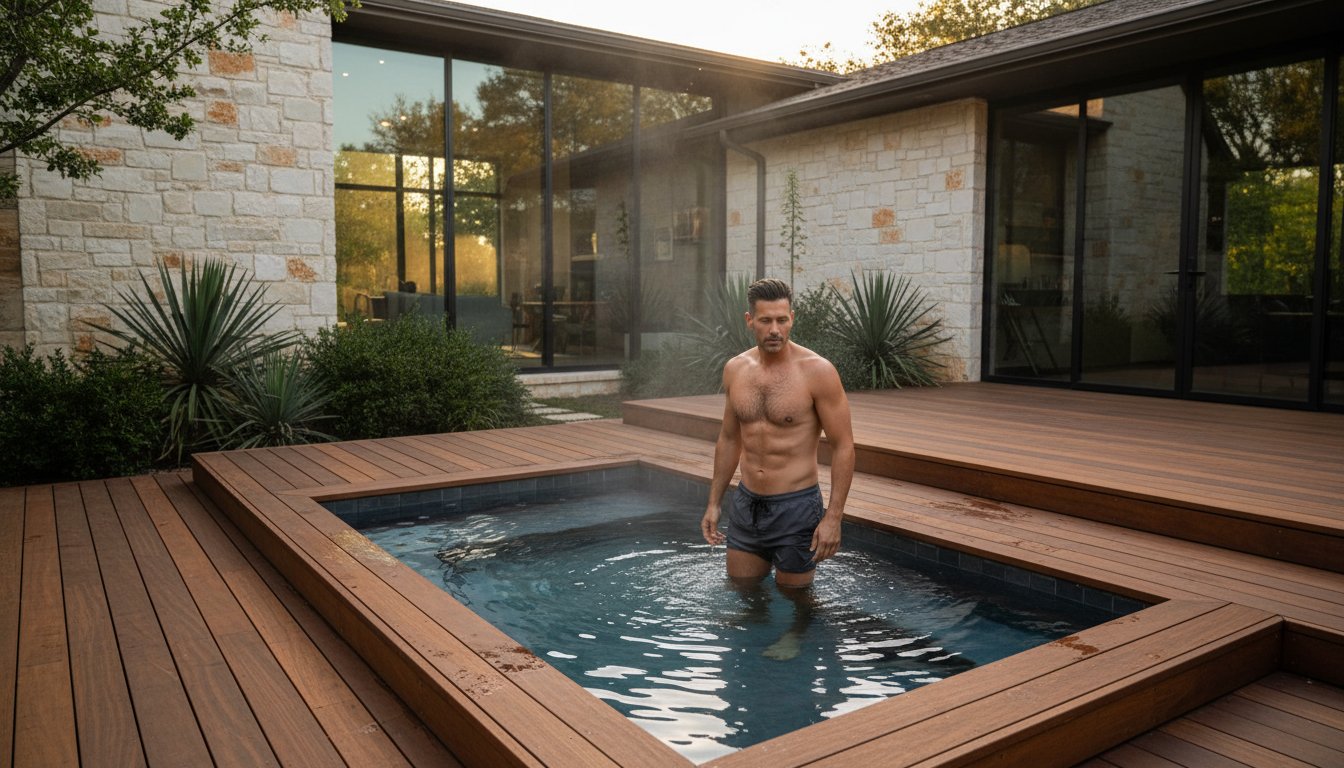
A $15,000 high-performance recovery tool shouldn't look like a piece of abandoned construction equipment sitting on your patio. While the health benefits of cold plunges have moved from niche biohacking circles into the mainstream, most Austin homeowners are still struggling to move past the "plastic tub" phase of installation. You likely recognize that consistent cold exposure is a game-changer for your nervous system, yet you're hesitant to clutter your outdoor design with a standalone unit that clashes with your architecture.
This article explains how to treat cold plunging as a permanent, value-add infrastructure project rather than a temporary trend. We'll break down the practical health ROI, the engineering required to maintain 45-degree water when it's 105 degrees outside, and the design strategies used to blend these units into custom decks. You'll finish with a clear roadmap for choosing the right equipment and planning an installation that survives the Texas heat while looking like a deliberate part of your home.
Key Takeaways
- Austin’s high-performance culture demands more than a basic ice bath; it requires a permanent, integrated wellness solution that fits a high-stakes lifestyle.
- Learn how cold-water immersion triggers metabolic fire and a neurological dopamine high to sharpen your mental edge and physical recovery.
- Stop ruining high-end outdoor spaces with eyesore plastic tubs and discover how to seamlessly integrate **cold plunges** into custom decks and architectural fencing.
- Avoid common installation failures by mastering the technical requirements for dedicated electrical circuits and foundation-safe drainage systems.
- Use 3D visualization to eliminate guesswork and ensure your performance oasis matches the architectural standard of your home before construction begins.
The Rise of Cold Plunging in Austin’s Wellness Culture
Austin has evolved into a high-stakes environment where physical recovery is now expected to match professional output. While Barton Springs provides a natural 68-degree baseline, local homeowners are increasingly demanding precision-controlled environments in their own backyards. Cold plunges have moved from niche athletic tools found in pro-facilities to essential, permanent home infrastructure that functions year-round.
This shift reflects a broader change in how we view outdoor living. It's no longer just about a place to grill or sit; it's about building a space that facilitates a high-performance lifestyle. A dedicated cold-water installation offers a level of consistency and hygiene that a bag of ice in a bathtub simply cannot match. For the Austin homeowner, this is a strategic move toward a self-contained wellness sanctuary.
Austin’s biohacking boom
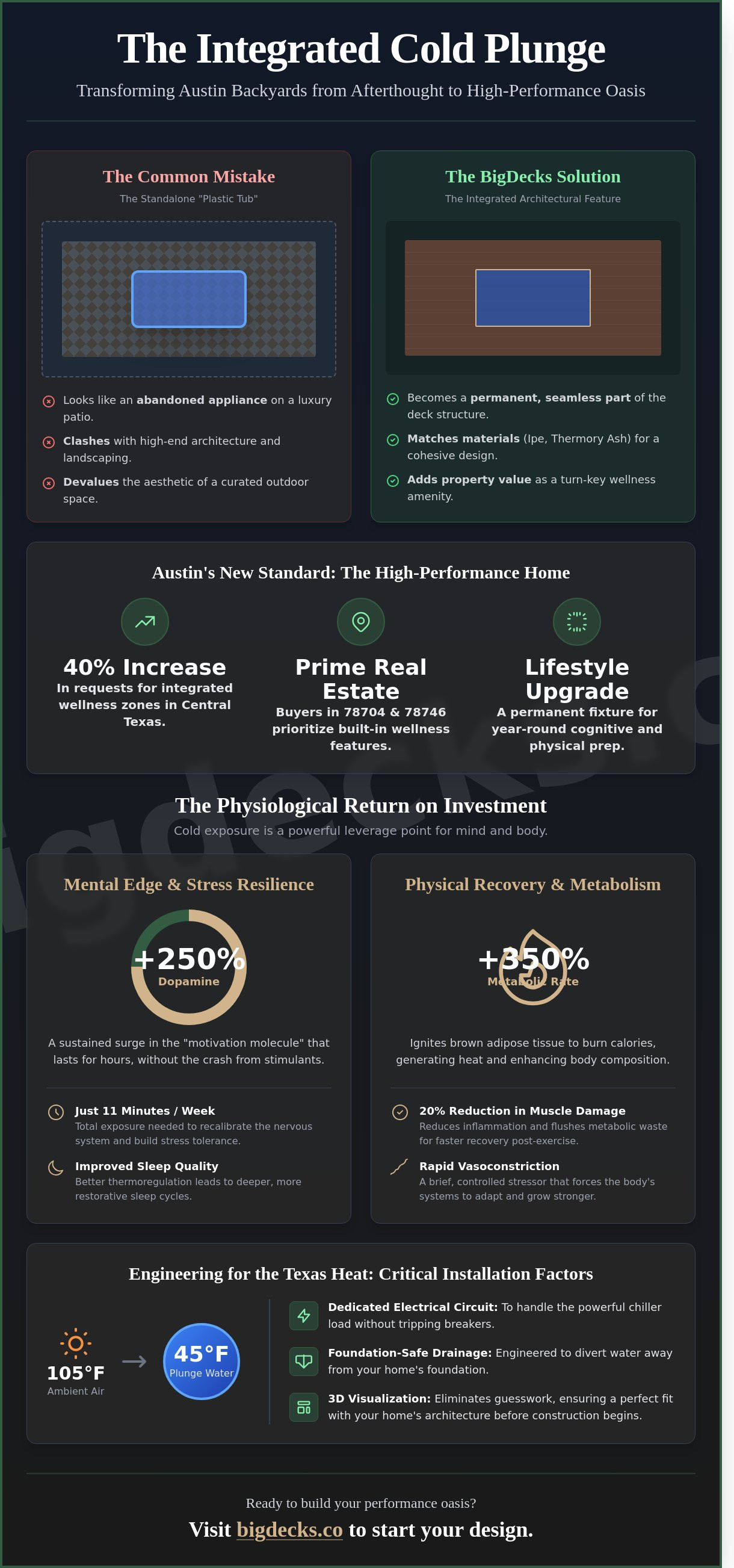
The massive influx of venture capital and tech talent into Central Texas since 2020 has turned the city into a hub for physical optimization. Local builders have seen a 40% increase in requests for integrated wellness zones that include saunas and cold plunges. Recovery has become the new status symbol for the Austin professional. These built-in systems represent a move toward permanent, high-utility infrastructure rather than temporary equipment cluttering a garage.
Trend vs. permanent lifestyle upgrade
This isn't a passing fad. Data from the wellness industry shows that cold-water immersion has seen sustained growth for over four years because it delivers a tangible psychological win every morning. For many Austin residents, the three-minute plunge is a non-negotiable part of their cognitive prep for high-pressure work. It provides a controlled stressor that builds mental resilience before the first email is even sent.
Beyond the personal benefits, these installations are increasing property desirability. Buyers in the 78704 and 78746 zip codes now prioritize homes that offer turn-key wellness amenities over traditional luxury finishes. Integrating cold plunges into a professional deck design ensures the equipment looks like a deliberate part of the architecture, which protects the home's aesthetic and resale value. It's a functional investment that serves the body and the bottom line simultaneously.
Understanding the Real Benefits of Cold-Water Immersion
Cold water isn't a gimmick; it's a physiological leverage point. When you step into a tub at 45 degrees, your body treats the temperature as a survival threat, triggering a cascade of beneficial chemicals. This process isn't about enduring pain for the sake of it. It's about the ROI of your time and health.
The Physical ROI of Cold Exposure
The primary mechanism involves rapid vasoconstriction, where your blood vessels tighten to keep your core warm, followed by a massive vasodilation when you exit. Hormesis is the core biological benefit where a brief, controlled stressor forces your body to adapt and grow stronger. For the weekend warrior or the elite athlete, this process flushes metabolic waste and can reduce markers of muscle damage by 20% within the first 48 hours after exercise.
Beyond recovery, cold plunges ignite metabolic fire by activating brown adipose tissue. This specific type of fat burns calories to generate heat, potentially increasing your resting metabolic rate by 350% during the exposure. It's a high-octane way to manage body composition while building a resilient internal engine.
Mental Performance and Stress Management
The neurological impact is where high-stakes decision makers find their edge. Research from the Soberg Institute indicates that just 11 minutes of cold exposure per week, split into short sessions, can recalibrate your entire nervous system. You aren't just getting cold; you're training your brain to stay calm while your heart rate spikes.
Dopamine levels can surge by 250% during a plunge, and unlike the crash from caffeine or sugar, this elevation persists for several hours. This sustained clarity is why many Austin professionals integrate a custom cold plunge setup into their outdoor living space. It serves as a strategic reset button. You gain better sleep quality through improved thermoregulation and a higher threshold for daily stress, making you more effective when the pressure is on.
Beyond the Plastic Tub: Designing for Aesthetic Impact
Dropping a $5,000 plastic tub onto a million-dollar limestone patio is a design failure. It looks like an afterthought; a livestock trough that ruins the visual flow of a curated backyard. High-performance recovery belongs in a high-performance environment. We treat cold plunges as permanent architectural features rather than portable appliances. This involves integrating the unit into custom Ipe or Thermory Ash decking to ensure the wood grain and finish match the primary structure exactly.
Strategic material selection is the difference between a cluttered patio and a luxury retreat. We favor 3/4-inch Ipe for its 40-year durability or Thermory Ash for its dimensional stability in the humid Austin heat. These materials allow us to build seamless surrounds that hide the 1/2 HP chillers and filtration lines that usually clutter the visual field. The goal is a clean, flush-mount appearance that suggests the plunge was part of the original site plan.
- Custom Metalwork: Using powder-coated steel panels to mask mechanical noise and heat exhaust.
- Material Matching: Syncing the plunge surround with existing Cedar or Ipe fencing.
- Integrated Access: Building hidden trap doors for easy maintenance of pumps and filters.
The Architectural Approach to Wellness
A well-placed plunge follows a clear narrative arc. You shouldn't see the plumbing or the power cords. We treat the unit as a design feature, using vertical slat screening to create a sense of enclosure. This hides the industrial components while maintaining airflow for the chiller. It transforms a piece of gym equipment into a focal point that adds tangible value to the property.
The Contrast Therapy Suite
The real win for Austin homeowners is the 180-degree shift. Pairing a custom outdoor sauna with cold plunges creates a dedicated recovery zone that functions year-round. We design these suites with a 3-step transition rule, ensuring the path between heat and ice is direct and slip-resistant. For tight 0.15-acre lots in Zilker or Tarrytown, we utilize vertical design and smart placement to maximize every square foot without crowding the layout.
Planning Your Austin Outdoor Plunge: Logistics and Placement
You don't want your high-performance recovery tool to become a high-maintenance headache. Planning the logistics of cold plunges requires more than just a clear spot on the patio. You're dealing with massive weight, constant electrical draw, and water management that can ruin a foundation if ignored.
Power and Plumbing in the Texas Heat
Austin summers hit 105 degrees frequently. Your chiller needs a dedicated 20-amp circuit to keep water at a crisp 50 degrees without blowing a fuse. Standard outdoor outlets often share circuits with patio lights or speakers; that's a recipe for a system shutdown when the compressor kicks in. Humidity is another silent killer. A cold tub in 90% humidity sweats constantly. We install drip pans or sloped drainage under the deck structure to prevent rot and mold growth from persistent condensation.
- Install a dedicated 20-amp GFCI outlet within six feet of the chiller.
- Use a simple sump pump for water changes every 3 months to avoid flooding the yard.
- Position the chiller intake away from direct sunlight to maintain a 30% higher cooling efficiency.
Structural Integrity and Safety
Math matters here. 100 gallons of water weighs roughly 834 pounds. Add a 200-pound adult and you're looking at a 1,034-pound load concentrated in a small 15-square-foot area. Most residential decks are rated for 40 to 50 pounds per square foot of live load. A full plunge tub exceeds that limit by nearly 40%. We reinforce deck joists with double-blocking or additional 6x6 posts to ensure your sanctuary doesn't end up in the yard below. Safety is the final piece of the puzzle. You aren't looking for a public spectacle during a three-minute soak. We use horizontal architectural fencing or cedar slats to create a secluded zone. This blocks the neighbor's view while maintaining the airflow your equipment needs to breathe.
If you're ready to integrate a heavy-duty tub into your layout, consult with a pro builder to verify your deck's load capacity first.
Designing Your Performance Oasis with BigDecks
Integrating a high-end recovery tool requires more than a flat spot on the grass. You need a space that matches the intensity of your training and the architectural value of your home. BigDecks builds environments where cold plunges feel like a permanent part of your floor plan rather than a bulky afterthought.
Visualize the Win with 3D Design
Our 3D rendering process stops the guessing game before you break ground. We build a digital twin of your Austin backyard to test how your plunge integrates with existing elevations and sightlines. You can toggle between different wood finishes or adjust integrated lighting to see exactly how the 110 degree Texas sun hits your recovery zone. This phase ensures the flow from your back door to the water is seamless, efficient, and intentional.
The BigDecks Difference
Standard plastic tubs and composite decks often fail under the 40 degree temperature swings common in Central Texas. We use custom carpentry and precision metalwork to create structures built for the long game. Our team refuses to use plastic or cheap composites for these projects. Instead, we rely on thermally modified wood. This material undergoes a high heat treatment process at temperatures exceeding 400 degrees Fahrenheit. This removes moisture and organic sugars, making the wood resistant to rot and incredibly stable in high humidity environments.
Building a wellness suite is a strategic investment in your daily output. We act as a technical ally for homeowners who demand precision and durability. Your backyard should reflect your commitment to peak performance. Starting your transformation begins with a site assessment to determine load requirements and electrical needs for your specific unit.
Frequently Asked Questions
- How much weight does a cold plunge add to a deck? A standard unit filled with water can weigh between 800 and 1,200 pounds. We engineer our framing with 12 inch on center joist spacing or dedicated structural piers to handle this concentrated load safely.
- Does a cold plunge require dedicated plumbing? Most modern units are self contained and only require a standard garden hose for filling. However, we recommend installing a dedicated 20 amp GFCI outlet nearby to power the filtration and cooling systems.
- Why is thermally modified wood better than cedar? While cedar is naturally resistant to decay, thermally modified wood is physically altered at a cellular level. It won't warp or shrink as much as traditional lumber, which is critical when you are inseting a heavy tank into a precision cut opening.
Build Your High-Performance Recovery Hub
Stop treating your recovery like an afterthought. In Austin, where temperatures regularly crush the 100 degree mark for 40 days straight, your outdoor setup needs to be as resilient as your training block. High-performance wellness requires a layout that handles the logistics of drainage, power, and thermal transitions without looking like a construction site. This isn't about a temporary fix; it's about creating a permanent asset for your home and your health.
We build these spaces using Austin-ready thermally modified wood that stays stable even when the humidity swings 40 percent in a single week. By integrating cold plunges and saunas into a cohesive 3D-modeled environment, you eliminate the guesswork and technical friction of daily use. Our 3D visualization process ensures every inch of your sanctuary is optimized for flow and aesthetic impact before the first board is cut. You get a space that works as hard as you do and stands up to the Texas elements for decades.
Design your killer Austin wellness sanctuary with BigDecks.
Your future self will thank you for the cold start.
Frequently Asked Questions
How often should I change the water in my home cold plunge?
You should change the water in a stagnant cold plunge every 3 to 5 days to prevent bacterial buildup. If your unit features a 20 micron filter and an ozone disinfection system, you can extend that interval to 4 or 6 months. Austin’s triple-digit summer heat accelerates algae growth, so testing your pH levels every 72 hours is a non-negotiable step for maintaining water clarity.
Is it safe to cold plunge every day?
Daily sessions are safe for most healthy individuals as long as you limit exposure to 2 or 5 minutes. Research from the Soeberg Institute suggests that 11 total minutes of cold exposure per week is the effective threshold for metabolic benefits. You should always consult a physician first if you have a history of cardiovascular issues, as the initial shock response can spike your heart rate by 15% or more instantly.
What is the ideal temperature for a cold plunge?
The ideal temperature for effective cold plunges typically ranges between 45°F and 55°F. Beginners should start at 60°F and drop the setting by 2 degrees each week as their cold tolerance improves. While professional athletes often push down to the 39°F mark, the primary neurological and anti-inflammatory benefits trigger once the water hits that sub-55 degree threshold.
Do I need a special permit to install a cold plunge in Austin?
You don't need a specific permit in Austin for self-contained, plug-and-play units that sit on the ground. However, if your installation requires a permanent drain line or a dedicated 220V electrical circuit, the City of Austin Development Services Department requires a standard trade permit. It's also worth checking your HOA bylaws, as 40% of local neighborhoods have strict rules regarding the visibility of outdoor mechanical equipment.
How much does a professional cold plunge installation cost?
Professional installation for cold plunges typically costs between $1,500 and $4,500, not including the price of the tub itself. This budget covers the cost of a dedicated 20-amp GFCI outlet, a reinforced concrete pad or deck framing, and basic plumbing integration. High-end custom builds that involve integrating the unit into existing masonry or cabinetry can scale past the $8,000 mark depending on site access.
Can I put a cold plunge on an existing wood deck?
You can place a cold plunge on a wood deck, but only after reinforcing the framing to handle the concentrated weight. A standard 100-gallon tub weighs approximately 830 pounds when full, which far exceeds the 40-pound-per-square-foot capacity of most residential decks. You'll need to install additional joists or 6x6 support posts directly beneath the unit's footprint to ensure the structure remains level and safe over time.