

Horizontal Wood Fence with Metal Posts: The Austin Guide to Durability and Design
Build a horizontal wood fence with metal posts in Austin. Our guide covers durability, design, and how to beat shifting clay soil for a fence that lasts.
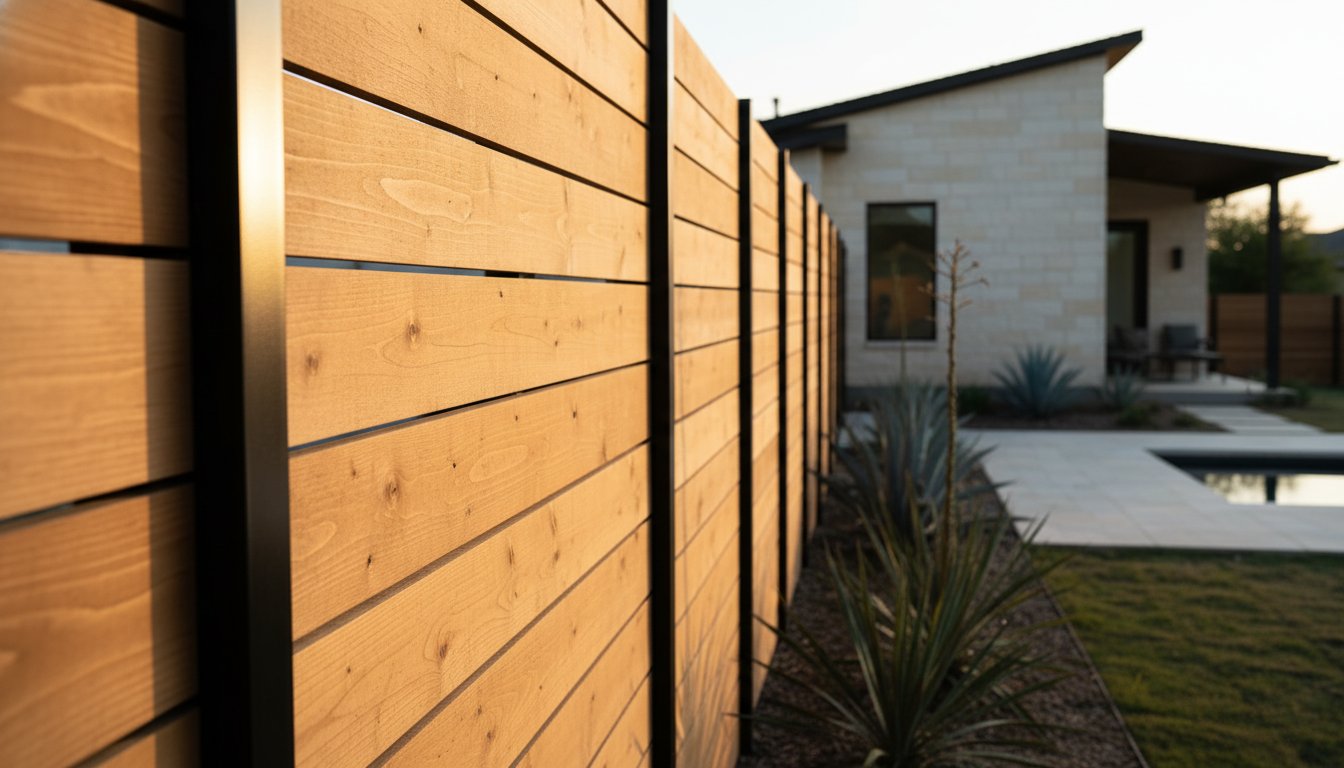
Your current fence is a liability waiting for the next July heatwave to buckle your curb appeal. In Austin, 85% of residential properties sit on expansive clay that acts like a slow-motion earthquake, turning standard wood posts into tilted eyesores within three years. If you want to dominate the neighborhood aesthetic in 2026, you stop playing defense. You build a horizontal wood fence with metal posts. It's the only strategic move that fuses the raw structural power of commercial steel with the high-end, modern warmth of premium cedar. This isn't just a boundary; it's a tactical upgrade for your property value.
You already know that the brutal Central Texas humidity turns cheap materials into warped junk before the first summer is over. We're going to show you exactly why steel-backed horizontal designs are the only logical choice for a backyard that survives the next decade of storms. From soil-shift mitigation to the ROI of modern architecture, this is your blueprint for building the last fence you'll ever need to buy.
Key Takeaways
- Stop gambling on "Austin Rot" with outdated wood posts and discover why a steel-backed hybrid system is the ultimate power move for structural longevity.
- Master the technical anatomy of a horizontal wood fence with metal posts, including the secret role of U-channels in killing board warp before it starts.
- Identify the high-performance wood species specifically engineered to dominate 100-degree Austin summers without cracking under pressure.
- Lock down your perimeter against shifting clay and high-velocity winds with the exact engineering specs required for a "sail-proof" fence system.
- Eliminate construction guesswork and visualize your win using 3D renderings that bridge the gap between architectural vision and backyard reality.
Why Austin homeowners are ditching wood posts for steel
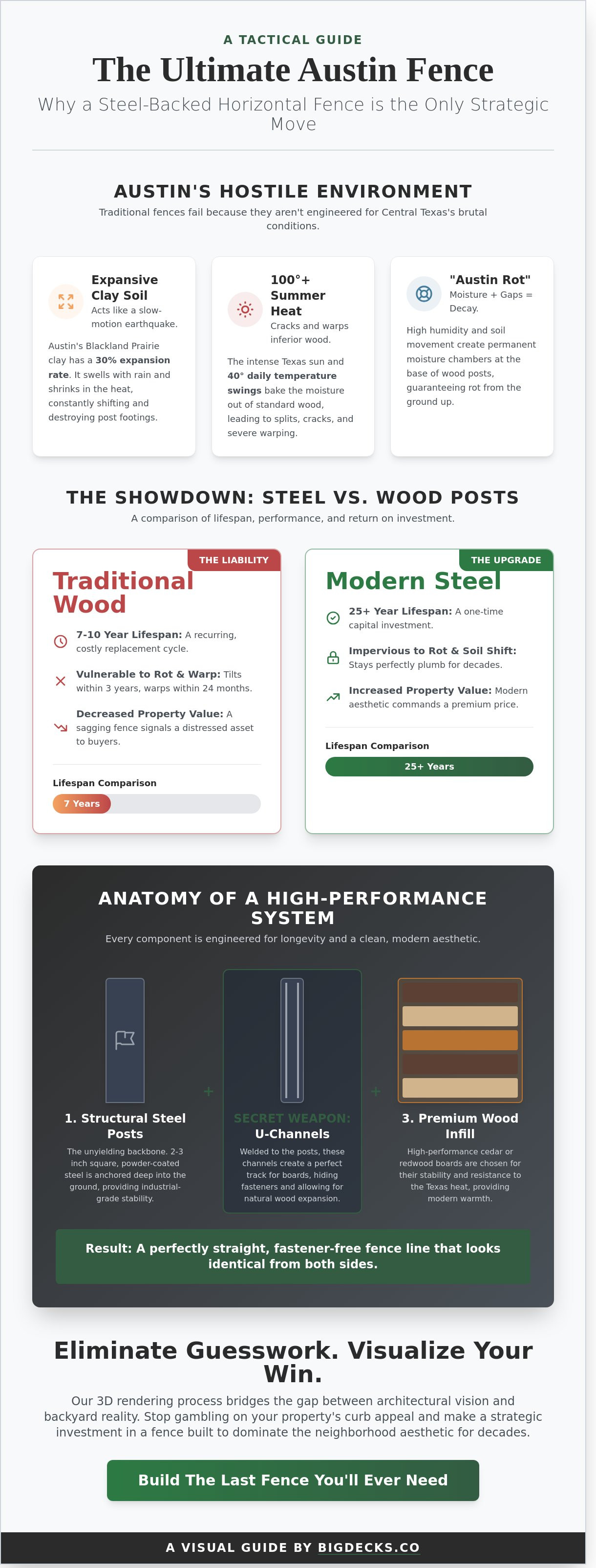
Your backyard is an asset, not a liability. In the high-stakes world of Austin real estate, curb appeal is your pitch deck. Most homeowners gamble their property value on traditional pressure-treated pine posts. They lose. Within 84 months, those posts are leaning, rotting, or snapped. It is a failed investment. We are seeing a massive strategic shift toward the horizontal wood fence with metal posts. This is a hybrid structural system designed specifically for the Central Texas battlefield. It combines the warm, modern aesthetic of cedar with the industrial-grade strength of galvanized steel.
Steel does not decay. It does not care about the 30% expansion rate of Austin clay. It delivers a 25-year lifespan compared to the measly 7 years you get from wood. Understanding the Anatomy of a fence is the first step in protecting your equity. If you are building a horizontal layout, the stakes are even higher. Horizontal boards act as massive levers; they catch wind and exert constant torque on your vertical supports. Wood posts buckle under that pressure. Steel thrives on it.
The problem with traditional wood posts in Texas
Austin sits on a foundation of Blackland Prairie clay. This soil is aggressive. When it rains, it swells; when the 105-degree August heat hits, it shrinks. This constant movement creates micro-gaps between the wood post and its concrete footing. Moisture settles in those gaps, creating a permanent rot chamber. It is a slow-motion execution for your perimeter. Furthermore, the horizontal wood fence with metal posts solves the structural stress issue. Traditional wood posts often warp within 24 months, causing horizontal lines to sag and look amateur. Steel remains plumb, ensuring your design stays sharp and professional for decades.
Steel vs. wood: The ROI of your backyard perimeter
Stop thinking about fence repair. Start thinking about capital preservation. Replacing a wood fence every 7 to 10 years is a recurring tax on your time and bank account. A steel-backed system is a one-time deployment of capital. It maintains a straight, stunning line that commands a premium during a home sale. In a market where 92% of buyers prioritize outdoor living spaces, a sagging fence is a red flag. Choosing steel is a move for the savvy homeowner who values long-term ROI over short-term savings. It is the difference between a property that looks like a distressed asset and one that wins the neighborhood. Build it once. Build it right. Secure the win. This focus on structural permanence is a strategy that pays dividends across your entire property; for those looking to extend this industrial-grade durability to residential or agricultural outbuildings, Bradberry Steel provides pre-engineered and weld-up steel building systems that offer the same permanent ROI as a steel-backed fence.
Anatomy of a modern horizontal fence system
Building a high-performance horizontal wood fence with metal posts isn't a DIY weekend project. It's a strategic assembly of three critical components: structural steel posts, precision U-channels, and premium wood infill. Forget the flimsy 4x4 lumber. Those warp within 12 months in the Texas sun. We use heavy-duty steel to anchor the system into the limestone. Structural integrity depends on post spacing. For standard residential heights, 6-foot spacing is the benchmark for maximum rigidity. If you push it to 8-foot centers, you risk sagging unless you're using thicker, commercial-grade lumber. This is about physics, not just aesthetics. Every component serves a purpose in this high-stakes game of curb appeal. We strip away the fluff to focus on what works.The U-channel: Secret to the clean horizontal line
Stop nailing boards directly to posts. It's a rookie mistake that leads to split wood and ugly gaps. The metal U-channel is the real hero here. It creates a dedicated track where wood can breathe. Choosing the right wood for the Central Texas heat requires understanding that cedar and redwood will expand and contract as the temperature swings 40 degrees in a single day. The U-channel allows this movement without compromising the structure. It hides the raw ends of the boards, delivering a surgical finish. Plus, it solves the "bad side" problem. Both you and your neighbor get the same killer view. No visible fasteners. No messy overlap. Just clean, uninterrupted lines that scream high-end design. It's a win for everyone involved.Post options: Beyond the galvanized pipe
The silver round pipe belongs in a dog park, not your backyard. For a modern Austin aesthetic, square powder-coated steel is the undisputed champion. Black powder coating is the gold standard because it disappears into the shadows, making the wood grain pop. It creates a high-contrast look that matches the modern architecture found in Zilker or East Austin.- Standard Square Posts: 2-inch or 3-inch steel provides a massive upgrade over wood.
- Custom H-Posts: These allow the wood to slide directly into the post for a seamless, architectural look.
- Powder Coating: This isn't just paint. It's a baked-on finish that resists the 100-plus degree Austin summers.
Choosing the right wood for the Central Texas heat
Austin summers don't just feel hot. They are a brutal test of structural integrity for every outdoor project. When the thermometer hits 105 degrees for 40 consecutive days, standard lumber fails. You need a material that survives the radiation. A horizontal wood fence with metal posts is only as strong as its weakest plank. Without the right species, your modern aesthetic turns into a warped, gray mess in under 24 months. Check the Austin Guide to Horizontal Fences for a deeper dive into the technical specs of these materials.
The secret to longevity isn't just the species. It's the protection. Penetrating oils are the only way to fight UV graying. Unlike film-forming stains that peel and flake, these oils dive deep into the wood fibers. They block the sun and keep the color locked in. If you skip this step, you aren't building a fence; you're building a countdown to a renovation.
Western Red Cedar: The classic Austin choice
Western Red Cedar remains the gold standard for aesthetic warmth in Central Texas. It contains natural tannins that repel insects and prevent decay. We specify 1x4 or 1x6 clear cedar to ensure every line in your horizontal wood fence with metal posts stays razor-sharp. You're buying a look, not just a barrier. However, cedar is soft. It requires a commitment to maintenance. Without a consistent schedule of oil-based staining, the Texas sun will bleach it to a dull silver within one or two seasons. If you want that rich, amber glow, you have to earn it.
Thermally modified wood: The 30-year solution
Thermally modified wood is the ultimate durability play for homeowners who demand perfection. This isn't your standard lumber. The wood is "cooked" at temperatures exceeding 400 degrees in an oxygen-free environment. This process removes the organic sugars that rot and bugs love to eat. It effectively turns the wood into a high-performance material that laughs at the humidity.
- Dimensional Stability: It won't shrink, twist, or cup when the humidity swings from 90% to 10% in a single week.
- Long-Term ROI: This material often comes with a 30-year warranty against rot, making it the smartest investment for high-end properties.
- Boreal Beauty: The cooking process gives the wood a deep, dark chocolate hue that penetrates all the way through the board.
Choosing between cedar and thermally modified options comes down to your long-term strategy. Cedar offers immediate impact and classic style. Thermal modification offers a permanent win against the elements. Either way, you're building for the long haul.
Engineering for shifting soil and high winds
Austin weather is a relentless stress test for your property. Between the brutal sun and sudden windstorms, your backyard is a high-stakes environment. A horizontal wood fence with metal posts isn't just about the aesthetic. It's about tactical survival. When the wind picks up, a solid horizontal fence acts like a massive sail. Without the right backbone, that sail becomes a liability. You aren't just building a barrier; you're engineering a structure to withstand 70 mph gusts and the volatile movement of Central Texas earth.
Footing depth and soil mechanics in Austin
The Blackland Prairie clay under your feet is a nightmare for standard construction. This soil expands when wet and shrinks when dry, creating a constant churning motion that ejects shallow posts. Most builders cut corners with 24-inch footings. That's a mistake. In Austin, you need a minimum of 36 inches of depth to hit stable ground. We utilize bell-bottom piers, wider at the base than the top, to lock the foundation into the earth. Unlike wood, steel posts don't wick moisture from the clay. They stay dry, stable, and rigid while wood alternatives would be rotting from the inside out. Proper drainage at the base is non-negotiable. We slope the concrete footings to ensure water sheds away from the post, preventing the pooling that compromises structural integrity over time. This prevents the 30 percent expansion rate of local clay from wreaking havoc on your investment.
Managing wind load on solid privacy screens
Physics doesn't care about your design goals. A 6ft tall horizontal privacy wall creates immense wind pressure. During a Central Texas storm, the lateral force on each post can exceed hundreds of pounds per square foot. This is where the horizontal wood fence with metal posts wins the game. Metal provides the shear strength required to keep your fence plumb when the pressure hits. If you want the look without the drag, consider modern horizontal fence ideas that incorporate 1/4-inch gaps between slats. These gaps allow air to pass through, reducing the "sail effect" while maintaining your privacy. It's a strategic move that balances high-end design with mechanical reality. By choosing steel over wood, you ensure the fence stays upright while your neighbors are left cleaning up debris after a storm.
Designing your backyard perimeter with BigDecks
A high-performance fence doesn't exist in a vacuum. It's the perimeter that protects your lifestyle and your investment. At BigDecks, we don't just install products; we engineer environments. Your horizontal wood fence with metal posts should be the architectural anchor for a larger custom deck project. We look at the total ROI of your outdoor space. It's about flow, privacy, and creating a cohesive aesthetic that screams premium quality. Stop thinking about just a fence. Start thinking about a total backyard transformation that wins the neighborhood.
We treat every project like a high-stakes pitch. Every detail matters. When you invest in a horizontal wood fence with metal posts, you're buying more than privacy. You're buying a statement of intent. Our team handles the heavy lifting, the engineering, and the logistics. You get the result. We align every board with the precision of a Swiss watch. It's about creating a backdrop that makes your home look like it belongs on the cover of a design magazine.
The 3D visualization advantage
Guesswork is for amateurs. We use 3D design renderings to kill uncertainty before the first post hole is dug. We model your fence against your home's actual architecture. You'll see exactly how the lines interact with your roofline and windows. This is how we eliminate the "I didn't think it would look like that" moment.
- Test different wood stains and powder-coated post colors in a virtual environment.
- Map out precise elevations on Austin's notorious 15 percent to 30 percent grade slopes.
- Visualize integrated LED lighting and custom gate placements before construction starts.
This isn't a best guess scenario. It's a digital blueprint for success. We account for every inch of your property line. We ensure the transition from your deck to your fence is seamless and intentional.
Precision metalwork and finishing
Standard gates are the weak point of every residential fence. They sag, they drag, and they fail within 24 to 36 months. We solve this with custom-welded steel frames. These gates are over-engineered to stay square for decades. We pair this structural steel with Cutek Extreme wood oils. This isn't a cheap hardware store stain. It's a high-performance oil that penetrates deep into the grain to prevent warping and rot in the Texas heat.
The research phase is over. You've seen the specs. You know the value. It's time to stop scrolling and start building. Move from the research phase to the execution phase. Get a modern horizontal fence bid from BigDecks today and secure your perimeter with the best in the business.
Build a Perimeter That Wins
Average fences fail because they ignore the reality of Central Texas. Austin clay soil exerts significant pressure during wet seasons; wood posts simply can't compete. By integrating a horizontal wood fence with metal posts, you're investing in a system engineered for the long game. We utilize heavy-duty steel and premium thermally modified wood to create a barrier built to withstand 70 mph wind gusts. This is high-performance architecture for your backyard. BigDecks brings the precision of 3D modeling to every project, ensuring your vision is flawless before the first post hits the ground. We're Austin-based experts in architectural metalwork and specialists in premium cedar. Don't settle for a rotting eyesore that kills your property value. It's time to play at a higher level and secure your perimeter with a design that commands respect. Your backyard deserves a killer upgrade that stays straight and true for decades. We've mastered the science of the Central Texas heat so you don't have to worry about warping or decay.
Request a 3D Design & Bid for Your Austin Fence Project
Let's build a legacy in your backyard.
Frequently Asked Questions
Will a horizontal wood fence with metal posts cost more than a standard fence?
Yes, you'll pay more upfront for this setup. A horizontal wood fence with metal posts increases your initial capital expenditure but kills long-term maintenance costs. Wood posts often fail in 7 to 10 years; galvanized steel stays rock solid for 25 years. You're buying a permanent asset, not a temporary fix. It's a strategic play for homeowners who value ROI over cheap, fast solutions that rot.
Do metal posts rust over time in the Austin climate?
High-quality steel posts don't rust in Austin if they meet ASTM A123 galvanization standards. Austin's 66 percent average humidity is a non-issue for zinc-coated or powder-coated steel. While raw iron fails, modern galvanized posts survive decades of Texas storms. You want the 20-year warranty that comes with industrial-grade materials. Don't settle for inferior metals that compromise your property's structural integrity or aesthetic appeal.
Can I use metal posts with a horizontal cedar fence?
Cedar is the ultimate partner for metal. Western Red Cedar contains natural oils that resist rot, making it the perfect infill for a horizontal wood fence with metal posts. This combination is the industry benchmark for Austin luxury builds. It creates a high-contrast, architectural look that screams premium quality. You get the warmth of natural wood backed by the indestructible strength of steel for a killer finish.
How deep should metal fence posts be set in Austin’s clay soil?
You must set posts 24 to 36 inches deep to beat Austin's shifting clay. The Blackland Prairie soil in Central Texas expands up to 10 percent when wet, which can heave shallow posts right out of the ground. Use 80 pounds of 4,000 PSI concrete per hole to ensure zero movement. A deep set is the only way to guarantee your fence line stays perfectly straight for a decade.
What is the best way to attach horizontal boards to metal posts?
Use heavy-duty steel brackets or 1.5-inch self-tapping screws for a secure connection. These fasteners bite into the metal and won't back out under the tension of drying wood. Avoid cheap clips that rattle or sag. You need a rigid, mechanical bond that handles the 15-pound per square foot wind loads common in Hill Country storms. It's about precision engineering, not just slapping boards together for a quick win.
Does a horizontal fence provide more privacy than a vertical one?
Horizontal designs provide 100 percent visual privacy when you use a tongue-and-groove profile or zero-gap installation. Unlike vertical fences that often show daylight between shrinking pickets, horizontal layouts overlap to kill sightlines entirely. This is a tactical upgrade for backyard security. You're building a fortress that looks like a masterpiece. It's the cleanest way to shut out the neighbors and own your space with total confidence.
11 Modern Horizontal Fence Ideas for Austin Backyards: 2026 Design Guide
Tired of sagging fences? Get 11 modern horizontal fence designs for Austin built to last. Our 2026 guide ensures your fence stays straight & adds value.
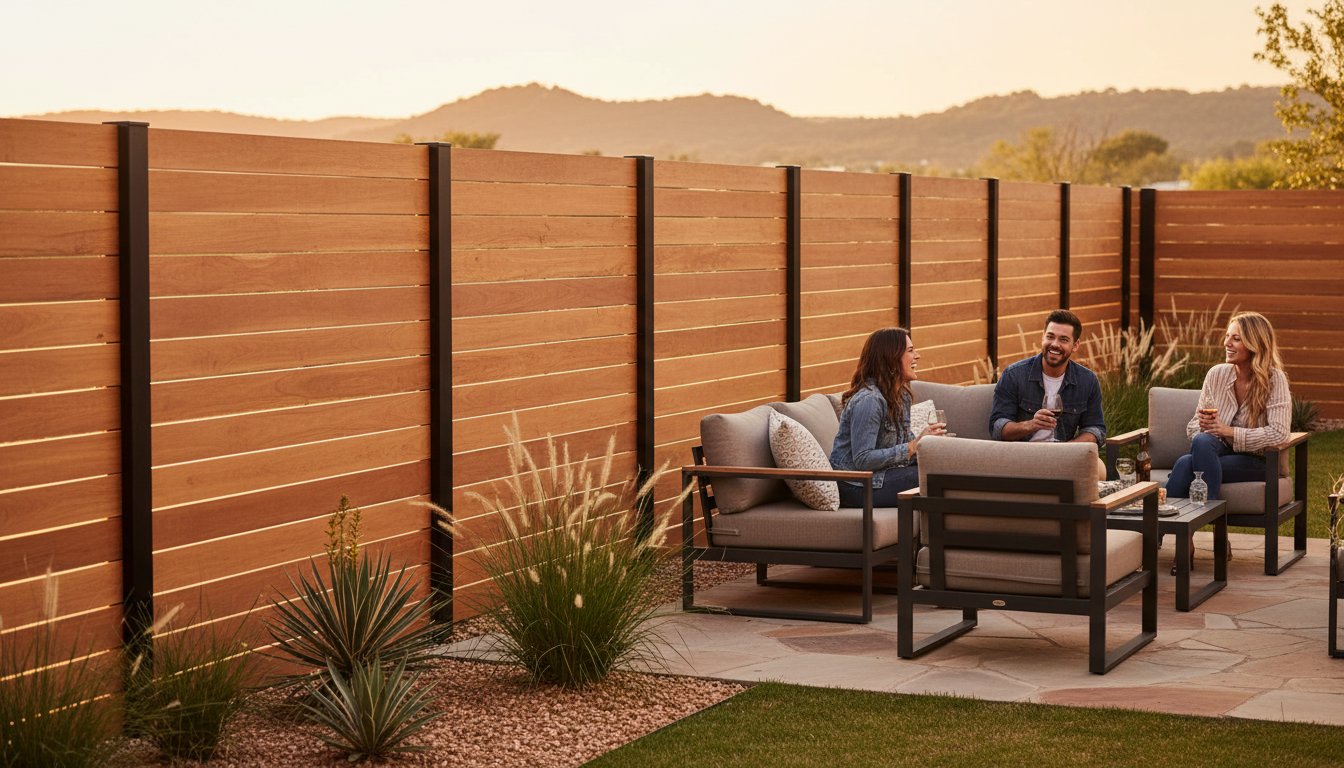
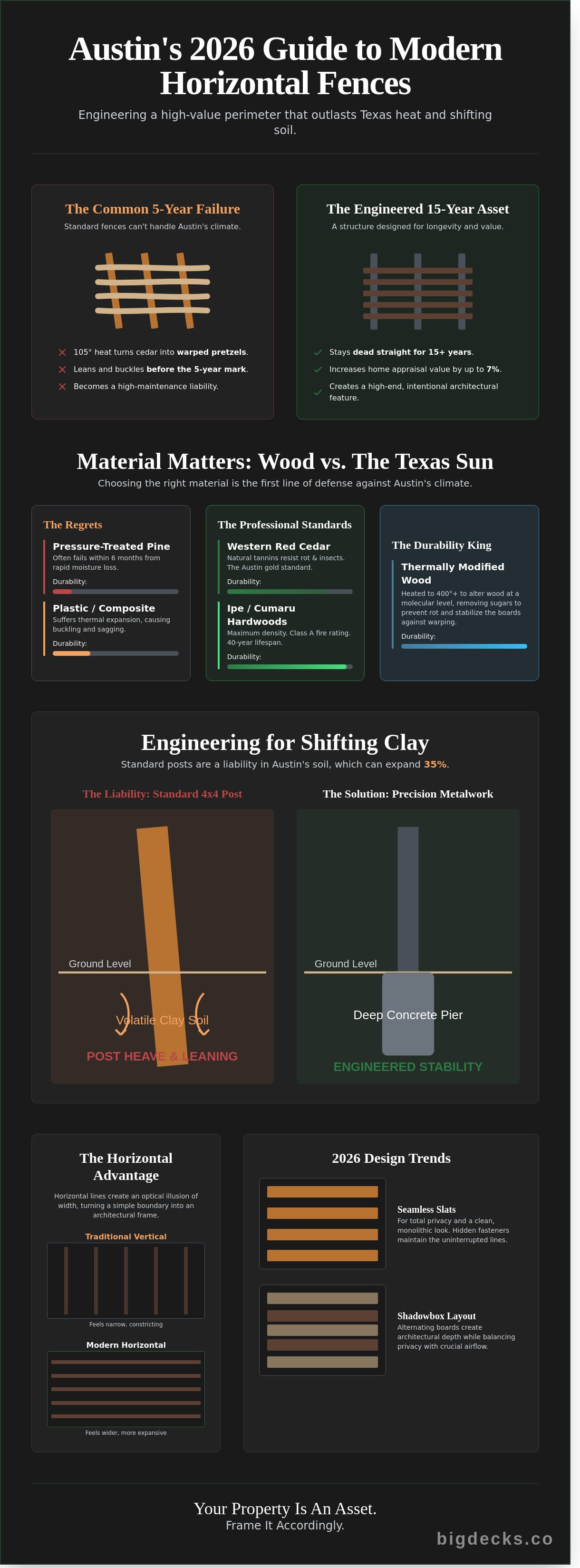
Most Austin fences are ticking time bombs, destined to lean or buckle before the five year mark. You want a modern horizontal fence that feels like a high end architectural choice, but you're likely tired of watching 105 degree Texas heat turn standard cedar planks into warped pretzels. It's a legitimate concern for homeowners who need privacy but refuse to settle for a sagging, fortress like barrier that blocks every breeze. You need a perimeter that looks as intentional as your home's interior design.
You can actually build a property line that increases your home's appraisal value by up to 7 percent while surviving the 35 percent expansion rate of Austin's notorious Blackland Prairie clay. This 2026 guide shows you how to engineer a structure that stays dead straight and looks sharp for fifteen years or longer. We'll break down 11 specific design layouts and material combinations that balance airflow, privacy, and architectural cohesion with your home's modern lines. Get ready to win the neighborhood aesthetic game.
Key Takeaways
- Understand how horizontal lines visually expand tight urban lots and shift the focus from simple boundary marking to intentional architectural framing.
- Learn why Western Red Cedar is the professional standard for surviving 105-degree Austin summers and why cheaper wood alternatives often fail within months.
- Discover the engineering required to prevent a modern horizontal fence from sagging in Austin’s volatile clay soil, including why standard 4x4 posts are a liability.
- Explore 2026 design trends like "Seamless Slats" for total privacy and "Shadowbox" layouts that balance airflow with architectural depth.
- See how combining 3D design with precision metalwork ensures your project remains a straight, high-value asset for years to come.
The rise of the horizontal aesthetic in Austin backyards
Austin's backyard landscape is undergoing a radical shift. In tight urban corridors like East Austin, traditional vertical dog-ear fences are being replaced by the modern horizontal fence to solve a specific spatial problem. Horizontal lines draw the eye along the perimeter, creating an optical illusion of width that makes a 5,000 square foot lot feel significantly more expansive. It's a calculated move for homeowners who want to maximize every inch of their property while maintaining a high-end feel.
The design philosophy has evolved from a defensive posture of "keeping things out" to a sophisticated strategy of framing the property. You aren't just building a barrier. You're installing an architectural feature that mirrors the low-slung, mid-century modern influence found in West Lake and Travis Heights. This aesthetic relies on precision. We define the look through hidden fasteners, clear grade lumber, and intentional 1/4 inch gaps that provide privacy without suffocating the airflow or the visual depth of the yard. It's about creating a backdrop that complements the home rather than a wall that hides it.
Vertical vs. horizontal: The architectural ROI
Vertical is a commodity; horizontal is a statement. This isn't just a fence. It's a premium upgrade that signals a high-end renovation to appraisers and buyers alike. Real estate data for the 2026 Austin market suggests that properties featuring modern perimeter transitions see a 5% to 8% higher appraisal value compared to those with standard vertical builds. This curb appeal is a measurable asset. Smart homeowners are linking their custom decks directly to their fence lines to create a unified outdoor living suite that commands a higher market price and wins the neighborhood appraisal game. Investing in a modern horizontal fence ensures the entire property feels like a cohesive, designer-led project rather than a series of disconnected DIY fixes.
Austin neighborhood trends
Specific neighborhoods are carving out distinct identities with these builds. In Clarksville, we're seeing a surge in minimalist steel posts paired with dark-stained wood for an industrial edge. Bouldin Creek homeowners lean toward warm, organic cedar slats that age into a silver patina, blending with the local greenery. These horizontal layouts also solve the "stair-step" problem common on Central Texas slopes. Instead of awkward, jagged vertical drops, the long lines can be transitioned smoothly to follow the natural limestone topography of the Hill Country, maintaining a level, professional finish across uneven ground. This approach requires more engineering than a standard build, but the result is a seamless transition that respects the local terrain.
Material matters: Selecting wood for the Texas sun
Austin summers aren't just hot; they're destructive. When the mercury hits 105 degrees for twenty straight days, your material choice determines if your modern horizontal fence stays straight or turns into a wavy mess by September. Cheap pressure-treated pine often fails within six months in Central Texas because the rapid moisture loss causes the boards to twist and pull away from the posts. You need materials that can handle high UV exposure without losing their structural integrity.
Western Red Cedar remains the Austin gold standard for a reason. Its natural tannins provide built-in resistance to rot and insects, and it handles the expansion and contraction of our climate better than most softwoods. For those looking for a "forever" solution, hardwoods like Ipe or Cumaru offer maximum density. These woods are so dense they carry a Class A fire rating, the same as steel or concrete. While the upfront investment is higher, the 40-year lifespan in the Texas sun is hard to beat.
Why Austin hates plastic and composite fencing
Many homeowners regret choosing composite materials once the first July heatwave hits. Plastic-based boards suffer from significant thermal expansion; a 20-foot run can expand up to 1/2 inch as temperatures climb. This movement leads to buckled lines and sagging boards that ruin the crisp aesthetic of a modern horizontal fence. Beyond physics, composite often looks like "fast furniture" for your backyard. It lacks the grain, texture, and soul of real timber. Natural wood is also the sustainable choice for Central Texas, as it's a renewable resource that doesn't end up in a landfill for centuries after its use.
Thermally modified wood: The durability king
The real game-changer for high-end projects is thermally modified wood. This process involves heating the timber to over 400 degrees in an oxygen-free kiln, which changes the wood at a molecular level. By cooking out the natural sugars and resins, the process removes the food source for rot and insects. More importantly, it drops the moisture content to near zero. Because there is no water left to evaporate, the wood won't warp, twist, or cup, even in 100 percent humidity or extreme drought. It stays dead straight, which is essential for maintaining those tight, modern horizontal lines.
Maintenance for these high-performance timbers is straightforward. You can let them weather to a silver-gray patina or apply a UV-protective oil once a year to keep the deep, rich tones. If you're weighing the long-term ROI of these materials for your backyard, our team at Big Decks can help you compare the total cost of ownership over the next decade.
Engineering for Austin’s shifting clay soils
Austin’s Blackland Prairie soil is a nightmare for lazy builders. This high-plasticity clay expands and contracts with extreme force depending on the moisture level, exerting thousands of pounds of pressure on fence footings. If you install a modern horizontal fence using standard 4x4 wood posts, you are building a structure that is destined to lean within three years. Wood posts warp, rot at the ground line, and lack the lateral strength to handle the wind load of a solid horizontal surface.
We solve this by ditching wood posts entirely for a "Steel-Core" approach. Integrating PostMaster+ or custom-welded 2x2 and 3x3 steel posts is the only way to guarantee a straight line for the next two decades. These posts are set in 3,500 PSI concrete at depths of 24 to 36 inches. This depth ensures the footing sits below the most volatile "active zone" of the soil, providing a rock-solid foundation that won't heave when the Texas rains finally return.
Preventing the sag: Structural secrets
Gravity is relentless, and horizontal boards have a natural tendency to bow toward the center. Most homeowners worry about sagging because they've seen cheap DIY jobs fail within 18 months. Professional modern horizontal fence Austin builders solve this with mid-span bracing. This involves a vertical 2x2 or 2x4 "stiffener" attached to the back of the boards every 4 feet. It locks the boards together, forcing them to act as a single structural unit rather than individual planks.
Fasteners are equally critical. We use 304 or 316-grade stainless steel screws to prevent "black streaks." Cedar contains natural tannins that react with galvanized nails, creating ugly black stains that ruin a modern aesthetic. Stainless steel doesn't react, and the threads provide significantly better withdrawal resistance than nails, stopping boards from popping off as they move through seasonal humidity cycles.
Metal and wood: The hybrid advantage
The smartest designs in 2026 combine custom metalwork with high-grade cedar or Ipe. Using a powder-coated steel frame provides an industrial-modern edge that wood alone cannot achieve. This hybrid approach offers massive structural integrity while maintaining the warmth of natural timber. It’s the difference between a basic barrier and architectural swagger.
You have two primary options for the steel components. Powder-coated steel offers a clean, consistent finish in matte black or bronze. Alternatively, some Austin homeowners prefer raw steel that develops a "patina" over time. This rusted, weathered look is a staple of the local design scene, though it requires careful planning to prevent rust runoff from staining your concrete patio. Both options provide the rigid skeleton necessary to keep a modern horizontal fence perfectly level for the long haul.
11 Modern horizontal fence ideas for 2026
Your fence defines your property's perimeter and its personality. In 2026, the modern horizontal fence is moving away from basic utility toward architectural precision. You want a design that blocks the neighbors without suffocating your backyard. These concepts focus on clean lines, structural integrity, and the high-end finish Austin homeowners expect.
The "Seamless Slat" is the definitive choice for zero-gap privacy. This design uses tongue-and-groove boards or tight-butt joints to create a solid wall of wood. It is the go-to for tight urban lots where every inch of privacy counts. By eliminating gaps, you create a flat, monolithic backdrop that makes your landscaping and outdoor furniture stand out. It's a high-stakes look that requires perfect leveling to execute correctly.
Airflow is non-negotiable in Central Texas. The "Shadowbox" style uses overlapping boards on both sides of the structural rail. This creates a 3D effect with deep shadows while allowing wind to pass through the fence easily. It's a heavy-duty look that handles 30 mph gusts without vibrating or whistling. It offers privacy from a direct angle but keeps the air moving during those 100-degree July afternoons.
If you want to break the monotony, vary your board widths. Mixing 2 inch, 4 inch, and 6 inch slats creates a rhythmic pattern that mimics high-end interior paneling. This shifts the focus from a simple boundary to a custom design feature. It's a calculated risk that pays off by adding visual texture to long, flat stretches of fencing.
To achieve a continuous horizon line, choose the "Floating" fence. We mount the boards to the front of the posts rather than between them. This hides the structural supports entirely from the outside. The result is an uninterrupted line of wood that makes a backyard feel wider and more cohesive. It's a minimalist approach that prioritizes the horizontal grain of the timber.
Privacy and airflow solutions
Louvered slats set at 45-degree angles provide total privacy from eye level while catching the breeze. For homes in the Hill Country, semi-transparent designs use narrow gaps to preserve a sense of space without exposing the yard. You can also integrate a privacy screen for the deck directly into your main fence line to create a unified, multi-level barrier.
Lighting and hardware accents
Hardware shouldn't be an afterthought. Matte black powder-coated hinges and latches create a sharp, modern contrast against the natural orange hues of Western Red Cedar. For night-time drama, recessed LED strip lighting tucked under the top rail provides a soft wash of light across the slats. This eliminates the need for harsh floodlights while highlighting the wood's texture. Smart-lock gate integration is now a 2026 standard, allowing you to monitor security and manage service access from your phone.
Executing your vision with BigDecks
Building a modern horizontal fence requires more than a nail gun and a stack of cedar. It demands a fusion of architectural precision and heavy-duty engineering. We treat your perimeter as the structural anchor of your entire backyard. BigDecks combines traditional carpentry with custom metalwork to ensure your fence doesn't just look sharp on day one, but remains dead-straight for a decade. We don't build barriers; we engineer boundaries.
We prioritize long-term performance by using Cutek Extreme penetrating oils. Most contractors use film-forming stains that peel after 12 months in the Texas sun. Cutek works from the inside out, protecting the wood core from moisture. This choice minimizes warping and cupping by up to 50% compared to standard untreated wood. It's a strategic decision to protect your high-capital investment from the 100-degree Austin summers.
The 3D visualization advantage
We don't start digging until you've walked through a digital twin of your property. Our 3D modeling process allows you to see exactly how shadows fall across your lawn at 5:00 PM in mid-July. You can swap Western Red Cedar for thermally modified ash in seconds to compare costs and visual weight. This eliminates the 15% "guesswork tax" often found in traditional builds. You see the privacy levels and the material transitions before the first post is set. It’s a no-surprises approach to high-end construction.
Next steps for your Austin project
Launching your project starts with site preparation and navigating local bureaucracy. In Austin, fences over 6 feet typically require a specific permit, and local HOA architectural committees often have strict rules about horizontal orientations. We handle the technical documentation to ensure your build stays compliant with City of Austin code. To prepare, clear any heavy debris from your property line and locate your survey stakes. Once you're ready, schedule a design consultation with our team. We'll review your site's topography and build a roadmap to secure your backyard anchor.
Frequently asked questions
- How long does a modern horizontal fence last? With steel posts and Cutek Extreme oil, expect a 20 to 25-year lifespan. Regular maintenance every 3 years keeps the wood from silvering.
- Do I need a permit for a 6-foot fence in Austin? Most residential fences 6 feet and under do not require a permit. However, if you're building on a corner lot or exceeding 6 feet, we must file paperwork with the city.
- Can I use pressure-treated pine for a horizontal style? We don't recommend it. Pine lacks the stability for long horizontal spans and will likely warp within the first 2 seasons. Stick to cedar, ipe, or modified woods.
A great fence defines your property. A BigDecks fence defines your standards. Let's build something that lasts.
Own the Austin Perimeter
Building a modern horizontal fence in Central Texas requires more than just a vision for clean lines. Success depends on selecting materials like thermally modified wood that won't buckle under the 105-degree August sun. You also have to account for Austin's aggressive clay soil by anchoring posts at least 36 inches deep to prevent shifting over time.
Don't leave your backyard's ROI to guesswork. We integrate precision metalwork and specialized engineering to ensure your design remains level for decades. Our 3D Design Visualization lets you see exactly how the light hits your panels before the first post is set. We focus on the technical details of the Central Texas climate so you can focus on the result. It's time to stop looking at your neighbor's old cedar pickets and start setting the standard for your block.
Ready to win the room? Get a custom quote for your modern fence today.
Your property deserves a boundary that works as hard as you do. Let's build something that lasts.
Frequently Asked Questions
Do horizontal fences cost more than vertical fences in Austin?
Expect to pay 15% to 30% more for a modern horizontal fence compared to a standard vertical build. This price gap exists because horizontal designs require higher-grade lumber to prevent warping and significantly more labor to ensure every line is perfectly level. In the Austin market, standard vertical cedar often runs $35 per linear foot, while professional horizontal installs typically start at $45 per linear foot.
What is the best wood for a horizontal fence in the Texas heat?
Western Red Cedar and Ipe are the only serious contenders for the 100 plus degree Austin summers. Cedar contains natural oils that resist UV damage, while Ipe is a dense hardwood that refuses to bow or splinter under intense sun. Avoid pressure-treated pine for this application; it will likely warp or twist within 12 months in the Central Texas climate.
How do I stop my modern horizontal fence from sagging?
Shorten your post spacing to 6 feet instead of the standard 8 foot intervals. Gravity is the primary enemy of long horizontal boards, so reducing the span is the most effective way to maintain structural integrity. You should also install a vertical mid-span support board on the back of the fence to keep the slats aligned and prevent them from dipping over time.
Does a horizontal fence provide enough privacy?
You can achieve 100% privacy by choosing a tongue-and-groove profile or a tight-stack installation method. Most homeowners opt for a 1/8 inch or 1/4 inch gap between boards to allow for airflow, which still blocks roughly 98% of the visual field. If total seclusion is your priority, overlapping the boards ensures no sightlines exist while maintaining the sleek, linear aesthetic of a modern horizontal fence.
Are steel posts necessary for a horizontal fence?
Steel posts are the gold standard for any high-end horizontal build in Austin's rocky, shifting soil. Wood posts eventually rot at the ground line or warp, which pulls your horizontal boards out of alignment and ruins the clean look. Using galvanized steel posts ensures your fence remains straight for 20 years, protecting your investment from the structural failures common with timber supports.
How long does a custom horizontal fence take to install?
A standard 150 linear foot project typically takes 3 to 5 days from the first post hole to the final coat of stain. Horizontal layouts require significantly more precision than vertical styles, as crews spend extra time on leveling and spacing each individual board. If your design includes integrated LED lighting or custom steel gates, plan for an additional 2 days to finalize those technical details.