

Architectural Fence Design in Austin: 5 High-Impact Styles for 2026
Tired of warped fences? Discover 5 high-impact styles for architectural fence design in Austin. Learn how steel & modified wood create lasting, modern privacy.
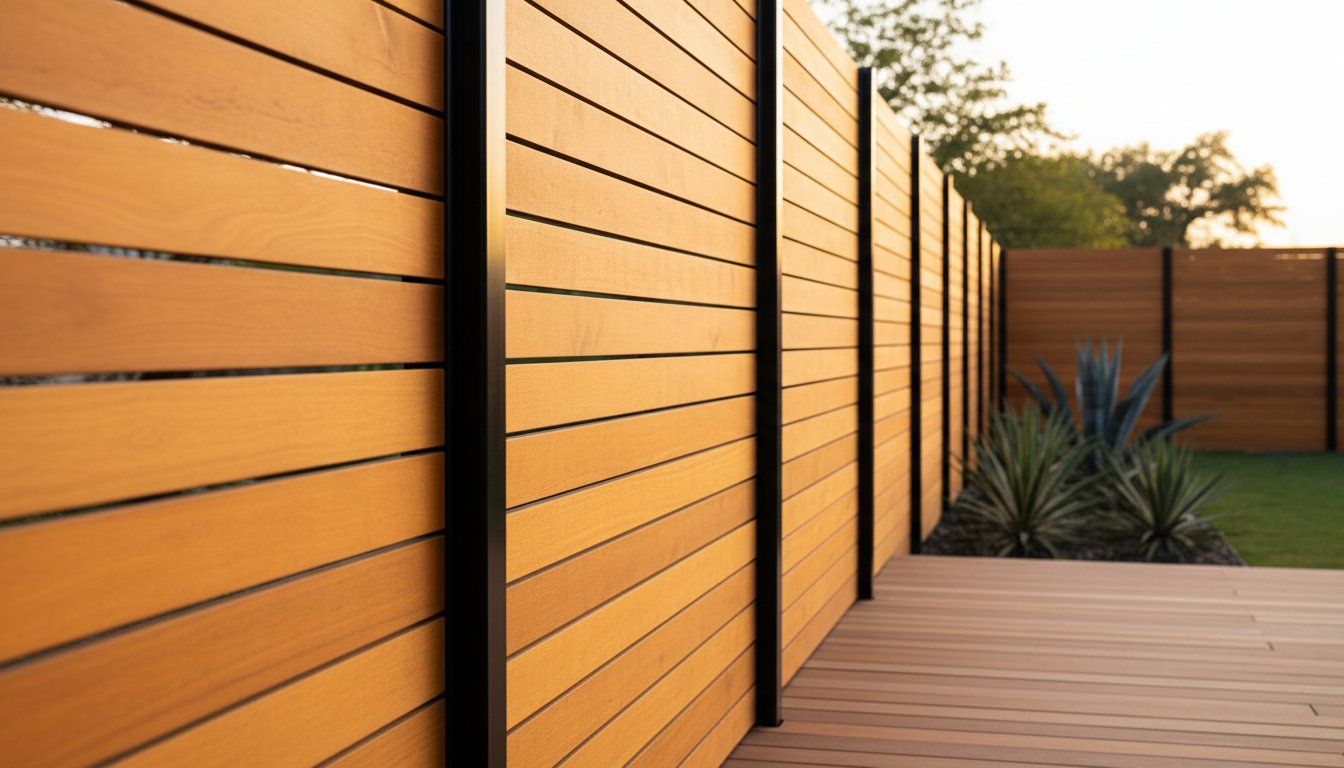
Most Austin fences are essentially ticking time bombs of warped cedar and rotting posts that devalue the very homes they're meant to protect. It's a frustrating reality for homeowners who watch their "privacy" screen bow and grey after just two Texas summers. You've likely seen those bulky, cheap posts that ruin a modern aesthetic and turn a backyard into a cluttered mess. We're here to kill that trend.
Investing in architectural fence design Austin homeowners can trust means moving beyond basic property lines and embracing precision engineering. You'll learn how to combine thermally modified wood with high-grade metalwork to achieve a 20-year lifespan with minimal maintenance. This article previews five high-impact styles for 2026 that provide 100% privacy while perfectly aligning with your home's architectural DNA. It's time to stop building barricades and start designing statements that actually win the room.
Key Takeaways
- Learn why standard contractor-grade pickets are a liability and how architectural fencing serves as a strategic asset for Austin property valuation.
- Discover why we reject plastic composites in favor of thermally modified wood and steel to survive the Central Texas UV and humidity.
- Explore five high-impact styles for architectural fence design Austin homeowners are using to create modern, industrial, and hybrid perimeters.
- Understand the engineering required to anchor deep-set steel into limestone terrain to ensure your structure survives heavy wind loads.
- See how 3D visualization eliminates the risk of 2D sketches by modeling how fence shadows and light interact with your deck’s mood.
Beyond the Property Line: Why Architectural Fencing Defines Austin Real Estate
You aren't just building a barrier. You're framing an asset. In Austin's aggressive real estate market, a standard cedar picket fence is the equivalent of a blank pitch deck. It functions, but it doesn't win the room. High-end architectural fence design Austin property owners invest in acts as a strategic move to increase valuation before a visitor even reaches the front door. It shifts the perception of a home from a standard residential lot to a curated estate.
Moving past the contractor-grade mindset means rejecting the basic 6-foot dog-ear picket. These standard installs often fail within 10 years and offer zero design ROI. A well-framed perimeter creates a psychological transition. It dictates the flow of the entire backyard, turning a patch of grass into a private oasis. This design bridge connects the public street view to your private life, ensuring the transition feels intentional rather than accidental.
The ROI of High-End Perimeter Design
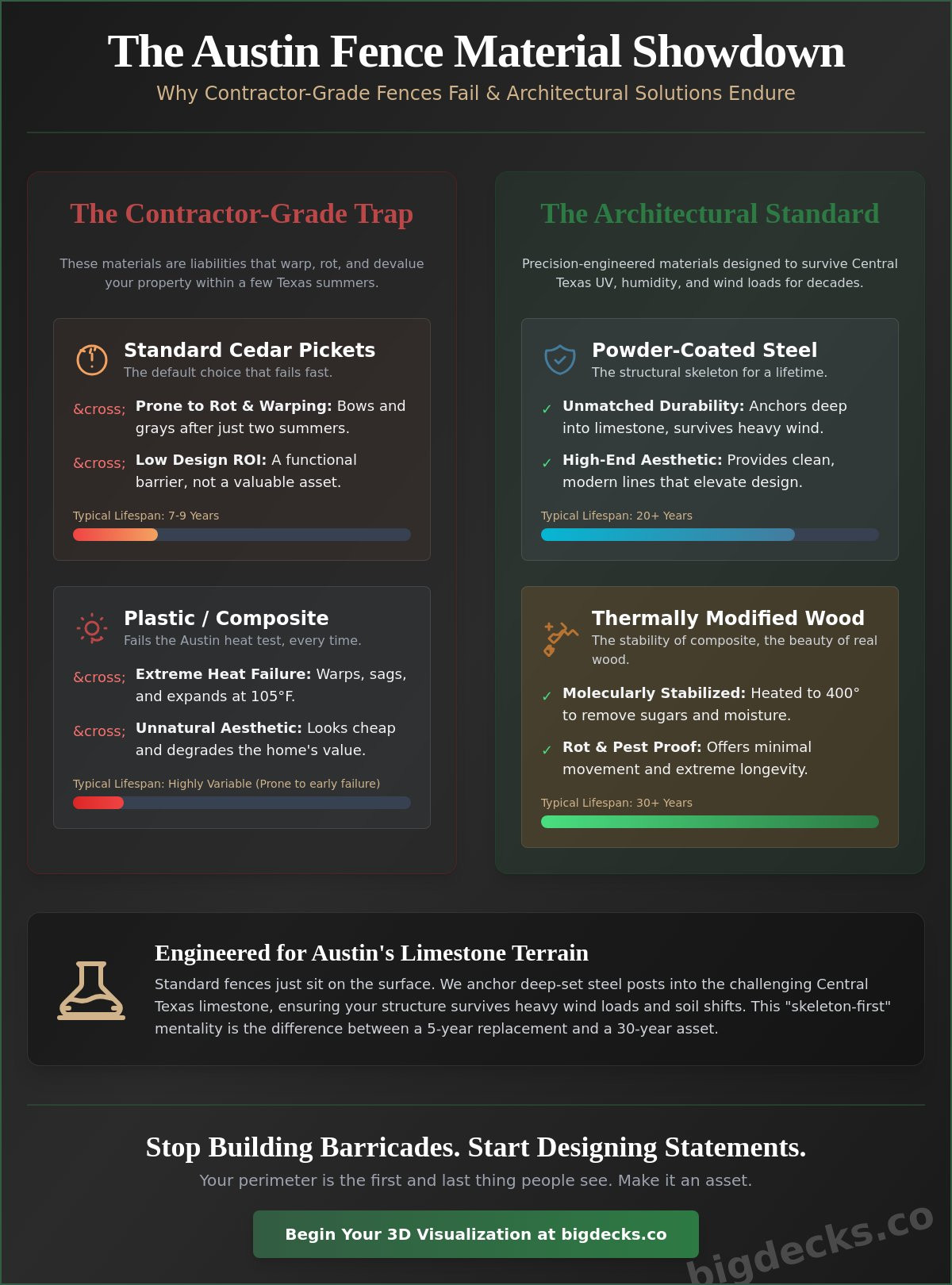
Curb appeal in neighborhoods like Westlake and Tarrytown starts at the sidewalk. While the history of fencing centers on simple property division, modern Austin design focuses on long-term capital appreciation. Choosing architectural steel over traditional wood posts isn't just an aesthetic choice. It's a durability play. Powder-coated steel components often carry a 20-year lifespan, more than doubling the 7 to 9-year cycle of standard cedar supports.
A custom fence acts as the narrative arc for your landscape. It sets the tone for the materials used in your deck, pool surround, and hardscaping. When you invest in premium materials, you're telling a story of quality and permanence. This level of detail is what separates a quick flip from a legacy property. Investors and homeowners who prioritize this early in the build process see a direct correlation in appraisal values and buyer interest.
Austin’s Architectural Diversity and Fence Synergy
Austin is a playground for Mid-Century Modern, Texas Modern, and sleek Contemporary builds. A "one size fits all" fencing approach fails the Austin aesthetic test every time. A Texas Modern home requires the warmth of horizontal clear-grade cedar paired with the industrial edge of raw steel. Geometric alignment is the secret to a cohesive outdoor footprint. If the lines of your fence don't mirror the roofline or the window casings of the main structure, the entire property feels disjointed.
Successful architectural fence design Austin projects rely on precision. We look at the site's topography and the home's silhouette to determine the right height and transparency. A fence should provide privacy without feeling like a fortress. By utilizing varying slat widths or integrated lighting—informed by the design standards of LED Artistry—we create a perimeter that feels integrated into the architecture. This synergy ensures the fence doesn't just sit on the property line; it defines the property's character.
Your perimeter is the first and last thing people see. Don't settle for a basic divider when you can install a design-forward asset that secures your investment and elevates your lifestyle. The right choice here sets the stage for everything else you build inside the line.
The Material Hierarchy: Why We Kill the Plastic and Build with Steel and Thermory
Plastic belongs in a recycling bin, not on your property line. Most builders push composite fencing because it is easy to install, but it fails the Austin heat test every single time. When the thermometer hits 105 degrees, plastic expands, warps, and sags. High-performance architectural fence design Austin requires a different breed of materials. We focus on a hierarchy of steel and thermally modified wood to ensure your investment actually lasts thirty years.
The BigDecks manifesto is simple. We never touch plastic or low-grade pressure-treated lumber for structural components. These materials are liabilities that lead to leaning panels and rot within five years. We build with a "skeleton first" mentality. This means using precision metalwork and stabilized timber that can handle the radical humidity swings of Central Texas without flinching.
Thermory and Ipe: The Heavyweights of Wood Fencing
Thermal modification is a game changer for wood stability. Thermory undergoes a process where the wood is heated to 400 degrees in a vacuum. This removes all moisture and sugars, essentially changing the wood at a molecular level. The result is a board that does not rot and barely moves. It provides a 30-year lifespan that rivals any synthetic product without the cheap, artificial look.
For those who want maximum density, Ipe is the "ironwood" solution. It is so heavy it sinks in water and carries a class-A fire rating. Maintenance is the only variable here. We use penetrating oils like Cutek Extreme to lock in the color. This oil works from the inside out to prevent UV damage. If you skip the oil, the wood turns a sophisticated silver gray, but it remains structurally sound for decades.
Steel and Custom Metalwork Integration
Wood posts buried in Texas limestone are a recipe for failure. We use custom-welded, powder-coated steel posts for every high-end architectural fence design Austin project. This creates a permanent skeleton that will never lean or snap. The steel provides a rigid frame that allows us to play with the "shadow line" aesthetic. This is a deliberate gap between the wood and the metal that creates depth and architectural interest.
Metal framing also solves the problem of gate sag, which is the number one complaint with traditional fences. Our steel gates are engineered for high-traffic use and heavy wind loads. While following official fence design guidelines for height and setbacks, we focus on corrosion resistance. Powder coating ensures the steel remains impervious to the elements. If you are ready to stop replacing your fence every seven years, explore our architectural design options to see how we build for the long term.
5 Architectural Fence Designs Dominating Austin Backyards
Choosing an architectural fence design in Austin requires balancing heat resilience with high-end aesthetics. The following five styles represent the current peak of Central Texas outdoor design; each solves specific privacy and airflow challenges while maximizing property value. These aren't just barriers. They're structural statements that define the character of a modern landscape.
The Modern Horizontal Mastery
Horizontal cedar fencing remains the gold standard for Tarrytown and West Lake Hills contemporary homes. To avoid a generic look, we suggest a custom rhythm by mixing board widths. Alternating 1x2, 1x4, and 1x6 planks breaks up the visual weight and creates a bespoke texture that standard fences can't match.
Precision spacing is critical for both longevity and security. We recommend a gap of 1/8 to 1/4 inch between boards to allow for natural wood expansion without creating a "ladder" effect that makes the fence easy to climb. For a deeper dive into these technical specs, check out The Austin Guide to Horizontal Fences.
Bull Panel and Steel Precision
The "Texas Modern" look often centers on high-end bull panel fencing. We pair heavy-gauge 4-inch welded wire with steel frames and thermally modified wood accents like ash or pine. It's a favorite for front yards because it defines the boundary without obscuring the architecture of the home. It keeps the view open while keeping the dogs in.
These designs perform best when integrated with local limestone pavers and xeriscaping. Achieving this look requires professional metalwork, specifically ground-down, flush-finished welds and hidden fasteners. This level of steel precision ensures the fence looks like a structural extension of the house rather than a perimeter afterthought.
Vertical Slat Screens offer a different architectural rhythm. By placing slats closer together on the vertical axis, you create deep shadow lines that change throughout the day. This style provides excellent privacy from a side angle while still feeling open when viewed head-on. It's a strategic way to add depth to a flat yard.
Louvered Privacy Fencing is an engineering solution for the Austin climate. By angling the slats, we block the neighbor's second-story view while allowing significantly more airflow than a solid wall. This prevents the "dead air" pockets that make Texas summers unbearable in tight backyard spaces.
Floating Panel Designs represent the high-stakes end of custom metalwork. These fences use negative space between the panels and the support posts to create the illusion that the fence is suspended in mid-air. It's a bold move that requires heavy-duty steel engineering to maintain structural integrity without visible bracing.
Engineering Privacy: The Technical Side of Precision Metalwork and Wood Hybrids
Building a high-end fence in Central Texas requires more than a nail gun and a level. The local environment is notoriously difficult, featuring solid limestone shelves and 100-degree temperature swings that can warp inferior materials in a single season. Achieving a lasting architectural fence design in Austin means treating the project like a structural engineering task rather than a simple boundary marker.
Step 1: Site analysis and grading. Austin terrain is rarely flat. We use laser levels to map the grade, ensuring the fence line follows the slope without creating "stair-step" gaps that compromise privacy or allow pets to escape. In areas with Edwards Limestone, we deploy rock saws or carbide-tipped augers to ensure posts are anchored into the substrate rather than just sitting on top of it.
Step 2: Foundation engineering. Wind loads are the primary killer of privacy fences. An 8-foot solid screen acts like a massive sail during a spring thunderstorm. We set steel posts in 36-inch deep concrete piers to ensure the structure remains plumb when 70mph gusts hit the vertical surface area.
Step 3: Material expansion math. Wood is a living material that breathes. In the Texas heat, Western Red Cedar can shrink or expand by 3% depending on moisture content. We calculate specific 1/8-inch gaps between horizontal slats to allow for this movement, preventing the boards from buckling or popping fasteners during a July heatwave.
Step 4: Custom fabrication. True architectural styles rely on a dedicated weld shop. We fabricate steel frames and channels off-site to ensure 90-degree precision. This allows us to "sandwich" wood pickets within a metal track, hiding the end grains and protecting them from water intrusion.
Step 5: Finish and protection. We use UV-rated powder coating for all steel components and oil-based penetrating stains for wood. This combination prevents the "silvering" of the wood and keeps the metal from rusting in the high humidity of an Austin summer.
Structural Integrity vs. Aesthetic Minimalism
Modern design often demands a clean, two-sided finish where the structural "guts" are invisible. We achieve this by using internal steel skeletons that support the weight without bulky 2x4 rails. This method prevents horizontal board sag over 10-foot spans and ensures the fence looks identical from both the street and the backyard. For 8-foot privacy screens, we increase the gauge of the steel to manage the increased leverage exerted by the height.
The Hardware of High-End Fencing
Standard galvanized nails often react with the natural tannins in cedar, leaving ugly black streaks down the wood. We exclusively use 304 or 316-grade stainless steel fasteners to eliminate this risk. For gates, we engineer custom frames that can weigh over 200 lbs, utilizing industrial ball-bearing hinges that allow a heavy steel-and-wood gate to swing with the push of a single finger. We also integrate smart tech like RFID readers and remote-access hardware directly into the gate posts for seamless security. You can explore our custom gate options to see how we blend security with high-end aesthetics.
Designing a fence that lasts 20 years requires a deep understanding of physics and local geology. By focusing on the hidden engineering, we ensure the visual impact of your architectural fence design in Austin remains as sharp in a decade as it does on move-in day.
Designing Your Perimeter: How BigDecks Uses 3D Visualization to Guarantee the Win
2D sketches are a liability in high-stakes outdoor design. They fail to capture scale, depth, or the way a structure interacts with the unique topography of an Austin lot. When you're investing in premium architectural fence design Austin, a flat drawing is a gamble you don't need to take. BigDecks eliminates the guesswork by moving the design process into a high-fidelity virtual environment. We treat your backyard like a high-value pitch deck, where every detail must be vetted before the first post is set in concrete.
Visualizing shadows and light is critical for setting the right mood. A six-foot privacy fence looks different at 10:00 AM than it does during the harsh glare of a 5:00 PM Texas sunset. Our 3D models show you exactly how your fence will cast shadows across your pool or deck area. This "See It Before We Build It" philosophy removes the anxiety of the "I thought it would look different" moment. We ensure the spatial flow is perfect, giving you the confidence to move forward with a design that actually works for your lifestyle.
The 3D Rendering Advantage
We don't just model a fence; we build a digital twin of your home’s actual architecture. This ensures the fence lines up perfectly with your roofline, windows, and existing structures. In this virtual space, we explore material variations with zero risk. You can compare the natural, warm grain of Western Red Cedar against the sleek, dark, and ultra-durable profile of Thermory ash. This level of detail allows us to optimize the ROI of your project by selecting materials that look stunning and perform under pressure. Discover why 3D design renderings in Austin are the only way to start a serious outdoor project.
The Path to a BigDecks Build
Our process moves from a strategic initial pitch to a relentless focus on execution. We don't settle for "good enough" during the final walk-through. Every joint, fastener, and slat is inspected to ensure it meets our high standards for architectural fence design Austin. We specialize in transitioning from a simple perimeter project to a full backyard transformation. By integrating your fencing with custom decks in Austin, we create a cohesive architectural narrative that increases your property's value and utility. To see how high-end hardscaping can further elevate this vision, you can explore Interlocking Driveways for design inspiration. We handle the complexity of the build so you can focus on the result.
Final Thoughts: Your perimeter is the most important "deck" you'll ever build. It defines the boundaries of your private world and sets the tone for every hour you spend outside. By utilizing advanced 3D visualization and a disciplined construction approach, we ensure your fence is a strategic asset rather than just a boundary. It’s time to stop guessing and start building with total clarity.
Secure Your Perimeter for the Long Game
Austin's high-end real estate market moves fast, and your property line shouldn't be an afterthought. Choosing Thermory wood and precision steel ensures your perimeter survives the Central Texas climate while maintaining a sharp, modern aesthetic. We've moved past the era of flimsy plastic and standard privacy pickets. Success in 2026 requires a technical approach to architectural fence design Austin homeowners can rely on for decades of durability.
BigDecks eliminates the guesswork by providing custom 3D renderings for every project. This visualization ensures that precision metalwork and wood hybrids align perfectly with your home's existing architecture before the first post is set. You aren't just buying a fence; you're investing in a strategic asset designed by local experts who understand high-stakes design-build.
Ready to win your backyard? Get your architectural fence bid from BigDecks today.
Building a superior perimeter is about making the right technical choices today so you don't have to rebuild them tomorrow. It's time to stop settling for average and start building for the win.
Frequently Asked Questions
How much does an architectural fence cost per foot in Austin?
High end architectural fence design in Austin typically starts at 60 dollars per linear foot for premium materials and can exceed 150 dollars for custom steel or exotic hardwoods. These figures reflect 2024 market averages for professional installations involving masonry or precision metalwork. Your final investment depends on site topography and the complexity of the structural engineering required for the project.
Is thermally modified wood better than Western Red Cedar for Austin's climate?
Thermally modified wood offers superior dimensional stability in Austin's 100 plus degree summers. It resists rot and moisture better than cedar because the heat treatment process removes the sugars that fungi feed on. While cedar is a classic Texas staple, it's prone to movement and checking. Thermally modified ash or pine holds its shape, making it the smarter play for long term ROI.
Do I need a permit for an 8-foot privacy fence in Austin, TX?
Yes, you must obtain a permit for any fence over 6 feet tall according to the City of Austin Land Development Code. Building an 8-foot privacy wall without city approval invites code violations and potential removal orders. We handle the bureaucracy because architectural fence design in Austin requires precise adherence to setback rules and neighbor notification protocols to ensure your project stays legal.
How long does it take to design and install a custom architectural fence?
Expect a 6 to 10 week window from the initial pitch to the final walkthrough. The design phase takes 2 weeks to lock in the vision and material specs. Fabrication and site prep consume another 3 weeks. Actual installation usually wraps in 7 to 14 days, though custom steelwork or complex masonry can extend that timeline based on crew availability and weather.
Will a horizontal fence warp faster than a vertical fence?
Horizontal fences warp more frequently if you skip the structural essentials like mid-span blocking or steel posts. Gravity is the enemy. Planks have a natural tendency to sag over time without proper support every 4 feet. Vertical fences hide movement better, but a well-engineered horizontal design uses high-grade clips and seasoned lumber to kill the warp before it starts.
Can you integrate a fence with an existing deck or stone patio?
Integration is mandatory for a cohesive estate look. We anchor fence posts directly into existing stone patios using core drilling or bolt them to deck framing for a seamless transition. This creates a unified architectural narrative rather than a disjointed collection of backyard features. It's about building a fortress that looks intentional, not like an afterthought.