

Outdoor Sauna Installation in Austin: The High-Performance Guide for 2026
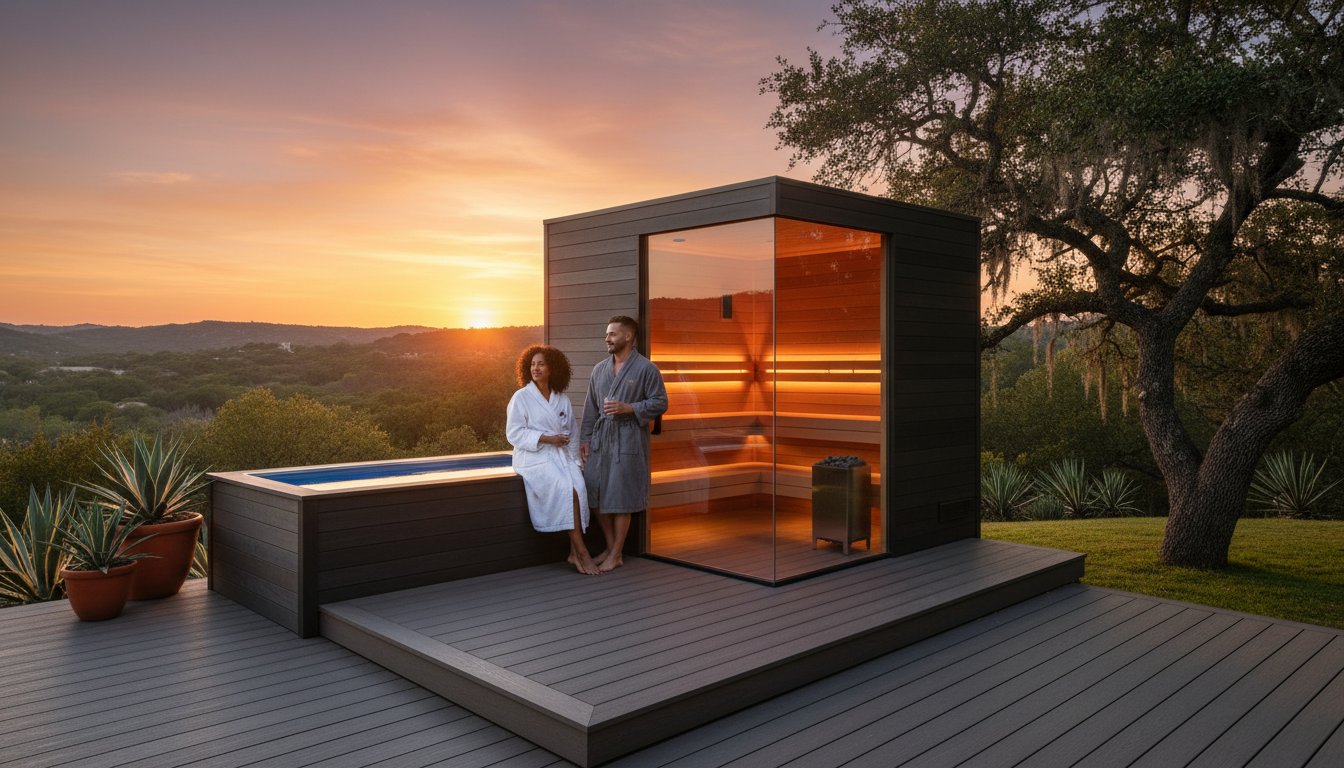
Placing a standard cedar kit in the direct Central Texas sun is the fastest way to watch a project costing over $10,000 warp into an expensive pile of kindling. Most homeowners realize too late that an outdoor sauna installation in Austin is a brutal stress test for traditional wood structures that weren't designed for 105-degree afternoons. You already know that heat therapy is a non-negotiable for your recovery routine, but you shouldn't have to settle for an ugly box that drags down your property value or rots after two seasons.
This guide breaks down the engineering required for a high-performance wellness retreat that survives the elements. We will show you how to choose materials that handle the humidity swings and how to navigate the electrical permitting hurdles that catch most DIYers off guard. You will learn the specific design tactics to integrate your sauna into a professional deck layout so it looks like a strategic architectural choice rather than a backyard afterthought. We are stripping away the fluff to focus on the durability, ROI, and technical specs you need for a premium build in 2026.
Key Takeaways
- Learn why high-performance saunas are replacing traditional pools as the new benchmark for Austin real estate value and recovery.
- Select the right material science, like thermally modified wood, to ensure your outdoor sauna installation Austin survives the brutal Central Texas sun.
- Engineer a foundation that handles the massive structural load of a premium sauna when integrating it into a custom deck.
- Streamline your recovery routine by planning the drainage and logistics for a combined sauna and cold plunge "wet zone."
- Use 3D design and professional planning to bypass HOA hurdles and Austin’s complex permitting process before breaking ground.
Winning the Backyard: Why Austin is Trading Pools for Premium Saunas
Austin's backyard landscape is hitting a major pivot point in 2026. The era of the high-maintenance, chemical-heavy swimming pool is being challenged by a leaner, more efficient alternative. Property owners are realizing that a pool sits idle for four months out of the year while a premium sauna delivers peak performance every single day. An outdoor sauna installation Austin project offers a higher density of utility per square foot than almost any other residential upgrade.
The footprint comparison tells the real story. A standard in-ground pool requires roughly 600 square feet of excavation and thousands of gallons of water. A custom sauna footprint is often less than 100 square feet. This efficiency allows homeowners in densifying neighborhoods like Bouldin Creek or Tarrytown to reclaim their yard for other high-value uses. You cut your monthly maintenance costs by 80% while gaining a year-round wellness hub that functions regardless of the Texas heat or a sudden freeze.
The ROI of High-End Outdoor Amenities
Custom structures win the appraisal game every time. While a pre-fab barrel sauna is a temporary fixture, a site-built structure is a permanent architectural asset. Real estate data from 2024 shows that Austin homes with integrated wellness suites saw a 12% increase in listing engagement compared to those without. A custom build integrates with the home’s existing design language, ensuring it adds actual square footage value rather than looking like a backyard afterthought. You are building equity, not just buying a kit that will degrade in the Central Texas humidity within five years.
Wellness as a Strategic Asset
High-achievers in the Austin tech and venture capital sectors are moving toward "Fire and Ice" recovery protocols. This routine pairs the intense heat of a traditional Finnish bath with a cold plunge for maximum physiological impact. It isn't just about relaxation; it is a strategic tool for cognitive performance and stress management. Integrating a sauna into your daily flow creates a dedicated space for mental clarity. Smart homeowners are prioritizing these health-focused transformations because they provide a recurring return on personal energy that a standard gym or pool simply cannot match.
The move toward premium saunas reflects a broader trend of intentional, high-performance living. By choosing a custom outdoor sauna installation Austin over a traditional pool, you are opting for a low-maintenance, high-impact asset. It is a decision that favors long-term property value and daily physical optimization over seasonal novelty.
Material Science: Selecting Wood and Heaters for the Texas Heat
Austin's climate is a notorious wood-killer. You aren't just building a backyard amenity; you're placing a high-performance machine in a 105-degree oven. Standard materials often warp or rot under the relentless Central Texas sun. Successful outdoor sauna installation Austin requires components that handle extreme UV exposure and internal temperatures of 190 degrees simultaneously without compromising structural integrity.
Thermally Modified Wood vs. Western Red Cedar
Traditional Western Red Cedar is the industry standard for a reason, but it has physical limits. In Austin's fluctuating humidity, cedar expands and contracts aggressively. We recommend thermally modified wood for its superior dimensional stability. The modification process uses high heat and steam to bake out sugars and resins, making the wood hydrophobic and resistant to rot. It won't swell when the humidity spikes or shrink during a July drought.
Maintenance requirements differ between species. Cedar requires frequent sealing to prevent graying. Thermally modified species like those from Thermory silver over time if left untreated, but they remain structurally sound for decades. This stability is vital for maintaining the airtight seal required for efficient heating. If you prefer the deep, toasted aesthetic, an annual UV-inhibiting oil keeps the wood looking fresh without the heavy lifting of traditional deck maintenance.
High-Performance Sauna Heaters
Your heater choice dictates your daily routine. Electric units from brands like Harvia and Huum offer digital precision and remote connectivity. These systems require a dedicated 240V circuit. You must coordinate with an electrician early in the planning phase to ensure your home's panel can handle the 40 to 60-amp load. To ensure your home’s electrical infrastructure can support these high-capacity upgrades, read more about professional energy solutions. Electric heaters allow you to trigger a session from your phone, ensuring the cabin is ready the moment you finish your workout.
Wood-fired saunas provide a primal atmosphere and a dry heat that many purists prefer. However, they demand more logistics. You must manage smoke paths and adhere to local Austin fire codes regarding setbacks and spark arrestors. Wood-fired stoves also take 45 to 60 minutes to reach peak temperature. If you value convenience, electric wins. If you value the ritual of the burn, wood-fired is the play.
Beyond the aesthetic, the science of heat is the real driver. Regular sessions contribute to the health benefits of sauna bathing, including improved cardiovascular function and lower blood pressure. To achieve these results, your build must balance interior heat retention with exterior weather resistance. We utilize high-density insulation and specialized vapor barriers to protect the exterior structure from the 200-degree internal environment. If you want to spec a build that survives a Texas August, see how we approach high-performance outdoor design for local homeowners.
Engineering the Foundation: Integrating Saunas into Custom Decks
A sauna isn't just a luxury accessory. It's a massive structural load that requires precision engineering. Most standard decks aren't built to hold a 2,000-pound cedar box filled with people. If you're eyeing an outdoor sauna installation Austin homeowners often overlook the physics of the substructure. You need a foundation that doesn't just hold the weight but eliminates movement entirely.
Water management is the second half of the battle. Saunas generate significant condensation and require regular cleaning. Without a dedicated drainage plan, runoff sits on your deck boards, leading to rot and premature failure of the substructure. We prioritize EPDM membranes and strategic pitching to ensure water moves away from your home and your deck's frame.
Structural Reinforcement for Deck-Mounted Saunas
The math is simple but non-negotiable. A typical 6-person barrel sauna weighs roughly 1,200 pounds empty. Add six adults and you're suddenly asking your deck to support 2,500 pounds in a 40-square-foot area. This concentrated dead load will snap standard joists or cause significant sagging over time. We solve this by doubling or tripling the joists directly beneath the sauna footprint.
Zero-deflection is our standard. We use solid blocking between joists to prevent lateral movement and twisting. Every outdoor sauna installation Austin project we lead ensures the custom deck foundation utilizes 6x6 posts and oversized concrete footers. This isn't just about code compliance; it's about making sure your investment feels solid underfoot for the next twenty years.
Seamless Aesthetic Integration
Dropping a sauna on top of a finished deck looks like a mistake. High-end design requires integration. We often recommend recessing the sauna base into the deck frame. By dropping the floor of the sauna 6 to 10 inches, you create a "built-in" architectural look that feels intentional. It lowers the profile of the unit and makes the transition from the deck to the sauna bench feel natural.
Privacy shouldn't feel like a cage. We use architectural fencing to create a secluded zone around the sauna entrance. By utilizing horizontal slats with specific gap spacing, we can block the neighbor's line of sight while preserving your view of the horizon. It's a strategic play that balances total seclusion with the open-air feeling of a Hill Country retreat.
Engineering for a sauna is about more than just strength. It's about how the heat, weight, and water interact with your deck's longevity. Don't cut corners on the substructure. A well-integrated sauna increases your property value, but a sagging deck is a liability you can't afford.
The Fire and Ice Strategy: Coordinating Saunas and Cold Plunges
Combining extreme heat with a cold soak is the gold standard for physical recovery and mental clarity. In Austin, where high-performance living is a priority, homeowners are increasingly opting for a dual-unit setup. Installing both units at the same time is a strategic move that saves on labor costs and prevents you from tearing up your deck or landscaping twice. A coordinated outdoor sauna installation Austin project ensures that your recovery zone functions as a single, high-output system rather than a collection of mismatched equipment.
Planning the Recovery Circuit
The layout of your recovery space determines how often you'll actually use it. You want the distance between the sauna door and the plunge tank to be between 5 and 8 feet. This short gap allows for a quick transition that maximizes the physiological "shock" of the temperature change. It also keeps the "wet zone" concentrated in one area of your deck or patio. Integrating an outdoor shower between the two units is a smart design choice. It allows you to rinse off sweat before entering the water, which keeps your filtration system running efficiently. To ensure your water quality matches the high performance of your equipment, you can check out Your Water Guy for expert residential treatment solutions. This seamless flow is why cold plunges have become the essential partner for modern heat therapy setups.
Infrastructure for Dual Installations
Managing the technical requirements for two high-draw appliances requires precision planning. A standard 6-person electric sauna typically pulls 240V on a 40 or 50-amp circuit. Most high-end cold plunges require their own dedicated 110V or 120V circuit to power the chiller and filtration pump. Running these lines simultaneously during your initial outdoor sauna installation Austin project reduces electrician fees and ensures your breaker panel can handle the load. Drainage is the other critical factor. A typical plunge tank holds 75 to 100 gallons of water. When it's time for a water change, you need a clear drainage path that moves water away from your home's foundation and into a proper runoff area.
Weight is a factor that many homeowners overlook until it's too late. A filled cold plunge, combined with the weight of the unit and the user, can easily exceed 1,200 pounds. If you're building on a deck, your contractor must reinforce the sub-structure. This often involves tightening joist spacing to 12 inches on center or adding double headers to support the static load. Don't guess on the structural integrity of your space; verify the weight limits of your deck before the units arrive.
If you're ready to build a high-performance recovery zone that lasts, talk to a pro at Big Decks today.
Executing the Vision: The BigDecks 3D Design and Build Process
Most backyard projects fail because of a massive gap between expectation and reality. We close that gap with high-fidelity 3D modeling. For a high-end outdoor sauna installation Austin homeowners expect more than a sketch on a napkin; they expect a digital twin of their property. This rendering ensures Austin’s strict HOA guidelines and permitting requirements don't stall your build before the first board is cut. We treat your backyard like a high-stakes investment, because it is.
Visualizing the Outcome Before Groundbreak
Don't guess where the sun hits your cedar at 4 PM in July. Our 3D renders let you toggle between different lighting scenarios and material finishes in real time. You'll see exactly how the sauna interacts with your existing pool or deck. We adjust the layout for traffic flow, ensuring the path from the cold plunge to the heater is seamless. This process eliminates the guesswork and protects your ROI. We finalize every detail, from the placement of the LED strips to the grain of the wood, before a single tool leaves the truck.
The Craftsmanship Behind the Build
The transition from digital design to physical structure requires absolute precision. We blend traditional carpentry with custom metalwork details that handle the central Texas heat and humidity cycles. Construction shouldn't be a mystery. You'll see a clean site, a disciplined crew, and a focus on structural integrity. Every unit undergoes a 120-minute heat test and a final walkthrough to ensure the thermal envelope is airtight. We finish by handing over a maintenance schedule tailored to the specific woods and hardware used in your architectural asset.
Frequently Asked Questions
- How long does the 3D design phase take? The initial concept usually takes 7 to 10 days, followed by a revision meeting to lock in materials.
- Do you handle Austin building permits? We manage the technical documentation and submission process for both city permits and HOA approvals.
- What is the typical construction timeline? Most custom sauna builds in Austin are completed within 4 to 6 weeks once the site is prepped.
- Can I integrate the sauna into an existing deck? We specialize in structural retrofitting to ensure your current deck can support the weight of a fully loaded sauna.
Your backyard is an asset that deserves professional execution. BigDecks builds saunas that perform as well as they look. Stop wondering what's possible and start seeing it. We're ready when you are.
Own the Backyard Performance Game
Austin’s climate is a brutal testing ground for outdoor structures. High-performance recovery requires more than just a heater in a box. You need thermally modified wood that resists rot and a foundation engineered to support the combined weight of a sauna and a loaded cold plunge. This is about building a compound that stays functional through 2026 and beyond. You aren't just adding a feature; you're executing a strategic upgrade to your property.
Stop guessing how your backyard will look. Our precision 3D design process eliminates the "hope for the best" strategy. As Austin’s premier design-build firm, we focus on the engineering and material science that protects your investment. Your outdoor sauna installation Austin project deserves a partner who understands that ROI is measured in both property value and daily performance. We don't do fluff. We build high-stakes environments for homeowners who demand the best. It’s time to stop settling for average and start building for the win.
See your vision in 3D; Start your sauna project with BigDecks
Your future self will thank you for the heat. Let's get to work.
Frequently Asked Questions
Do I need a permit for an outdoor sauna installation in Austin?
You need a permit for any outdoor sauna installation in Austin that includes electrical wiring or exceeds 200 square feet. The City of Austin Development Services Department enforces these codes to ensure fire safety and structural integrity. Even if your structure is small, hiring a licensed electrician to pull a trade permit is a non-negotiable step for your insurance compliance.
What is the best wood for an outdoor sauna in the Texas climate?
Western Red Cedar and Thermally Modified Wood are the top performers for the intense Texas heat and humidity. Cedar contains natural oils that resist rot and insects, while Thermally Modified Wood undergoes a heat treatment process that makes it dimensionally stable. These materials won't warp when the Austin summer hits 105 degrees, ensuring your sauna remains airtight for years.
Can I put an outdoor sauna on my existing wood deck?
You can place a sauna on an existing wood deck only if the framing is reinforced to handle the concentrated load. A standard 6-person sauna can weigh over 1,500 pounds, which often exceeds the 40 pounds per square foot design limit of residential decks. We typically add extra joists or dedicated support posts to ensure your outdoor sauna installation in Austin doesn't cause structural sagging.
How much electrical power does an outdoor sauna require?
Most high-performance outdoor saunas require a dedicated 240-volt circuit with a 30 to 60-amp breaker. This isn't a standard plug and play situation; it requires a hardwired connection from your main electrical panel. Using a 240V system ensures the heater reaches 190 degrees Fahrenheit in under 40 minutes, even during a rare Central Texas cold snap.
How long does it take to build a custom outdoor sauna?
A custom outdoor sauna typically takes 4 to 8 weeks from the initial design phase to the first sweat. The physical construction on-site usually wraps up in 5 to 10 business days, but sourcing premium materials and scheduling inspections adds to the timeline. Planning your project 90 days in advance ensures all components are ready for a seamless installation.
What is the difference between a traditional sauna and an infrared sauna for outdoor use?
Traditional saunas use stones and water to create high heat and humidity, while infrared saunas use light waves to heat your body directly. For outdoor environments, traditional heaters are the superior choice because they're built to handle ambient temperature swings and moisture. Infrared units often struggle to maintain effective temperatures when the outside air drops below 50 degrees, making them less reliable.
How do I handle drainage for my outdoor sauna and cold plunge?
Proper drainage requires a sloped floor inside the sauna and a dedicated runoff solution for your cold plunge. We install floor drains that lead to a gravel soakaway or a French drain system to prevent water from pooling around your deck foundation. For cold plunges, a 1.5-inch PVC drain line connected to your home's wastewater system keeps the setup clean and functional.